
Industry Insights
iRobot's Next Chapter: CEO Gary Cohen on the Roomba Maker's Future
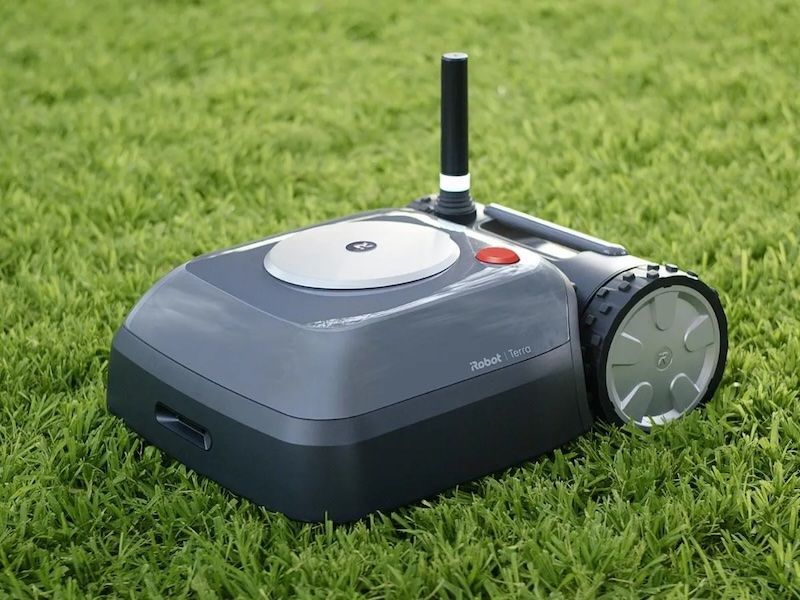
“I've got a whole back room of lawnmowers that haven't seen the light of day,” Gary Cohen notes. It’s more than just an allusion to unrealized potential. It’s a true–life example — albeit one that’s largely been relegated to the pre-pandemic memory hole. There was real excitement around iRobot’s next big product category when Terra was unveiled in a Las Vegas conference room during CES 2019.
None of the company’s bids to move beyond the robot vacuum — the gutter-clearing Looj, floor-mopping Scooba, and pool-scrubbing Mirra — had sufficiently stuck the landing. Terra felt different — for one thing, the Roomba-maker had worked on the project for more than a decade. It was the sum of learnings from generations of productization successes and failures alike. At long last, iRobot was ready to show the results to the world. And then, for the next year or so, things went quiet.
In April 2020, as the first wave of Covid was cresting in the continental U.S., iRobot confirmed what many suspected — Terra was delayed indefinitely. Truly unfortunate timing played a key role in the decision not to launch that year, as iRobot cited “current market realities,” adding that it would “reassess options for launching it when the time is right.” In hindsight, of course, things went from bad to worse for consumer electronics companies highly dependent on the global supply chain.
That Cohen inherited a backroom of lawnmowers when he took over for longtime CEO, Colin Angle, in mid-2024 wasn’t the product of any single misstep. iRobot’s recent fortunes are the outcome of years-long decisions and circumstances that recently found the company journeying through the Chapter 11 process and emerging the other end a subsidiary of its Shenzhen-based manufacturer, Picea Robotics. Nor are the lawnmowers the sole R&D casualty of these past several years.
“We've got a lot of products that had been invented and close to commercialization that are sitting around that we still are testing.” Says Cohen. “But a lot of those products needed a better cost curve, or we'll probably make some enhancements and modifications that take advantage of the latest navigation and the latest cost curve to be able to bring those to market. But we have good IP on a lot of those categories as well. I've got to give [Angle] and the team a lot of props for their inventiveness and their ability to come up with a number of ideas. And I think one of my goals will be, I'd be nothing prouder than to take some of these ideas and see them come to light and see them hit the marketplace.”
For now, such goals will have to remain aspiration. Stabilizing iRobot has been job one since Cohen stepped into the CEO role in the wake of Amazon’s failed acquisition. The company was running low on money and facing substantial economic headwinds, while battling to remain competitive in a category it practically established singlehandedly two decades prior. It was an unenviable position.
“I'm Boston born,” Chen explains. “I knew about iRobot. “I would drive by the company headquarters all the time. And I even knew some people that used to work at the company and some folks on the board. I had this emotional connection to the business separate from just my turnaround shops and my interest in trying to jump into this. I love jumping into the fire and building and rallying teams towards a vision, and I felt this, from day one, felt this great loyalty to the brand but also to the people and to the team. They were so passionate about the mission that Colin had set up that we're gonna change the world through robotics.”
While the degree to which iRobot “changed the world” is open to interpretation, the once-assuming MIT spinout unquestionably transformed robotics. The company achieved the seemingly impossible, creating and marketing a wildly success home robot. iRobot has been a cornerstone for Boston robotics and a tentpole for both American and consumer robotics writ large.
The reactions to recent weeks’ news surrounding the company are about much more than the logos that will emblazon the world’s robot vacuums for years to come. They’re about the fate of a company that has been a formative part of countless robotics careers since the turn of the century, beginning with founders Angle, Helen Grenier, and Rodney Brooks.
In recent weeks, Cohen’s media appearances — couched between frequent visits to meet with Picea executives in China — have focused on reassuring concerned observers that the sky hasn’t necessary fallen. While it’s safe to say things didn’t pan out the way proponents of the Amazon deal were hoping (go listen to our recent podcast interview with Colin Angle for the unfiltered inside scoop there), there is certainly precedent for big brands that have emerged from Chapter 11 in one piece.
iRobot’s own Chapter 11 journey officially ended on January 23, around a month or so after the process started. It has no doubt emerged a different company than it entered, with new corporate structures to navigate. Of course, iRobot’s transformation has been long and pronounced — leadership has changed, the company has undergone large rounds of layoffs, and rearranged priorities. Everyone might not have agreed on the correct path forward, but something clearly needed to change.
Cohen capitalized on the Chapter 11 emergence to address the loudest piece of criticism surrounding the Picea acquisition — that the U.S.-based company now fell under the umbrella of a China-based owner.
“”We need to lean into privacy and we need to make sure that consumers are comfortable,” says Cohen. “So we've set up this governance board, and this process where we have strong protocols for protecting data in the U.S. and Europe. All of our cloud servers are US-based. We use AWS for our cloud support, and all that data is housed there. We really don't have data on individuals that we look at on aggregate. We can find out how people are using products, how many are active, how many are not active, where the pain points are from missions, how many are not successful. So on an aggregate basis, we get a lot of that data that we use for R&D and development. But even then, we said that data has to stay in the United States, and they were very supportive. And we set up a governance board just to give people that extra layer of comfort.”
iRobot’s next steps won’t be easy — though nothing about this process has been, so far. Some parts of the plan have taken longer than expected, while others have come together with surprising speed. For now, the company is focused on reestablishing its place in a category with which it was once synonymous. And then, maybe someday, the lawnmowers will come.
“Nothing really has changed from the turnaround plan that we put together last year,” says Cohen. “It may have just gotten pushed out a year due to some of the external challenges that we had. But it's really, solidify the base, start to grow into and expand into new markets within our core category, and then eventually get into adjacencies. […] You can't just put a product out in the marketplace anymore. The brand still is going to require investment. It's still going to require promotion because just about every segment we would want to go into, there is some competitor that may be there first. But we know that with our technology and the brand that we'll be able to make meaningful inroads.”
Association for Advancing Automation
Discover how Association for Advancing Automation can support your automation journey with their complete range of solutions and expertise.
Visit Company Website


How Matic is Reinventing the Robot Vacuum
The Bay Area-based robotics firm is taking on the category with new funding.
iRobot’s Former CEO Wants to Reinvent the Home Robot
Colin Angle discusses Familiar Machines & Magic's cuddlier approach to the home.
iRobot Files for Bankruptcy
A pair of China-based suppliers will aquire 100% equity in the Roomba maker