
Industry Insights
How Matic is Reinventing the Robot Vacuum
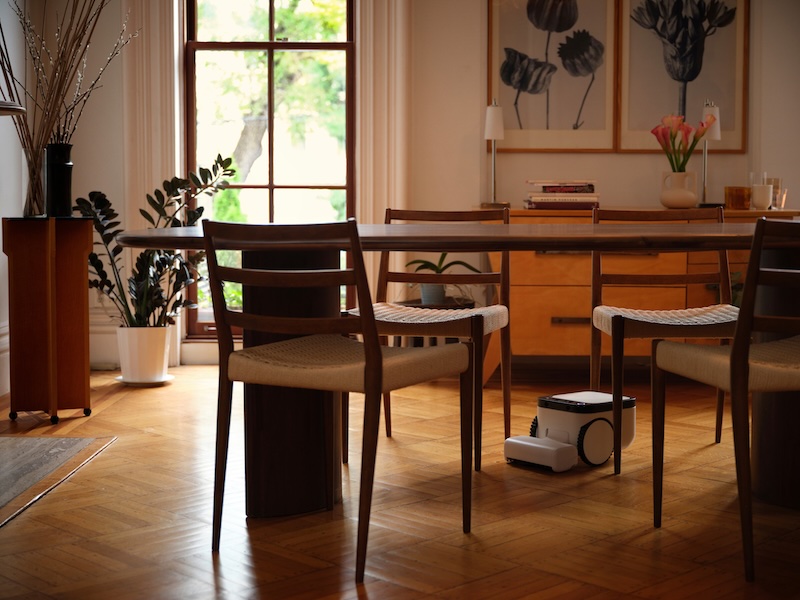
The wheels of Matic’s recent $60 million raise, says cofounder and president, Mehul Nariyawala, were already in motion before iRobot’s recent industry-altering news. Even among the hottest tech startups, eight figure raises aren’t exactly an overnight affair. Mutual vetting needs to happen on both sides of the balance sheet, goals set, timelines established, and roadmaps sketched out.
In the case of the hardware startup, a boxy little robot vacuum has to find its way to Silicon Valley floors of those tasked with signing the checks.
“Someone at Sutter Hill Ventures got the robot, and they had previously tried three generations of robot vacuums,” Nariyawala notes on a quick Friday afternoon call. “I believe Pete Schlampp — who is CEO of Luminary Cloud and Managing Director at Sutter Hill Ventures — was the first one to get hands on Matic, and he loved it. A few other folks on the team got a little bit of a love inside Sutter Hill Ventures. Just around that time I reached out and then stars aligned, I guess.”
The “three generations of robot vacuums” bit Nariyawala alludes to is a common refrain in the Matic story. It was the thing I kept going back to when we first met up at CES 2022, and it’s the thesis statement of every subsequent review of the company’s first-generation product. Robots have gotten pretty okay at vacuuming our homes after 20+ years, and we’ve seemingly been satisfied.
Roomba has enjoyed a nearly genericized level of brand recognition, akin to a Kleenex or ChapStick, even as it has ceded accessibility to companies selling products at a fraction of the cost. Matic, on the other hand, was looking down the barrel of an $1,800 price point pre-launch (to be fair, there were some discounts from day one, and you can currently nab the product for an admittedly still steep $1,245).
Matic’s pedigree has long worked in its favor. Nariyawala and cofounder, Navneet Dalal, both came over from Google, most recently serving as, respectively, lead product manager for Nest Cams and product scientist. Silicon Valley, however, is littered with examples of high-ranking employees from FAANG companies failing to hit the mark with well-funded startups. The Humane Pin jumps out as a recent high profile AI consumer hardware example.
The key difference here is that Matic sucked up plenty of converts in its path. The initial price tag continues to be a bitter pill, particularly in an age when the competition is pushing bells and whistles like stair-climbing wheels and sock-lifting arms. On occasion, however, you can find success simply building the best version of a thing out there. A cursory search of professional and customer reviews shows that most folks who have shared their home with Matic feel mostly the same way I do about the boxy little robot.
ROI Calculator

Discover the potential cost savings of robotic automation over a 20-year system life
This calculator compares your current manual labor costs against the total cost of owning and operating a robotic system over its 20-year lifespan.
To date, the product has attained sufficient word of mouth to drive 6,000 shipments. While future scaling will no doubt require exposing the system to more consumer through routes like advertising or brick and mortar, Nariyawala tells me the company will be occupied for some time simply fulfilling the current cadence of product orders.
“At the moment we're still focused on just doing the build-to-order model, building in-house direct, to consumer model,” he explains. “We expect that to be the cae for the rest of the year and then it's just a matter of changing our website and doing things in a way that allows [customers] to maybe even get a virtual demo, virtual tour, or virtually try it out.”
While Matic sources components internationally, the systems will continue to be assembled at the company’s California headquarters. “We get parts from all over the world,” Nariyawala explains. “I would love to source all of them from the United States, but that's not feasible at the moment. So we get parts and batteries and cameras from France, all over the place, and then we assemble and test and do everything in our in-house factory.
Some of the current funding round will go toward expanding the office’s footprint — and the manufacturing space along with it. Nariyawala says the company is looking to quadruple its footprint to around 100,000 square feet, around 50,000 to 70,000 of which will be devoted to hardware assembly.
The executive cites a few reasons for keeping assembly in house. First is privacy, and a bid to protect proprietary information. Second has to do with how the company works to continually upgrade hardware and software alike, a move he compares to the early Tesla model.
“What we've been able to do in this continuous upgrade cycle is make sure that as we learn what the robot is doing and what the issues are, we're continuously upgrading and solving the problems,” Nariyawala says. “Being able to assemble here allows us to be a little bit nimble and fast. Our goal is to keep doing it as much as possible.”
Third, U.S. consumers see value in purchasing AI hardware produced in the U.S. While iRobot’s recent bankruptcy journey isn’t exactly the end of the company, its change in ownership has raised concern for some privacy advocates. The Roomba maker’s uncertain future could present precisely the opportunity Matic has been looking for to establish itself in the premium robot vacuum market.
Matic is firmly focused on growing its presence in that space, which much of its current R&D funding going toward improving how the efficacy of the current product. One big focus is improvements to the robot’s semantic understanding — its ability to interpret meaning from human speech. When you tell a future version of the robot to “clean up the mess near the chair,” (using microphones that are already built into the hardware) for instance, it will execute the task not simply because someone programmed that specific line of code somewhere in the development process.
Association for Advancing Automation
Discover how Association for Advancing Automation can support your automation journey with their complete range of solutions and expertise.
Visit Company Website


SITON® range: The non marking, high temperature resistant suction pads
In addition to its non marking capacity, the new range of suction pads in SITON® offer excellent resistance to abrasion.