
Tech Papers
Collaborative Robot Safety White Paper
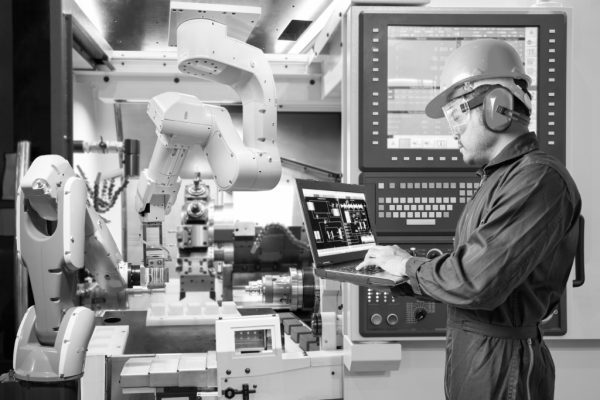 Safety and efficiency—there are no greater reasons to invest in collaborative robots (cobots). Manufacturers deploy lines of these smart robots because they are safer to work with and can increase efficiency when working side by side with human counterparts on repetitive tasks.
Robot Safety is Vital in the Workplace
While collaborative robots are equipped with numerous safety features, accidents and user errors can still happen during production. When accidents occur, they result in lost time for injured employees, temporary halts in production, medical costs for injuries and repair costs for machines, among other negative effects. That’s why it’s vital for businesses that employ cobots to know the industry standards and best practices for cobot safety, particularly when it comes to project stages and collaborative workspaces and operations.
This white paper will help you understand the safety standards and features of cobots and offer guidance for successfully deploying them, increasing safety and maximizing efficiency in your application.
Learn About:
- Robot Safety Standards
- Collaborative Robot Safety Features
- Hand-Guided Teaching Options
- Best Practices for Designing a Collaborative Space
- Ways to Analyze Collaborative Operations
- And more!
Download the White Paper Today!

Motion Ai
Motion Ai is a one-stop-shop for custom automation and motion control solutions and products (machine and motion control, pneumatics, robotics, machine vision, digital networking/IIoT, industrial framing, and mechatronics. We bring personalized, regional service to OEMs, integrators, and in-house end-users.
Discover how Motion Ai can support your automation journey with their complete range of solutions and expertise.
Visit Company Website


Motion Ai is a one-stop-shop for custom automation and motion control solutions and products (machine and motion control, pneumatics, robotics, machine vision, digital networking/IIoT, industrial framing, and mechatronics. We bring personalized, regional service to OEMs, integrators, and in-house end-users.
The Importance of Human Brainpower in Hipshot's Robotic Polishing Application
Hipshot, a manufacturer of top-notch quality hardware for guitar and basses, faced ongoing labor and production challenges in their deburring
ACS Partners with FANUC to Deliver Fully Integrated Facility and Robotics Solutions
ACS earns FANUC Systems Integrator status, expanding its ability to deliver fully integrated robotics solutions from design to commissioning.
Winchester Announces New Facility in Mexico
Winchester Interconnect, a leading interconnect solutions provider, is excited to announce the opening of its new facility in Empalme, Mexico.