
Industry Insights
Snake Robots Aid in Venezuelan Earthquake Search Efforts
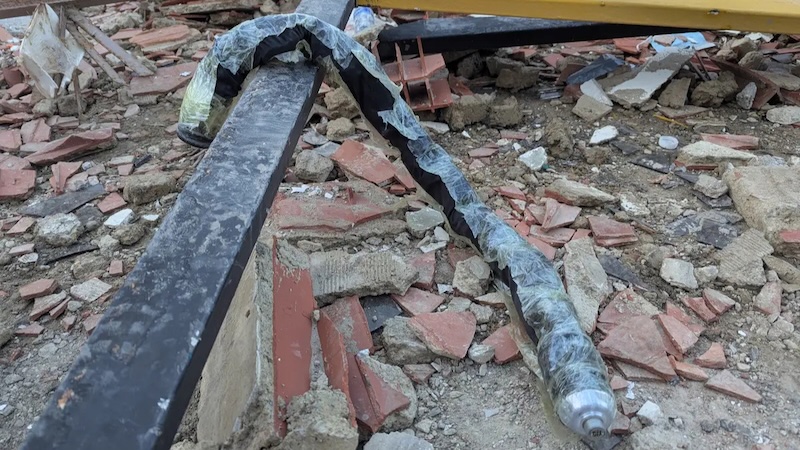
In June, two 7+ magnitude earthquakes struck the northern part of Venezuela, resulting in more than 5,000 fatalities, 16,000 injuries, and around 18,000 survivors left without homes. As of this writing, around 6,500 people have been rescued from the wreckage.
To help with this rescue effort, a team from Carnegie Mellon University (CMU) teamed with the Venezuelan and Colombian Red Cross, Mexico's Topos search and rescue team, and other volunteers to explore collapsed buildings in La Guaira, a coastal city just north of Caracas. The teams deployed snake robots for the dangerous task.
“We traveled to Venezuela at the invitation of the Venezuelan Red Cross to support search-and-rescue operations following the earthquakes,” says Howie Choset, Kavcic-Moura Professor of Computer Science, Robotics Institute, Carnegie Mellon University. “We believed our snake robots could reach spaces inside collapsed buildings that were inaccessible or too dangerous for human rescuers”.
This is not the first time that the team has undertaken philanthropic missions, having teamed with the Mexican Red Cross a decade prior. The lab has also worked with search-and-rescue professionals for many years, including members of the Topos, or “Moles,” whose organization grew out of the response to the 1985 Mexico City earthquake.
“That previous interaction helped us understand that deploying a robot in a disaster is very different from demonstrating one in a laboratory. Transportation, power, communications, repairs, coordination with first responders, and the social realities of working near victims’ families are all as important as the robot itself,” Choset told A3.
For this deployment to Venezuela, the team had to act very quickly. “Within approximately 36 hours, our team was on stage performing with Third Eye Blind, finished, and then assembled the robots, cameras, protective equipment, tools, and replacement components and traveled to the affected region,” says Choset “We went because the technology was potentially useful, but also because we believed it was important to show up and serve when people were facing an extraordinary tragedy”.
Snake Robot Searches Through the Wreckage
The CMU team brought multiple robotic and camera systems to Venezuela, but a search operation typically only involved one ‘snake robot’ at a time, which traversed the tricky environments and searched for survivors in targeted rescue missions. “The robots were not used to survey an entire city block autonomously,” confirms Choset. “They were used for targeted searches identified by first responders, families, structural information, or other indications that someone might be inside a particular part of a building”.
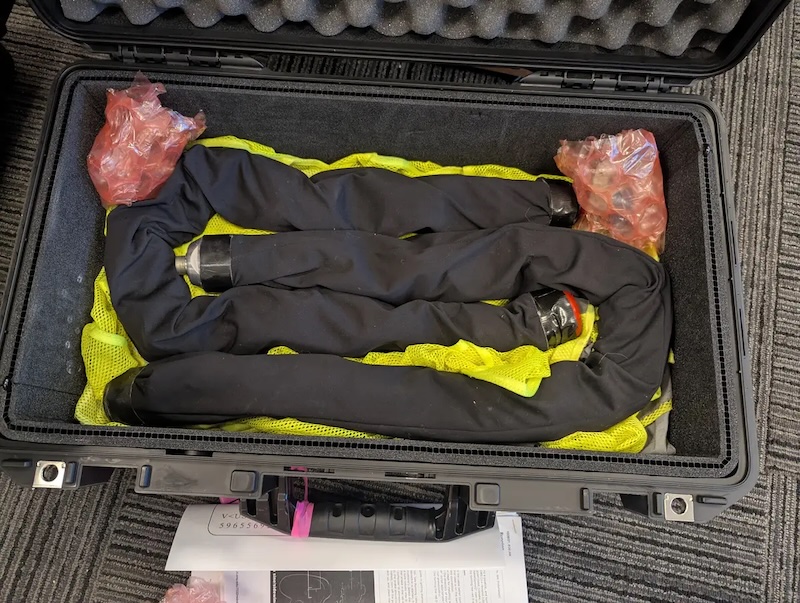
The snake robot deployed by the CMU team in Venezuela consisted of a series of compact, motorized modules connected by articulated joints. “By coordinating the motion of those joints, the robot can change its shape, propel itself through rubble, climb over obstacles, move around corners, and enter narrow openings” Choset told A3.
The robot also has a rugged camera that returns images from the front of the snake to rescue workers, keeping rescue workers out of harm’s way and allowing them to find victims quickly. Because the snake robots have a lot of internal degrees of freedom, they can navigate through the tightly packed spaces of the rubble and access locations that were difficult for humans and machinery to access.
“The robot has a rugged mechanical structure designed to withstand contact with concrete, metal, dirt, and other debris. During this deployment, its most important sensor was a camera mounted at the front of the robot, together with lighting that allowed rescuers to see inside dark voids. The live video was transmitted to the operators and rescue personnel outside the structure” Choset explained.
During search-and-rescue operations, the snake robot was primarily teleoperated. A trained operator watched the video and commanded the robot’s body movements while working closely with rescuers who understood the building and the likely locations of victims. “The robot did not independently decide where survivors were located. Instead, it extended the rescuers’ eyes into spaces they could not otherwise inspect,” explains Choset.
The researchers have said that the robot system can support extra sensing and can be operated with greater autonomy than was on display during this mission. However, Choset told A3 that for this mission, simplicity and reliability were essential, and the immediate objective was to place a camera as deeply and safely as possible into collapsed structures.
When asked about why the snake robot is advantageous over other robot morphologies, the professor told A3, “the principal advantage is access. Conventional wheeled and tracked robots generally require a relatively flat and continuous surface and enough room to turn. A snake robot has a narrow cross-section and many joints, allowing it to conform to irregular terrain and move through small openings, around reinforcing bars, across broken concrete, and through winding voids.
"Its long, articulated body also allows part of the robot to remain supported while the front explores deeper into a structure. It can distribute contact along its body rather than relying on only a few wheels or tracks. This makes it especially useful in environments where the geometry is unknown, confined, and highly irregular”.
On the Ground Operations in Venezuela
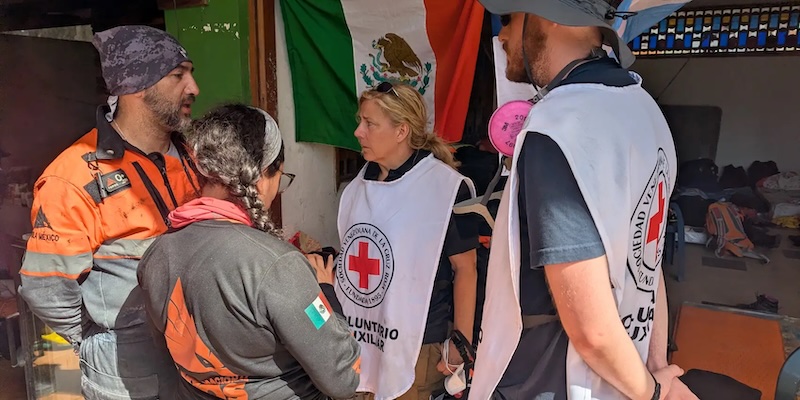
One robot was deployed at a time to extend the rescuer’s vision into a confined and dangerous space. A single robotic insertion could examine a sequence of connected voids inside a rubble pile or collapsed building. According to Choset, “the precise distance depended heavily on the opening, the amount of rebar and debris, communication conditions, and whether the robot could maintain traction and avoid becoming trapped”.
The approach on the ground therefore took the form of rescuers identifying a location of interest, the robotics team deploying the robot, and everyone observing the video together while deciding where to look next. During their time on the ground in Venezuela (June 30 to July 3), the team helped to search several sites.
CMU’s time on the ground in Venezuela wasn’t straightforward though, and the mission was fraught with various issues ranging from changing conditions, equipment failures, logistical challenges, and language barriers. Robot repairs had to be performed while searching in collapsed buildings and efficient power generation planning had to be implemented to keep the robotic systems functioning in the field.
The robotic investigations into the locations of interest in the rubble didn’t locate any survivors. However, the team considered the job a success, as first responders had a clearer picture of different areas and knew that potential survivors were not located in these areas. This allowed the search-and-rescue teams to reassure relatives who thought they may have trapped family members under the rubble, and allowed the search-and-rescue teams to focus their attention on other areas.
The Path Forward
The snake isn't expected to replace existing tools like rescue dogs, cameras on poles, listening devices, drones, or human rescuers. Instead, the researchers believe that these snake robots can be used to augment existing methods for tricky search environments. It’s expected that the snake robots could be best utilized when rescuers need to see beyond the reach of conventional cameras without widening an opening or sending a person into an unstable structure.
While earthquake response is an important use case of the snake robot, Choset told A3 that, “the underlying problem being solved is broader as the robot can reach confined, unstable, contaminated, or otherwise dangerous environments without exposing a person to unnecessary risk”.
Other use cases include collapsed buildings following hurricanes, tornadoes, landslides, explosions, fires, industrial accidents, transportation accidents, mining incidents, and attacks on infrastructure. “Related versions of the technology could also inspect damaged tunnels, bridges, pipes, aircraft, ships, power plants, and hazardous industrial facilities,” says Choset.
The researchers have stated that there is still a lot of learning to do and the field tests in Venezuela poses new questions and avenues of research exploration. Choset and the team have documented what they learned so that future deployments can be faster, safer, and better integrated with established search-and-rescue operations. “The deployment also showed us that future work cannot focus only on improving the robot,” states Choset. "We need systems that can be transported quickly, repaired in the field, operated with limited power and communications, and transferred effectively to trained first responders”.
Choset concluded our interview by noting that the team's “long-term goal is not to replace first responders. It is to give them a capable and reliable tool that allows them to search places they cannot safely reach and to make better-informed decisions during the most critical stages of a rescue”.
Association for Advancing Automation
Discover how Association for Advancing Automation can support your automation journey with their complete range of solutions and expertise.
Visit Company Website


Researchers Say AI-Enabled Robots Need New Safety Frameworks
CMU and Oxford researchers believe robots need guardrails to avoid harm.
CMU’s Dean of Computer Science on the School’s Massive New Robotics Center
The school launches 150,000 square foot research facility.