
Industry Insights
Apptronik Opens 90,000 sq ft Testing Site for New Apollo 2 Humanoid
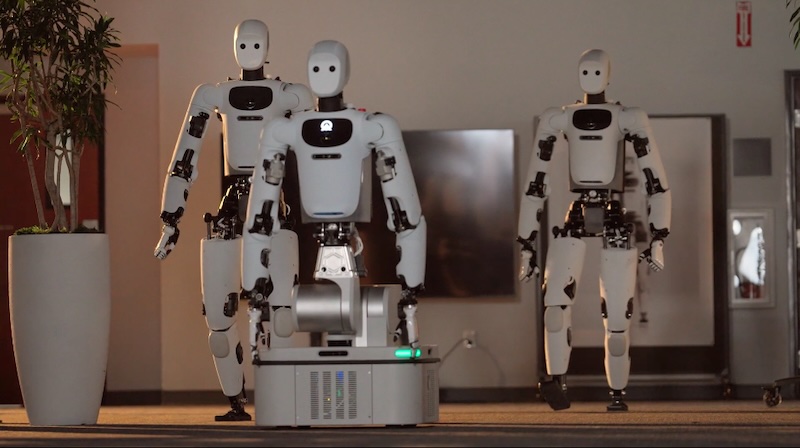
In February, Apptronik announced a $520 million Series A extension, bringing the full round to nearly $1 billion. The massive funding news arrived just as the humanoid maker had leased around 60,000 square feet of additional space across the street from its Austin, Texas headquarters.
In a call this week, CEO Jeff Cardenas confirmed that the size has ballooned to roughly 90,000 square feet the company has christened “Robot Park.” The space is being devoted to an increasingly prominent trend in the world of physical AI and general-purpose robotics.
It’s a kind of brute force approach to model training, aiming at a flywheel many proponents believe can only be sufficiently kickstarted through real-world data collection. The space, which Cardenas says formerly served as a Dell server plant, replaces a far smaller area of Apptronik’s offices that was used for model training.
Robot Park already functions as the home to Apollo 2, the latest version of the company’s humanoid robot. In our discussion, Cardenas referred to the system as a “prototype” and “data collection platform,” much like its eponymous predecessor. The labels are meant to distinguish the robot from a production system designed for commercial deployment, rather than an attempt to downplay the advances the system presents.
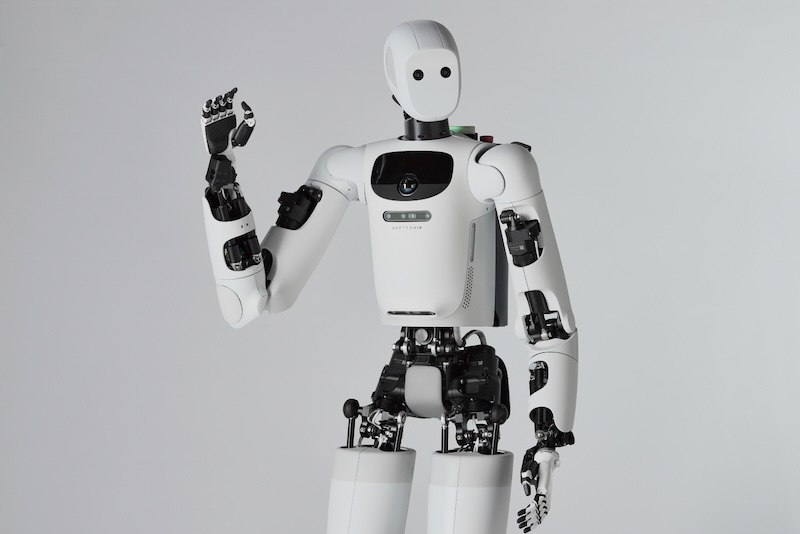
“It's a significant upgrade over Apollo 1,” says Cardenas. “A next generation of actuation is in Apollo 2. It has a bigger battery, better at achieving that four-hour runtime, depending on what it's doing. The battery was safety rated this time so that we could get out to customer sites. New sensors on the robot, so new camera placement for data collection. We've tested out a variety of different end effectors and hands on Apollo 2 overall.”
ROI Calculator

Discover the potential cost savings of robotic automation over a 20-year system life
This calculator compares your current manual labor costs against the total cost of owning and operating a robotic system over its 20-year lifespan.
Like the first version, Apollo 2 is modular, which is available as both a wheeled and legged version, depending on customer preference. The former, which also sports an expanding z-axis, is capable of reaching up to seven feet.
Cardenas teased the system in a conversation with Automated back in February, noting that Apptronik had already been testing the system for around a year at that point.
“We really wanted to show off the capabilities of Apollo 2 as much as we could when we launched it,” Cardenas told me this week. “I don't know that I would wait 18 months again to show off a robot because I got a lot of people that wanted to see it. But yeah, we've had it since February of 2025, and now we have Apollo 2s all over the world today performing real work and doing data collection.”
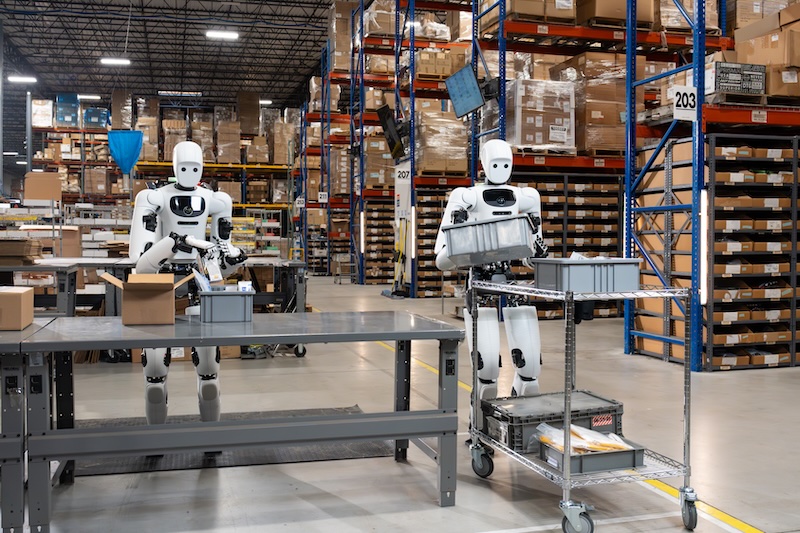
According to Cardenas, Apptronik’s close collaboration with Google DeepMind influenced many of Apollo 2’s refinements. The company notes in a release this week,
As part of Apptronik’s research partnership with Google DeepMind, the high-quality data collected by Apollo 2 helps to advance Gemini Robotics - Google DeepMind’s foundational AI models for robotics. Together, Robot Park, Apollo 2, and the research partnership with Google DeepMind form an integrated system for rapidly developing and deploying humanoid robot intelligence. With operational fleets of Apollo 2 robots already active across Robot Park and at key customer and partner sites worldwide, Apptronik is accelerating the path to scalable, real-world humanoid robot deployment.
Apollo 2’s data collection will primarily revolve around industrial and manufacturing applications in Robot Park, as Apptronik continues to work with customers like Mercedes and GXO. Though Cardenas notes that the company “can we turn over use cases very quickly,” adding “it’s quite the operation.”
Association for Advancing Automation
Discover how Association for Advancing Automation can support your automation journey with their complete range of solutions and expertise.
Visit Company Website


Google DeepMind Debuts Gemini Robotics On-Device Visual Language Model
Gemini Robotics On-Device is more or less what it says on the tin. The new visual language model (VLM)

Conference on Collaborative Robots, Advanced Vision and Artificial Intelligence Comes to San Jose November 12-13
Keynotes from Google, Intel Sports, Sarcos Robotics and UC San Diego, and 36 Breakout Sessions, to Explore Trends and Innovations
This Year’s Model: Apptronik's Next Apollo is (Nearly) Ready for Its Closeup
Fresh off a nearly $1 billion Series A, the humanoid startup is ready to show off its next big thing.