
News
Revolutionizing Patient Care: How Automation is Transforming Healthcare Workflows
Hospitals and clinics today are grappling with an ever-growing patient load and constantly-scarce resources to meet their needs; and automation is a great solution for dealing with the issues.
Automation in the Healthcare system

Automation in the context of the healthcare system can be described as employment of software and hardware to mechanized work that would otherwise be done manually.
This can range from handling records of patients to even helping in surgery operations of the hospital or center.
With the help of automation, healthcare providers can attend to the patients more, plus, reduce the number of trips they undertake to deal with paperwork, hence increasing their productivity.
For instance, Microsoft’s Dragon Ambient experience (DAX) Express synthesizes several AI capabilities to minimize the intellectual burden experienced by clinicians.
This tool integrates seamlessly into the physician's workflow, allowing them to capture patient interactions more effectively, which contributes to reduced burnout among clinicians and improved care delivery.
Improving on Administrative Procedures

Another efficiency by the help of which automation leaves a rather strong impression is the complex of works popular among which the organizational and administrative ones are obtained.
Some of the benefits attributed to the use of C.E.H in the management of H.C organizations include; Introduced technologies such as scheduling, appointment reminders and billing greatly cut out time for healthcare providers and minimize probabilities of human mistakes. https://c8health.com/a/blog/automated-workflows-transforming-clinical-best-practices
Automation tools like C8 Health improve workflow efficiency by ensuring that critical tasks are organized and completed systematically.
source:https://c8health.com/a/blog/automated-workflows-transforming-clinical-best-practices
In numerous healthcare practices, they use automatic systems for organizing EHR, reminding both patients and clinicians about results, and scheduling.
This has helped in the minimization of time for convergent tasks and also frees up more time for the health care providers to address higher value, patient centered activities. Moreover, AI chatbots and virtual assistants are increasingly being deployed to handle patient inquiries, freeing up staff time and improving patient satisfaction.
https://c8health.com/a/blog/automated-workflows-transforming-clinical-best-practices
Improving Patient Care
Healthcare automation supports clinical decision-making since it can evaluate large datasets in a shorter duration.
Concerning clinical decision-making, automated systems can help in making decisions regarding specific diseases, even treatment and prognosis, depending on past evidence.
For example, in cardiology, AI-enabled diagnostics work with data like ECG tracings, imaging, and lab results to make faster and more accurate diagnosis of disorders, including heart rhythm disorders.
Further, decision support tools based on AI represent subtle notifications to the care providers regarding the best practice to be followed, without overwhelming them with too many notifications.
These systems help guide providers in offering the most up-to-date and evidence-based care.
Robotics and Surgical Automation.

The surgical process is not being left behind and has recorded CAS robotic systems as revolutionary tools.
Robotic surgeries are becoming popular due to increased precision of movement that is difficult for the human hand and eye coordination hence less complications and quick recovery.
These automated systems allow for minimally invasive procedures, which are less traumatic for patients and often result in shorter hospital stays.
https://c8health.com/a/blog/automated-workflows-transforming-clinical-best-practices
Certified Motion Control Professional Program
Strengthen Your Skills and Enhance Your Career
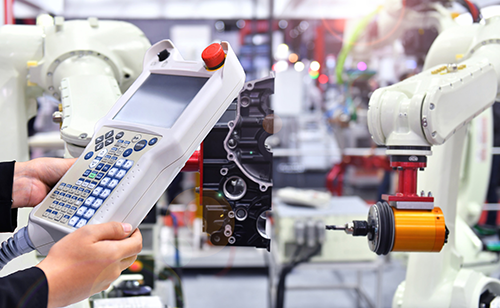
Become a Certified Motion Control Professional (CMCP) and join the elite group of system integrators, machine builders, manufacturers, end-users and others recognized in the industry for their professional knowledge and expertise.
The robotic surgical instruments connect to data acquired from a range of diagnostic examinations; this gives surgeons precise information about their patients as they make surgery decisions.
This has the advantage of lowering the risk of complications and thus improves the standard of health care.
Overcoming Challenges in Automation

Although automation remains one of the opportunities, the use of automation in the healthcare industry has its issues.
Among those are costs which can be considered to be one of the most important challenges to sustainability of green roofs in the City.
Automation of these processes is not cheap, especially for small medical centers. However, the long-term cost savings, especially in terms of improved patient outcomes and operational efficiency, often outweigh the initial investment.
The next problem is an information overload, confirmed by the fact that people use it either as a tool for searching for the required information or for browsing through manifold different sources at the same time.
Yet, with a steady stream of new drugs, treatments, and protocols pouring in, there is a great deal of information for the healthcare personnel to go through.
Any automation has to leave filtering and prioritizing of important pieces of information to feed clinicians in order to avoid a flood in the process.
Another is about the relevance and applicability of automation systems, as a whole, to the operational needs of clinicians.
Sometimes, practitioners who design such systems do not work directly with clinicians, which results in tools that act more as obstacles than useful instruments.
Automation in Patient Care
It is also important to note that automation is not a tool exclusive to the healthcare provider; automation is directly comprehensive to the patient.
Through timely categorization and diagnosis, organization and prioritization of work, the automated systems lead to short waiting times.
Moreover, with the help of AI, chatbots offer patients quick answers to their questions and prioritization, so that patients can receive advice on potentially life-threatening cases in the shortest time possible.
For instance, the hospitals that incorporate the automated system for the work flow may be in the position to set the follow up appointments and monitor the progress of the patients, as well as in issuing the follow up reminders that assist to enhance the compliance to the treatment regimens and the general health of the patients.
The Future of Automation in Healthcare.

The role of automation technology that brings the major changes to healthcare is incredible.
Next gen AI integration into broader clinical contexts holds out further evolution that will include continuous and predictive patient tracking among others.
A coordinated stratagem should be employed by the health care managers while adopting automation.
Involving clinicians and other stakeholders throughout the development and implementation process ensures that the systems meet their needs and improve their workflows.
This healthcare automation is not just a novelty — it is the organic development of the sphere in which the existing focus on improving patient outcomes and increasing patient inflows cannot be achieved solely, through the growing application of technologies to enhance the amount and productivity of administrative work performed.
With more efficient workflows, decreased potential for errors, and the ability to deliver positive patient results.
Automation is on schedule to become an invaluable component of current healthcare organizations.
Conclusion
Automation has implications for clinical practice in that it impacts both routine clinical tasks and personalized patient care.
From imagine and prescription to writing appointments and paperwork, from robotic systems in surgery studios to nurses’ helpers in clinics, there is enhanced efficiency and accuracy in health care through automation.
These systems assist in minimizing errors, enhancing decisions, alleviating time for more important patient related chores for the health care givers.
In-spite of many shortcomings like the high implementation costs, use of automation brings fruitful outcomes in patient care, practice productivity and many more features that contribute mostly to the positive influence of automation in health care.
It is clear that application of technology and automation in health care will only open new possibilities for the healthcare system, new options for making the whole process more efficient and providing a higher quality of healthcare services.

Asamaka Industries Ltd
Asamaka Industries Ltd specializes in providing comprehensive control automation solutions across multiple industries including automotive, power generation, and distribution. From electrical design to implementation of advanced technologies like robotics and vision systems, we cater to the unique needs of each sector, ensuring safety, quality, and efficiency in every project.
Discover how Asamaka Industries Ltd can support your automation journey with their complete range of solutions and expertise.
Visit Company Website


Asamaka Industries Ltd specializes in providing comprehensive control automation solutions across multiple industries including automotive, power generation, and distribution. From electrical design to implementation of advanced technologies like robotics and vision systems, we cater to the unique needs of each sector, ensuring safety, quality, and efficiency in every project.