
What Is the Industrial Internet of Things (IIoT)?
The Industrial Internet of Things (IIoT) is a network of connected sensors, devices, machines, and systems used in industrial environments. Unlike consumer IoT, which focuses on convenience, IIoT prioritizes reliability, real-time performance, security, and integration with automation systems.
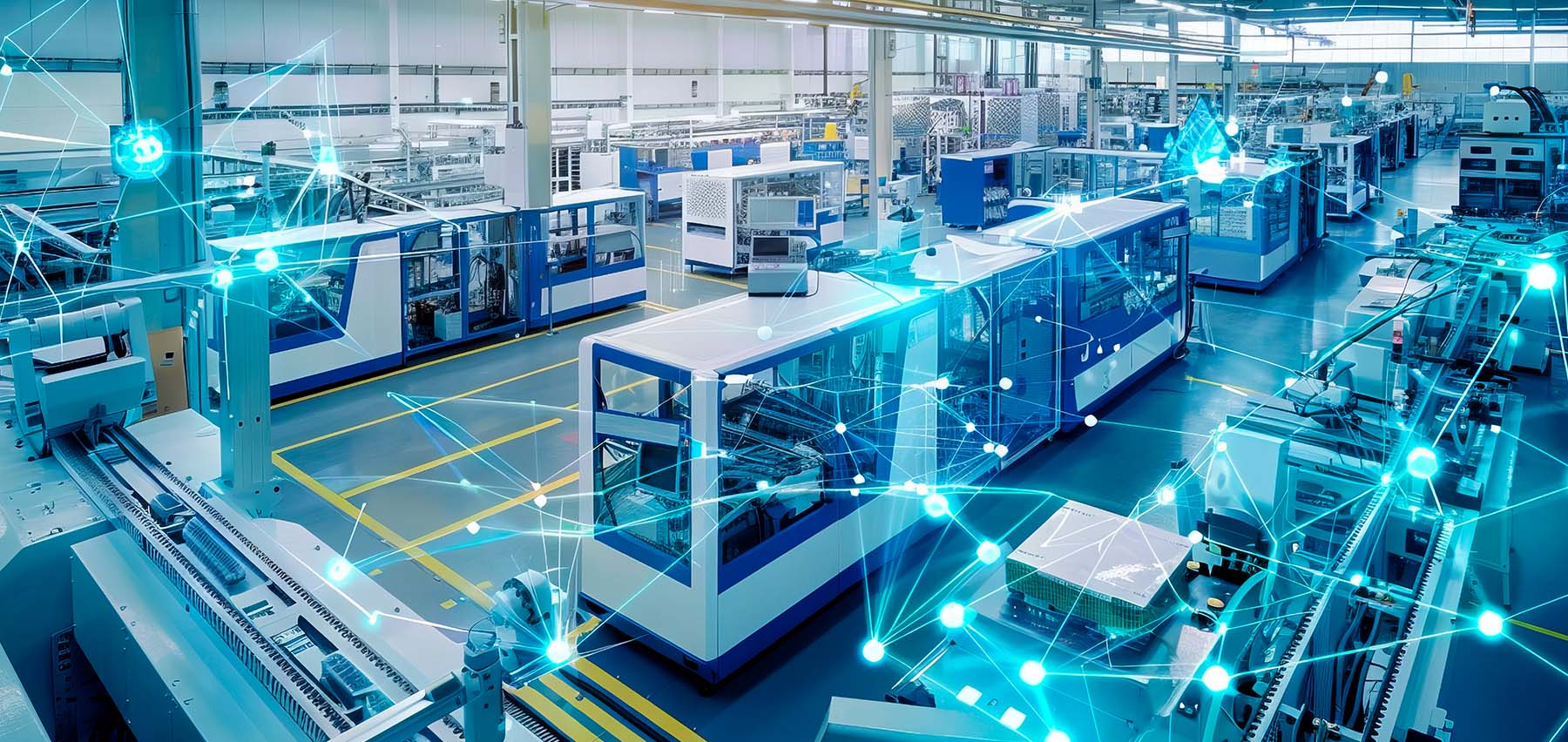
IIoT connects isolated equipment and systems, enabling data to flow from factory floor sensors to enterprise systems and cloud analytics. Modern facilities may have thousands of IIoT devices, such as temperature sensors for equipment health, vibration sensors for bearing wear, cameras for quality inspection, and RFID readers for tracking work-in-process. Organizations use IIoT to reduce downtime, improve quality, and increase productivity through data-driven optimization.
What Protocols Does IIoT Use for Industrial Communication?
Industrial IoT relies on a range of communication protocols to enable seamless control and data exchange. In manufacturing environments, protocols like EtherNet/IP, PROFINET, and EtherCAT facilitate real-time control over machinery and processes. Wireless technologies such as WirelessHART and 5G connect sensors and mobile equipment, ensuring flexibility and responsiveness. Meanwhile, protocols like MQTT and OPC UA serve as the bridge between devices and cloud systems, managing data exchange smoothly and efficiently.
Industrial Ethernet and Wireless Protocols
Industrial Ethernet protocols provide real-time communication for control applications:
- EtherNet/IP: Common in North American manufacturing, uses standard Ethernet hardware for real-time I/O control with update rates reaching 1 millisecond
- PROFINET: Widely deployed in European manufacturing, provides real-time communication with cycle times under 1 millisecond
- EtherCAT: Excels in high-performance motion control, achieving update rates under 100 microseconds across hundreds of devices
- Modbus TCP/IP: Simple, widely supported protocol for monitoring and supervisory applications
Wireless connectivity plays a crucial role in supporting IIoT devices, especially in environments where cabling is impractical. For reliable communication in process measurement, WirelessHART uses self-healing mesh networks to ensure robustness. Private 5G networks enhance mobile equipment such as AGVs and robots by offering low latency and high bandwidth, enabling seamless operation. Meanwhile, Wi-Fi 6 connects portable devices and extends coverage to areas without wired connections, making connectivity more flexible and storytelling more natural.
Data Exchange Protocols
MQTT (Message Queuing Telemetry Transport) is a lightweight publish-subscribe protocol ideal for transmitting sensor data to cloud platforms. Its low overhead suits constrained devices with limited processing power.
OPC UA (Open Platform Communications Unified Architecture) enables secure, reliable data exchange between automation devices, controllers, and enterprise systems. It provides rich information modeling, built-in security, and platform independence, becoming the de facto standard for industrial data exchange.
Protocol selection depends on application requirements: real-time control uses industrial Ethernet (EtherCAT, PROFINET, EtherNet/IP), sensor monitoring uses MQTT over Wi-Fi or cellular, system integration uses OPC UA, and mobile equipment uses 5G or industrial Wi-Fi.
How Does IIoT Enable Predictive Maintenance and Real-Time Monitoring?
The Industrial Internet of Things (IIoT) enhances predictive maintenance by gathering sensor data from equipment. This data is analyzed to identify trends that can help anticipate failures, allowing maintenance to be performed based on actual conditions rather than fixed schedules. Additionally, real-time monitoring provides immediate insights into equipment status and production metrics, enabling swift responses to anomalies.
Continuous Data Collection and Analysis
IIoT sensors continuously monitor equipment health:
- Vibration monitoring: Accelerometers on motors, pumps, and rotating equipment detect bearing wear, imbalance, or misalignment
- Temperature monitoring: Thermal sensors detect cooling problems, lubrication degradation, or electrical issues
- Current monitoring: Electrical signatures reveal motor loading, efficiency, and mechanical problems
- Process parameters: Pressure, flow, and level sensors indicate equipment performance degradation
Sensor data flows through several stages. First, edge devices and gateways handle initial processing, extracting features from raw data and triggering local alerts when critical conditions are detected. This information is then sent to cloud platforms, where historical data is aggregated. Here, machine learning algorithms analyze the patterns of normal equipment behavior to develop predictive models. By examining data across multiple facilities, we can uncover patterns that wouldn't be visible when looking at a single machine.
Predictive Algorithms
Multiple approaches identify developing problems:
- Threshold alerts: Trigger when measurements exceed predefined limits (temperature above 80°C, vibration above safe levels)
- Trend analysis: Track parameter changes over time detecting gradual degradation. Bearing vibration increasing 5% per month indicates developing wear that will require attention in 3-6 months before failure.
- Anomaly detection: Machine learning algorithms trained on normal operation identify deviations indicating problems
- Failure prediction models: Predict remaining useful life or failure probability based on patterns learned from historical failure data
Real-Time Monitoring Techniques
Real-time dashboards display equipment status, process parameters, and production metrics accessible from control rooms, offices, or mobile devices. Automated alerts notify responsible personnel of anomalies and threshold violations immediately. Historical data storage enables retrospective analysis when quality issues arise, helping engineers identify correlations between process conditions and defects.
How Does IIoT Integrate With Existing Automation Systems?
IIoT integrates with existing automation systems through several key components. These include industrial gateways that translate between IIoT and legacy protocols. OPC UA servers provide standardized access to automation data. Edge computing platforms aggregate data from multiple systems before transmitting it to the cloud. Additionally, retrofit sensors add IIoT capabilities to legacy equipment without requiring the replacement of functional automation hardware.
IIoT vs Traditional SCADA: Feature Comparison
IIoT differs from traditional SCADA systems in several key ways:
| Feature | Industrial Internet of Things (IIoT) | Traditional SCADA |
|---|---|---|
| Architecture | Distributed, cloud-connected devices and edge processing | Centralized control with dedicated SCADA servers |
| Connectivity | Internet-based, wireless options, multiple protocols | Dedicated networks, wired connections, proprietary protocols |
| Scalability | Highly scalable, thousands of devices easily added | Limited scalability, infrastructure capacity constraints |
| Analytics | Edge and cloud-based, machine learning capabilities | On-premises SCADA servers, limited analytics |
| Data Storage | Cloud-based, unlimited historical data | Local servers, limited historical storage |
| Initial Cost | Lower per-device, infrastructure leverages cloud | Higher, dedicated SCADA infrastructure investment |
| Real-Time Control | Edge-based for critical functions | Strong deterministic performance |
| Best For | Large-scale monitoring, predictive analytics, distributed facilities | Mission-critical control, legacy system integration, proven reliability |
Industrial Gateway Solutions
Gateways bridge between IIoT and existing automation networks by converting between industrial protocols (Modbus, PROFIBUS) and IIoT protocols (MQTT, OPC UA, HTTP). A gateway might read data from Modbus devices via serial connections and publish to cloud platforms via MQTT, enabling legacy equipment to participate in IIoT without replacement.
Gateways collect data from multiple automation devices, aggregate into efficient formats, and buffer data during network outages, ensuring no data loss. Modern gateways include computing capabilities for local analytics, filtering raw data, triggering local alarms, and reducing cloud bandwidth. They also implement security boundaries, performing firewall functions, data encryption, and authentication.
OPC UA for Unified Access
OPC UA provides standardized automation data access. Automation equipment from different vendors (PLCs, drives, sensors, robots) expose data through OPC UA servers, enabling IIoT applications to access diverse equipment using a single protocol. This simplifies integration when facilities include mixed-vendor automation.
OPC UA represents not just raw data but relationships, structures, and metadata, enabling intelligent analysis beyond simple data collection. Built-in authentication, authorization, encryption, and integrity verification address security concerns when connecting automation systems to IIoT platforms.
Edge Computing Platforms
Edge platforms process IIoT data locally before sending it to the cloud. Edge servers perform analytics, dashboarding, and local control using data from connected devices, enabling a real-time response impossible if all processing occurred in distant cloud data centers. Edge platforms aggregate and summarize data before cloud transmission, reducing bandwidth costs.
Retrofit Solutions
Retrofit approaches add IIoT capabilities to legacy equipment without replacement. Common solutions include wireless sensors (vibration, temperature, current) that attach to existing equipment without modifying control systems, vision and acoustic sensors adding perception capabilities to legacy machines, and non-invasive current transformers measuring energy consumption without electrical modifications. These retrofit approaches enable phased IIoT implementation, starting with monitoring and analytics while retaining functional legacy automation.
Conclusion
The Industrial Internet of Things is transforming manufacturing by connecting isolated equipment into comprehensive, data-driven systems. IIoT enables predictive maintenance, real-time monitoring, and process optimization. It uses a range of communication protocols, from deterministic industrial Ethernet for control to flexible wireless and cloud protocols for monitoring, supporting applications from high-precision motion control to equipment health monitoring.
Realizing IIoT benefits requires addressing security challenges, including expanded attack surfaces, OT/IT convergence risks, legacy equipment limitations, and balancing security controls against operational requirements. Integration with existing automation happens through gateways, bridging protocols, OPC UA providing standardized data access, edge computing enabling local processing, and retrofit sensors adding IIoT capabilities without replacing functional equipment. Understanding IIoT protocols, predictive maintenance capabilities, security considerations, and integration approaches enables organizations to evaluate this technology for improving manufacturing efficiency, safety, and operational flexibility.
Recommended Resources
Explore more AI insights and industry developments
Industrial Internet of Things (IIoT) - What To Do With Big Data
The Industrial Internet of Things (IIoT) refers to the merger of online capabilities with hardware that allows novel approaches to capturing data: For example, embedded sensors, actuators, and controllers. These make it possible to gather data during manufacturing operations.
Next-Generation Motion Control: Integrating IIoT and Real-Time Data Analytics
Motion control is undergoing a massive transformation as manufacturers adapt to Industry 4.0. Modern motion systems are no longer just executing moves; they are now expected to self-monitor, respond in real time, and contribute to overall operational intelligence. The fusion of...
Advantech Launches WebAccess + IoT Solution Alliance Program
(Cincinnati, OH) - Advantech is pleased to announce the launch of its WebAccess + IoT Solution Alliance program. This program is based on Advantech's popular IoT software suite called WebAccess, The program is a market-oriented cooperation model aimed at building win-win...