
Editorials
Robotic Insight in Automotive Industry Optimization
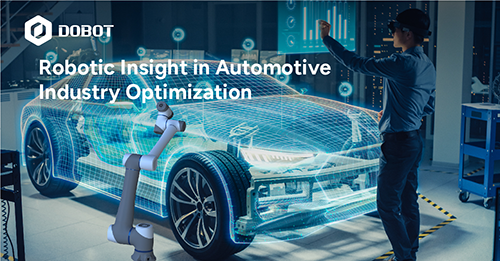
Automotive manufacturing is a popular industry for robotic use. Car plants deploy industrial robots for rich application sets, including welding, assembly, painting, and others, inside and outside a car plant.
The Global Scope of Robotic Sales in Automotive Industry 2019-2022
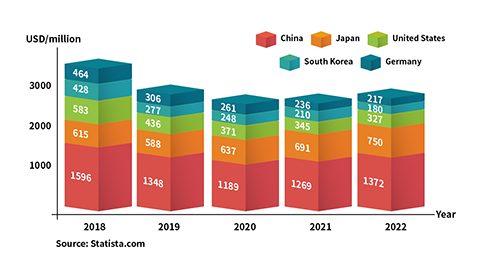
According to the recent data by Statista, the sales number of robot installations is growing. China, Japan, and the U.S. are the leaders in automotive industry development across the years 2018-2021. In 2021, China's sales value of robots for the automotive industry was 1269 million U.S. dollars, Japan’s 691 million U.S. dollars, and US 345 million U.S. dollars, respectively.
What is the reason for the extensive automation in car manufacturing?
Benefits of Cobots in Automotive Manufacturing
-
raise performance & eliminate automotive challenges
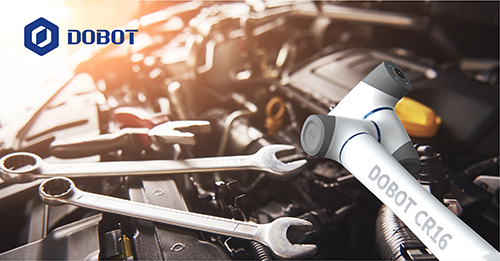
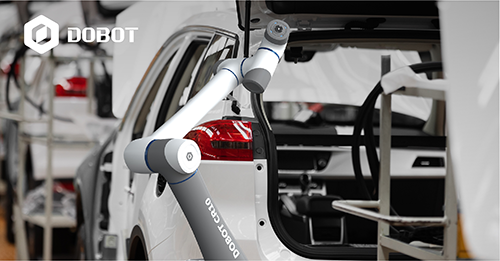
Dobot robotic arms eliminate automotive challenges
First, industrial robots can increase capacity and eliminate all the bottlenecks from car manufacturing. Cobots are flexible and safe; they do not suffer from end-of-shift fatigue. Even a tiny detail can cause a break in an assembly line.
Thus, cobots can bring additional capacity to operate in automotive manufacturing. Unlike workers, they cannot be bored or distracted, resulting in a high level of manufacturing capacity.
-
gain quality
NEW ONLINE TRAINING COURSE
Designing Industrial AI Agents
Gain the skills to orchestrate advanced AI agents that learn, adapt, and collaborate like experts in real-world automation environments
With the use of cobots, car plants gain quality
Second, they bring quality by performing highly repetitive tasks, causing no damage to a car assembly line. Human error can lead to severe injury and manufacturing breaks compared to manual work. Thus, robotic arms reduce waste by making fewer mistakes. It ensures high quality of car manufacturing.
Alongside the quality, the cost means a lot as well. Cobots are cost-effective because they can reduce warranty costs, bringing a competitive advantage to OEM suppliers and end-users.
-
protect workers

The automated solution integrated into the car plants ensures worker safety
Third, cobots are labour-saving as they protect workers from dangerous and complex jobs. There is a high level of fumes, exposures, and noise from welding or painting in an assembly line. Thus, keeping workers safe in automobile manufacturing is a crucial task. Car cobots can prevent accidents and provide a better working environment for workers, less dirty and dangerous.
-
make supply chain consistent
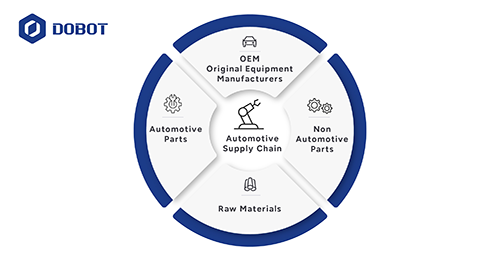
Automotive supply chain elements
Moreover, OEMs, Tier 1, and other automotive suppliers can benefit from cobots because they make the supply chain precise. Car suppliers’ primary goal is to keep production lines consistent without disruption.
Applying robots in automobile manufacturing is efficient because they simplify the car manufacturing process.
Minimize the costs and optimize automotive manufacturing with Dobot.
Read our next blog article about Dobot experience in car manufacturing here.

DOBOT
Dobot is one of the leading global providers of collaborative robots, ranking #1 cobot exporter in China. Dobot possesses a sound global network in the United States, Japan, Germany, and other countries.
Discover how DOBOT can support your automation journey with their complete range of solutions and expertise.
Visit Company Website

Dobot is one of the leading global providers of collaborative robots, ranking #1 cobot exporter in China. Dobot possesses a sound global network in the United States, Japan, Germany, and other countries.
Yaskawa Motoman Showcases Latest Automation Technologies at Automate 2023
Yaskawa America, Inc. will showcase its next-level robotic automation solutions created to level up production
Automation Alley's Tech Takeover
You're invited to Automation Alley's Tech Takeover as the experts at Clayton & McKervey present a session aimed at helping
Cober Solutions Implements AMR Technology to Improve Employee Fulfillment and Productivity
Cober chose OTTO autonomous mobile robots to automate the non-linear flow of materials between job processes because OTTO can handle dynamic environments without requiring fixed infrastructure such as wires, guides, or predefined paths.