
Case Studies
How Interlocks Enhance Safety in Robotic and High-Throughput Manufacturing
As robotics and high-throughput systems become more common in factories, there is a growing need to control access to areas with hazards without compromising productivity. For instance, industrial robots often handle large, heavy components at high speeds, and while they improve efficiency, there are still scenarios where personnel must enter areas in which these machines operate. In this case, interlocking systems play an essential role in reducing risk in increasingly automated environments.
Reducing Risk with Interlocks
There are several challenges such as limited visibility of personnel, the presence of conveyor systems, and the movement of robotic handling equipment, which increases the complexity of maintaining a safe working environment. Without appropriate safeguarding, unrestricted access to these areas can expose workers to crushing or impact hazards, potentially resulting in serious injury or fatality.
Interlocked guards help mitigate these risks by ensuring that access is only permitted once machinery has reached a safe state. Interlocks enforce access procedures by integrating mechanical and/or electromechanical components with the wider control system. For example, an interlock with guard locking may only unlock once a robot has completed its cycle and come to a stop.
Interlocks also support compliance with machinery safety standards such as ISO 14119, ISO 13849-1, and EN 528. In addition, they contribute to the safety of machinery, and in some cases help improve machine efficiency.
Access Control in Action: Practical Examples for Safer Automation
The complex manufacturing processes and high levels of automation found across multiple industries present ongoing challenges in managing safe interaction between workers and machinery. Two clear examples of this can be seen in the automotive and steel manufacturing sectors, where automated systems operate at high speeds and involve significant hazards.
In automotive manufacturing, robot welding cells are used to spot weld automobile frames. Personnel may need to gain access to the welding cells to perform some tasks, and in these circumstances, access should only be permitted once the machines have come to a controlled stop. Fortress interlocks are frequently used in these situations, and there are many examples where it is possible to see our devices on the production lines of some major car manufacturers.
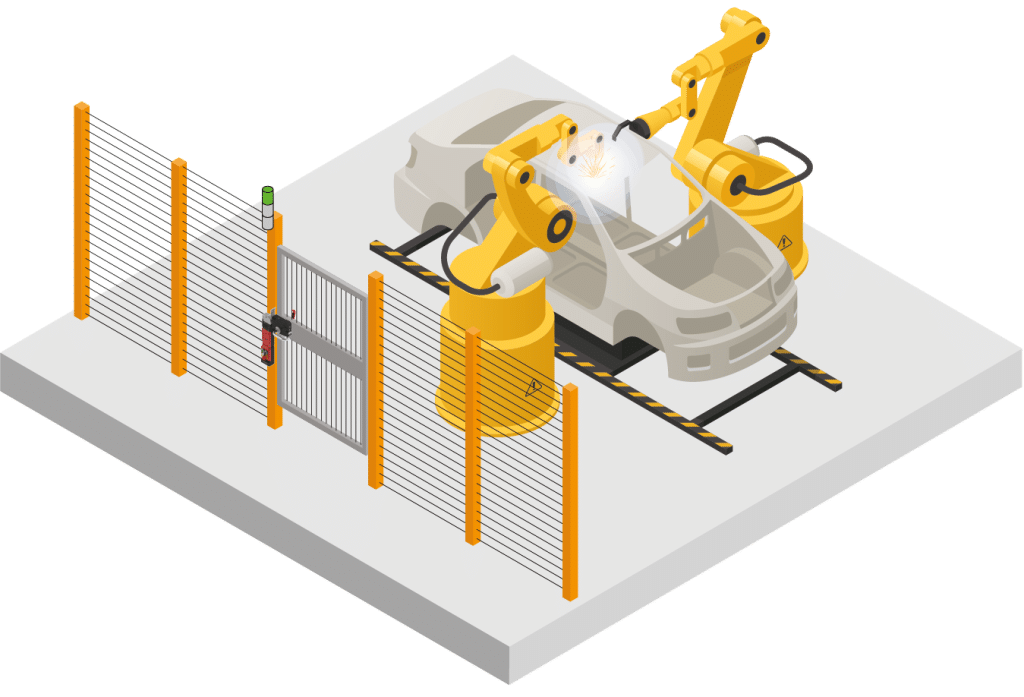
Automated robot welding cells are used to accurately and efficiently spot weld automobile frames.
Ensuring only the right people are carrying out the right tasks is a crucial aspect of safeguarding machinery. To address this challenge, Fortress Safety has worked with one of the UK’s largest steelmakers - Tata Steel - to provide interlocking solutions for their galvanisation process. Network-enabled interlocks with RFID readers were installed at the pool pit where steel enters the zinc bath. Previously managed using a manual sign-in board, access is now controlled using existing RFID cards. Not only does this solution provide a real-time live update of personnel in the area, but also allows control room teams to respond immediately if required.
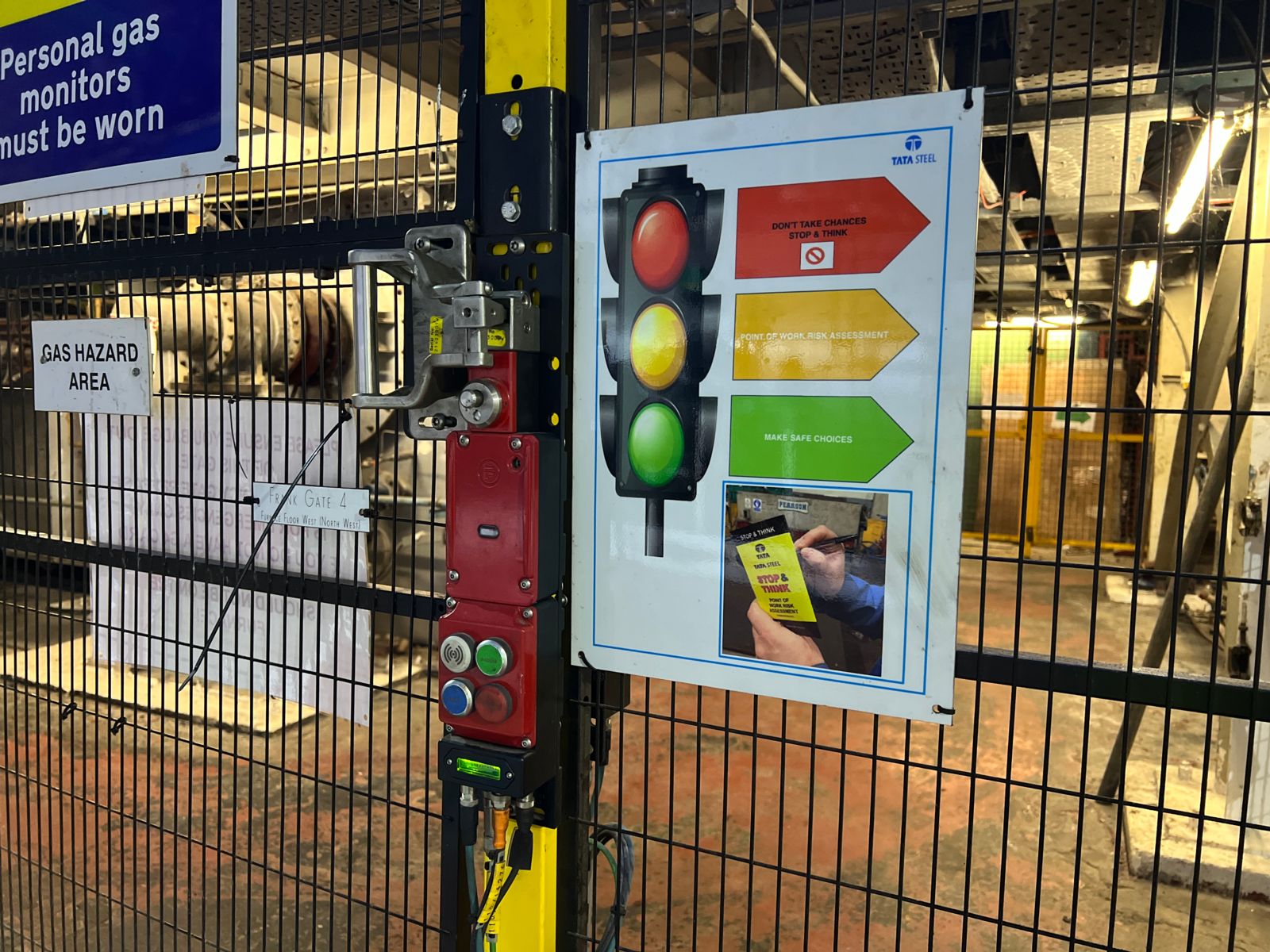
amGardpro interlock with network connectivity, pushbuttons and RFID card reader installed at Tata Steel
Considerations for Safety Products in Human-Machine Collaborative Spaces
Feedback from users has consistently highlighted four key priorities:
- Usability
- Integration
- Adaptability
- Durability
Operators need to work efficiently without navigating unnecessary complexity. That is why Fortress solutions integrate pushbuttons and control functions directly into one device. This streamlines workflows and reduces the need for separate control stations, helping to maintain productivity while upholding safety.
Seamless integration with industrial networks is another crucial factor. Whether a facility uses PROFINET, EtherNet/IP, or EtherCAT, network-enabled interlocks and control pods are designed for rapid installation, reduced wiring, and simplified troubleshooting, minimizing downtime and supporting scalable, future-ready safety architectures.
Finally, in high-throughput environments, where downtime is costly, reliability and robust engineering are critical. This is why Fortress products are built to withstand demanding industrial conditions, with heavy-duty construction that ensures long-term reliability and reduces maintenance.
This article originally appeared on www.fortress-safety.com

Fortress Safety
Fortress Safety provides life-saving solutions, protecting people and equipment in industrial workplaces globally. We are experts in machinery safety and interlocking, and a global provider of robust safety solutions for the manufacturing sector.
Discover how Fortress Safety can support your automation journey with their complete range of solutions and expertise.
Visit Company Website
Fortress Safety provides life-saving solutions, protecting people and equipment in industrial workplaces globally. We are experts in machinery safety and interlocking, and a global provider of robust safety solutions for the manufacturing sector.
Applied Robotics, Inc. New Channel Program Offers Partners Growth and Differentiation
Plan is designed to increase opportunity and profitability for partners, highlighting a significant commitment to technical support and channel growth.
COMAU INTRODUCES MI.RA/ONEPICKER, A NEW AND FULLY AUTOMATED INTELLIGENT PIECE PICKING SOLUTION
Meet MI.RA/OnePicker by Comau, the AI-powered solution revolutionizing piece picking. Increase productivity and efficiency in warehouse and e-commerce settings