
Industry Insights
Deepu Talla's First Principles (Automated Newsletter Issue 1)
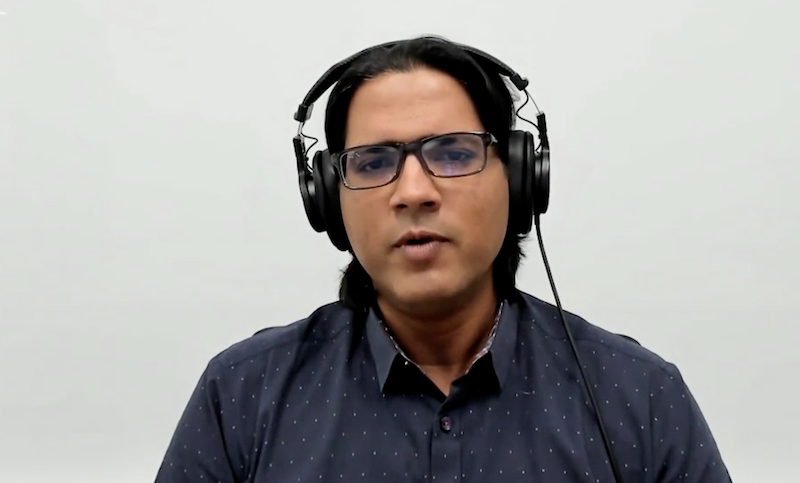
I had an hour-long call with Deepu Talla toward the end of last month. It was the second time I’d spoken with the NVIDIA exec for any length of time. We’d met a few years back at the chip giant’s South Bay headquarters, as he walked me through the Jetson ecosystem. The August conversation was cleaned up a touch and edited into the second episode of this newsletter’s eponymous podcast.
We got a bit more into our respective backgrounds — it was a podcast, I couldn’t help myself. Discussing his work history, I was struck by a parallel between our careers I’d not previously noticed. Before we were robot guys, we were phone guys. I reviewed them and Talla helped build them.
His transition was a quick one from the sound of it. NVIDIA hired him for its Tegra team in February 2013. By April, he was the company’s vice president and general manager Robotics and Edge AI. Talla joined the team as founder Jensen Huang was in the throes of an early pivot from mobile into robotics.
“We have a saying inside NVIDIA, ‘if you’re not at least 10 years before a market or a technology takes shape, you’re probably late,’” Talla told me about the then-risky move. “I think it was perfect timing for us to jump into physical AI and autonomous robotics applications.”
Just over a decade later, it’s safe to say NVIDIA was both right on time and as well positioned as anyone to power the next generation of autonomous systems. Prior to August’s Thor launch, NVIDIA counted 2.2 million developers across 7,000 companies as having engaged with the Jetson platform. That scale was unimaginable in this industry a decade ago, and you don’t have to squint too hard to see reflections of mobile’s early days.
My transition into robotics has been far more gradual. Maybe it’s because my boss was never a leather jacket-wearing billionaire owner of a wildly popular GPU firm. Publishing has been a troubled industry for longer than I’ve been in it. But slim margins can open creativity — say you’re putting on a big robotics event and you’ve got a spare consumer hardware editor lying around.
Asked how he made the transition from mobile to robotics, Talla quickly dons his engineering cap, explaining that it all starts with “first principles.”
“The idea that robotics is going to be very big someday is not that surprising,” he explains. Growing up watching Star Wars and Star Trek, it was obvious it was going to happen. The question, then, is when? Technology had to catch up. Working on mobile phones, we had to create processors that were extremely capable, but at the same time, energy efficient and low power. It was actually the perfect segue into the world of robotics and autonomous machines, which still need to be based on an SoC (system on a chip).”
Were you to, say, run into me in the hall at next week’s Humanoid Robot Forum and ask me the same question I asked Talla, my answer wouldn’t be dissimilar. Here’s my first principle: ask good questions. I’ve found myself speaking to some incredibly fascinating people in far flung parts of the world by adhering to this very basic tenet.
A big piece of asking the right questions is laying the groundwork to find the right people to ask them of. Find the people who will get you past the clickbait and hype. Those who understand that this industry is young and exciting, but optimism need not come at the expense of pragmatism.
As the AI wave rises to the embodied intelligence hype cycle, I’m happy to have a pair of new platforms to give these subjects the space and depth they deserve.
Association for Advancing Automation
Discover how Association for Advancing Automation can support your automation journey with their complete range of solutions and expertise.
Visit Company Website


NVIDIA’s Jetson Thor Robotics Computer is Now Available
NVIDIA's latest is aimed at humanoid robots and physical AI.
RealSense and NVIDIA Collaborate to Usher in the Age of Physical AI
RealSense and NVIDIA join forces to advance Physical AI, combining RealSense depth cameras with Jetson Thor and Isaac Sim to power the next generation of intelligent robots.
FORT Extends Trust Layer by adding Outside-In Safety with NVIDIA Halos for Robotics
FORT Robotics and NVIDIA Halos for Robotics bring enhanced safety and productivity to physical AI with outside-in safety, a new framework for safe and productive robotics operations.