Tech Papers
Review of Direct Part Marking Methods
While the overall concept of product tracking is not new, the automated tracking of products down to the individual part and component level has proven to have great bottom-line impact. The most direct way to ensure complete quality control of the production process is to mark objects with a machine-readable symbols and track them through the entire life cycle.
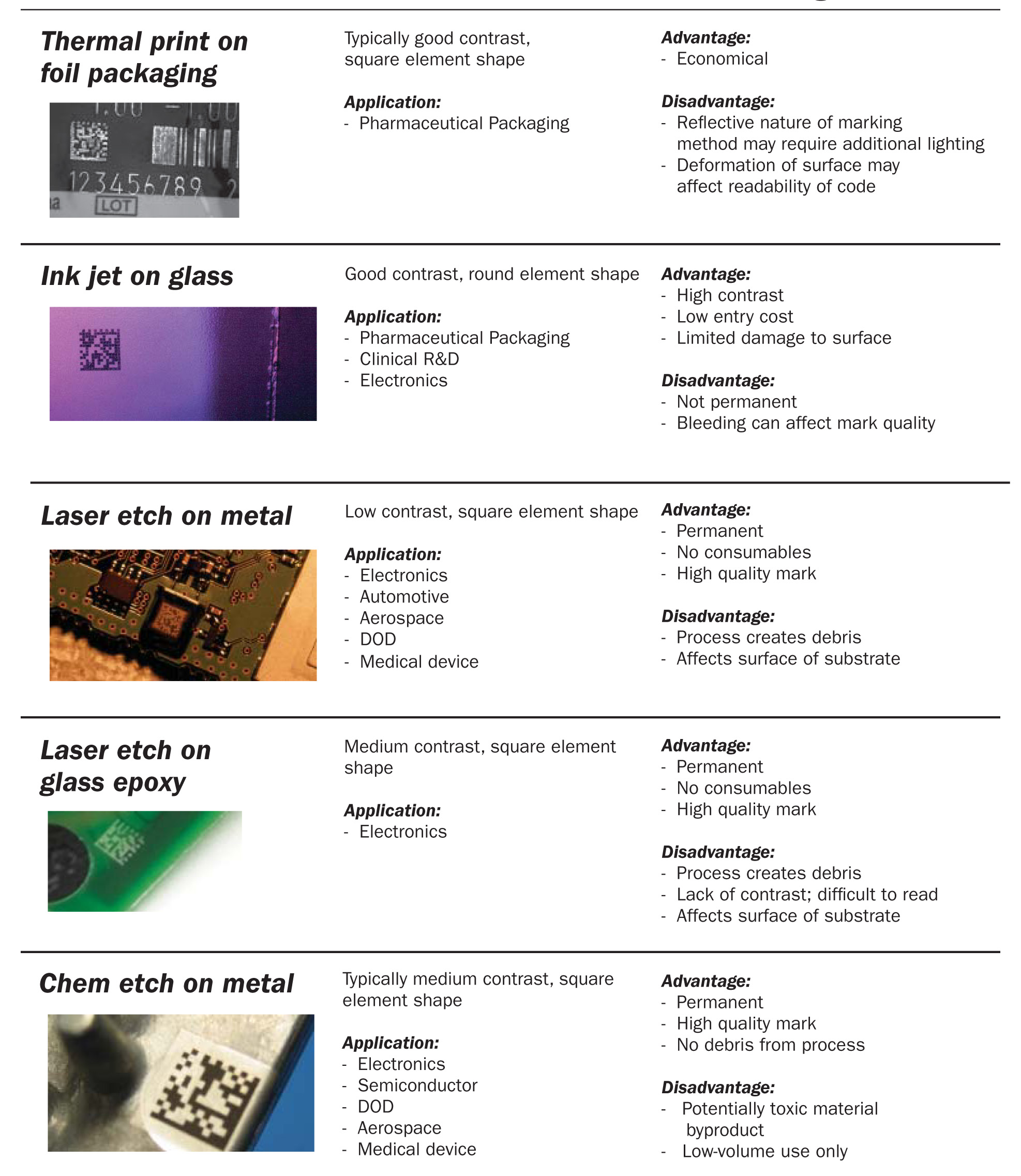
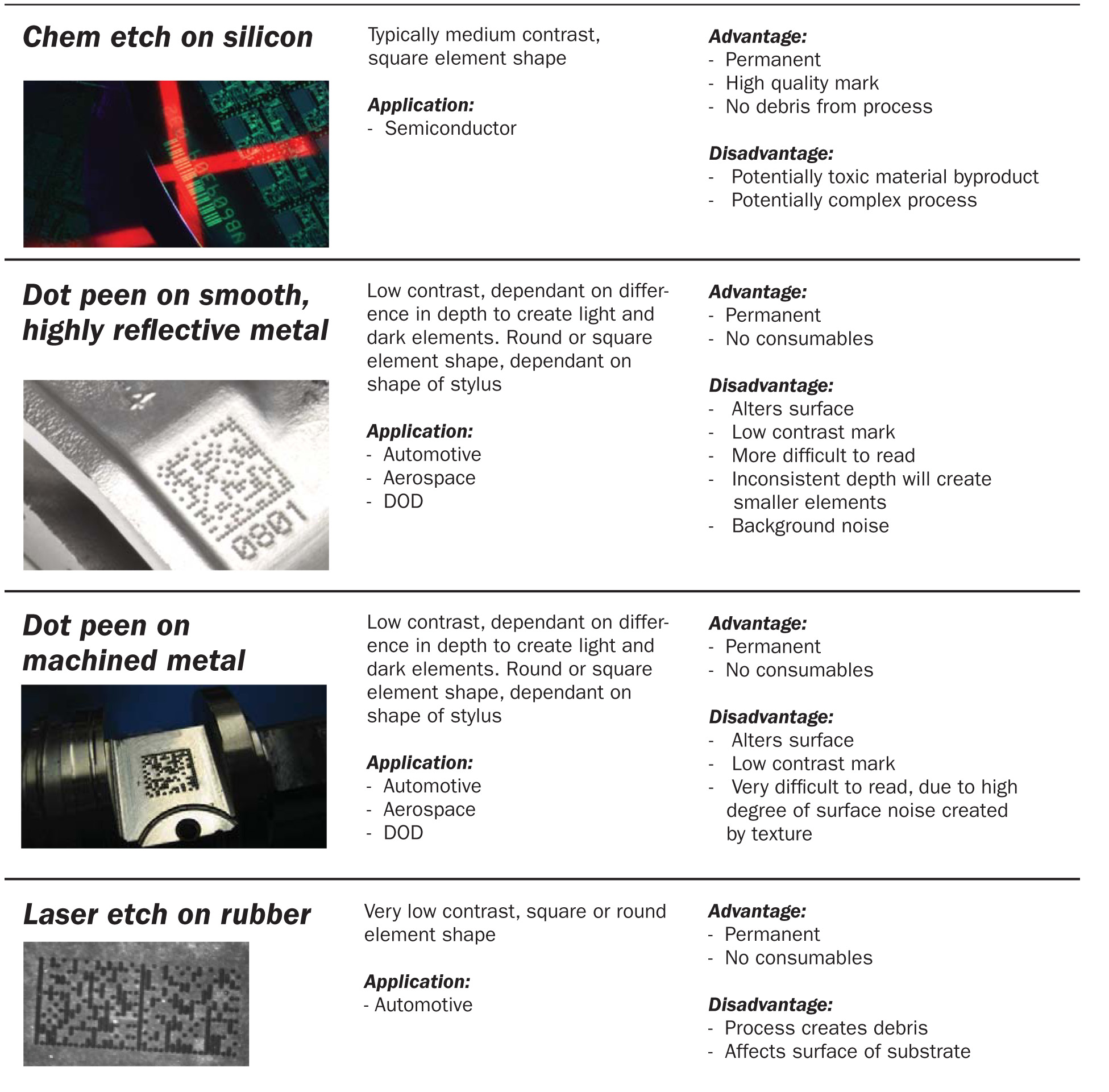
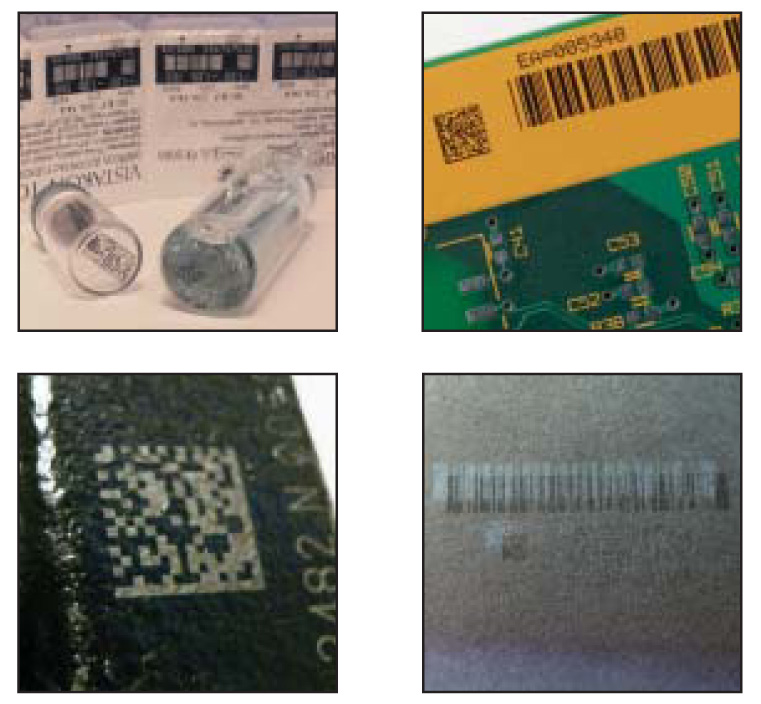 There are many methods to directly mark objects. Selecting the best method for the application is critical to achieving success. Since each method has its own advantages and limitations, it is important to review and experiment with as many methods as possible before selecting the appropriate one.
This marking process uses a low voltage electrical current to pass through a stencil to the part’s surface. In order for this method to work, the part must have a conductive metal surface. This method will not work for anodized, powder-coated or non-conductive coatings. Unlike other permanent marking methods, electro-chemical etching does not weaken or distort metal parts because the molecular structure of the part is not altered beyond the depth of the mark. As a result, very thin walled parts and those with fine surface finishes can be safely marked without damage. Since electro-chemical etching is a more involved process than other methods, it is not suited for highly automated applications and is commonly used for low volume product runs.
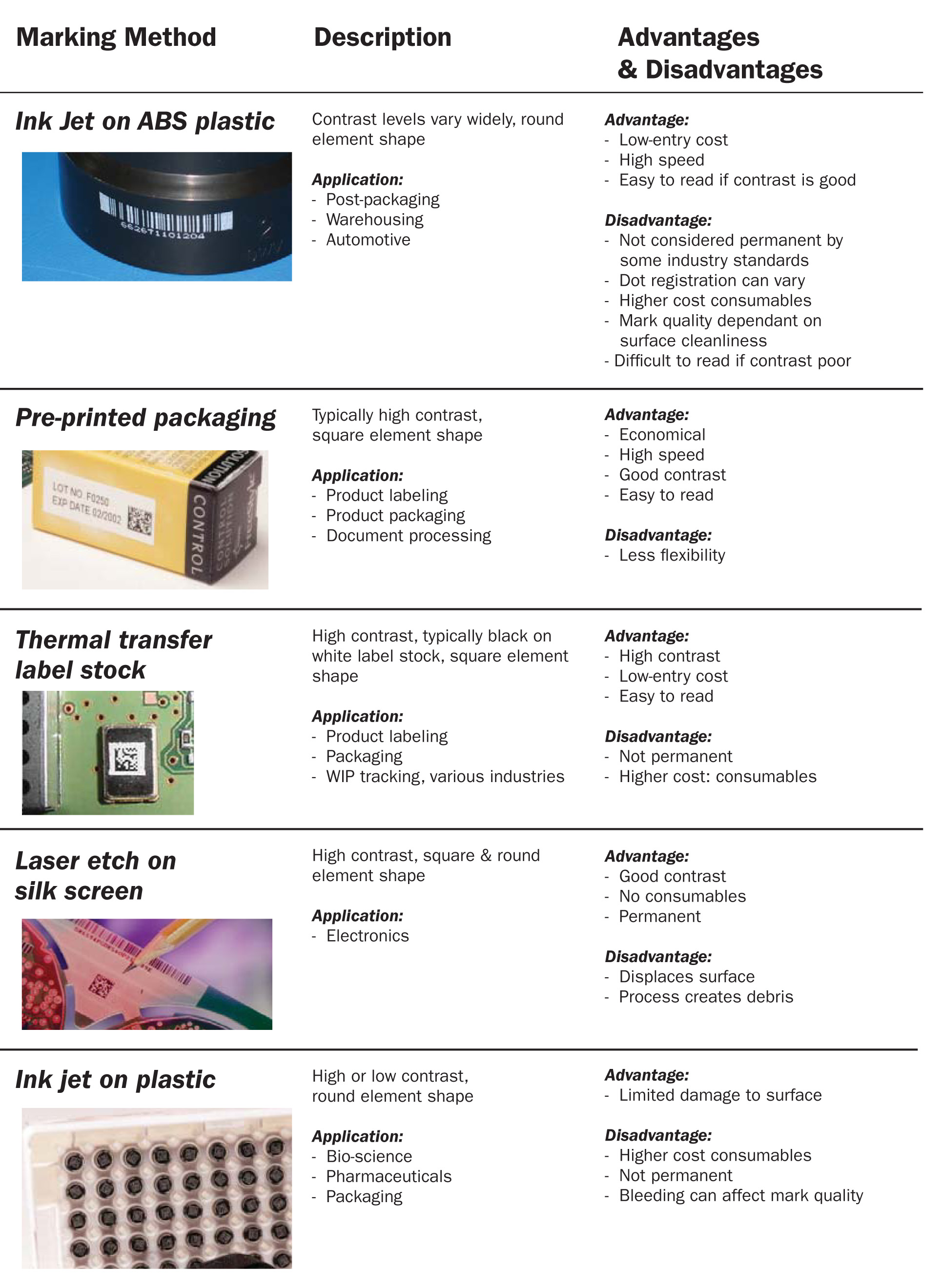
This type of marking uses small, dots sprayed directly onto the surface of the part. Ink jet typically produces high contrast marks, depending on the substrate and the ink color. Although permanent inks do exist, ink jet is not considered by some industry standards as a permanent marking method. Disadvantages include routine maintenance to prevent the jets from clogging, and the additional cost of consumables.
This marking type uses lasers to etch the symbol directly into the surface of the part. In addition to producing a clean, high resolution mark on a variety of substrates ranging from metal to plastics to glass, laser-etching is also well-suited for automated environments requiring high volumes. Since the top layer of the part’s substrate is removed during the etching-process, sometimes the minimal residue that results may not be suited for some clean-room applications. The type of laser (Yag, CO2, YVO4) must be matched to the application and will affect price considerably. While laser etching equipment has a higher entry cost than many marking methods, there is no additional cost of consumables and maintenance is minimal.
Dot Peen is a percussive marking method, using changes in-depth to create the contrast between the light and dark elements of the symbol. Dot peen is recommended for applications where the symbol must last the entire life cycle of the part. In the aerospace and automotive industries, this can be several years. Suitable substrates for dot peen marking must have some hardness so material memory does not return the surface to its original condition.
A wide range of marking methods are discussed here, including advantages and disadvantages.
Product Information:
[email protected]
OMRON Automation - Americas
Omron Automation is an industrial automation solution provider that creates, sells and services fully integrated automation solutions that include sensing, control, safety, vision, motion, and more.
Discover how OMRON Automation - Americas can support your automation journey with their complete range of solutions and expertise.
Visit Company Website


Omron Automation is an industrial automation solution provider that creates, sells and services fully integrated automation solutions that include sensing, control, safety, vision, motion, and more.