
Industry Insights
Telepresence Robots Can Help Prevent Loneliness and Improve Health – Report
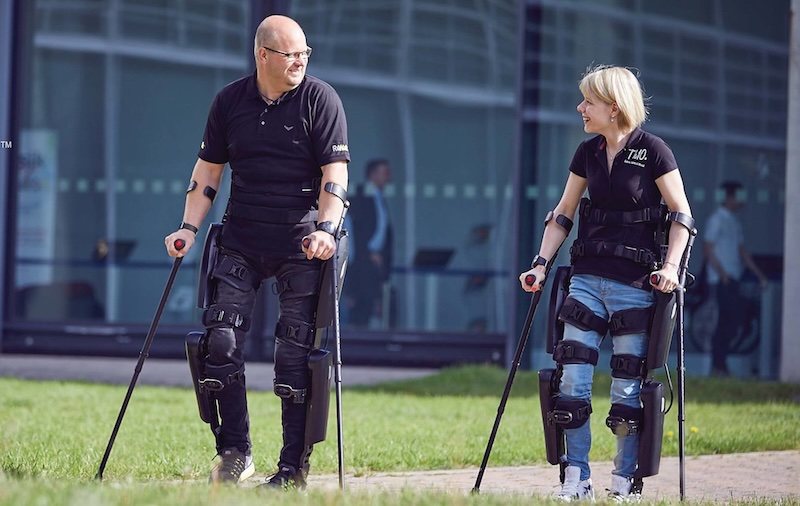
More than one-in-three adults over the age of 65 will have a fall. In turn, the frequency of falls has driven many older adults to become less social. Such inactivity then increases the likelihood of a fall occurring and a more serious injury (or death). It can also lead to social isolation. It’s a vicious cycle that causes elderly people to continually become frailer and more isolated by self-imposed isolation.
The healthcare system (NHS) in the UK is publicly funded, and while free at the point of use for anyone, it does mean that resources are divided equally between departments. Support for elder car is often scarce ― especially when it comes to employing caregivers for physical and emotional support.
Telepresence robots present a social care opportunity within resource-constrained healthcare systems by enabling two-way communication over video conferencing software (Zoom, Facetime etc.), without the physical presence of a carer. This allows patients in their homes to still have a version social interaction without leaving home. Because robots are complete technology systems, there is also no need for the elderly person to set up software and have digital skills―something which can be a barrier as some older people have not developed digital skills that are as seen as vital and ubiquitous today (I know this from personal experience with elder family members).
However, scaling in-home care robotics has been difficult and more research is required at a policy, care standard, and institutional level to better work out the barriers and tensions of using in-home robots and to facilitate adoption on larger scales.
A recent project called Future-Proofing Care between the University of Nottingham and non-profit, Age UK Bristol looked to better understand the barriers, challenges and opportunities for using telepresence robots as part of a volunteer support scheme. The project focused on a combination of policy engagement and participatory research to understand how telepresence robot adoption could be accelerated in the UK to support the elderly population at risk of social isolation ― with not only social interaction but to also support the patients to improve their physical strength and balance inside their own homes. A secondary was to design materials and protocols that could become a sustainable framework to address the staff shortages in the health and social care sector.
ROI Calculator

Discover the potential cost savings of robotic automation over a 20-year system life
This calculator compares your current manual labor costs against the total cost of owning and operating a robotic system over its 20-year lifespan.
During this project, volunteers from Age UK were selected, trained, and paired up with an older person in a kind of buddy system. The volunteers were trained in how to use the telepresence robot, and how to safely guide and engage with the older person on the other side of the video so that they stick to a personalized physical activity exercise plan developed by a fitness instructor.
Over a six-week trial, the volunteers engaged in regular social interactions with their buddy through the telepresence robot in their home and helped them to implement their tailored physical exercise program 2-3 times a week.
Assessments were performed before, during, and after the person in the home was paired up with a buddy via the telerobot. Usability and user-experience evaluations were also conducted to evaluate how effective the scheme was and to refine the materials and protocols going forward.
The assessments of the study showed that the telerobotics approach achieved small reduction in physical frailty and improved the confidence of the older participants enough that they began to socialize outside of their home. It also increased the digital literacy of both the volunteers and the older people in the study. The findings from the study provided insight into the emotional, logistic, and technical challenges facing the care sector, and with a deployment framework, the approach could be used to support larger studies in community settings.
The Future-Proofing Care project is now using the results in this study to form a parliamentary round table―in conjunction with the think tank Policy Connect―to further explore how these robots can safely and effectively become a part of intelligent assistive robotics in health and social care. The round table is called Easing the Adoption of Intelligent Assistive Robotics and aims to find suitable recommendations to inform the UK government on the standards, procurement, skills, sustainability, regulation and implementation of telepresence robots.
Association for Advancing Automation
Discover how Association for Advancing Automation can support your automation journey with their complete range of solutions and expertise.
Visit Company Website


