
Industry Insights
Tiny Swarming Robots Are Coming for Your Sinuses
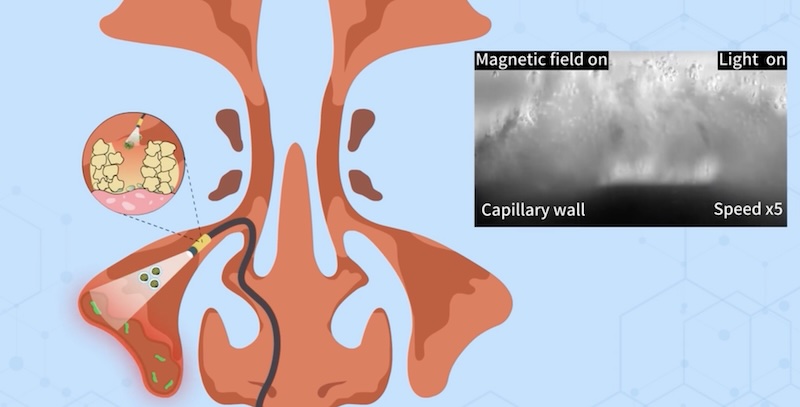
A team of researchers at Shenzhen University and Guangxi University in China have developed swarming microrobots, aimed firmly at the world’s sinuses. When light is applied, the tiny magnet-controlled CBMRs (copper single atom–loaded bismuth oxoiodide photocatalytic microrobots) emit heat and free radicals designed to disrupt sinus infections by to kill bacteria and loosen up biofilms.
They accomplish this task by using a different kind of ROS – reactive oxygen species – which is believed to contain its own antimicrobial properties.
As with other health-related microbots, the idea here is replace drugs and invasive surgical procedures with targeted interventions. Both of the aforementioned traditional methods run into issues when addressing (apologies in advance) inflamed and puss-filled tissue.
ROI Calculator

Discover the potential cost savings of robotic automation over a 20-year system life
This calculator compares your current manual labor costs against the total cost of owning and operating a robotic system over its 20-year lifespan.
“Our proposed microrobotic therapeutic platform offers the advantages of noninvasiveness, minimal resistance, and drug-free intervention,” the paper notes.
The team has begun testing the system in the lab, successfully clearing biofilms from pig sinuses. They were tested on rabbits as well, clearing infections, “without causing significant tissue damage or side effects.”
Best of all, the tiny robots were expelled “naturally” from the animal noses after they finished doing their thing.

Association for Advancing Automation
Discover how Association for Advancing Automation can support your automation journey with their complete range of solutions and expertise.
Visit Company Website


