
Industry Insights
The Grocery Store Is Becoming the Next Factory Floor
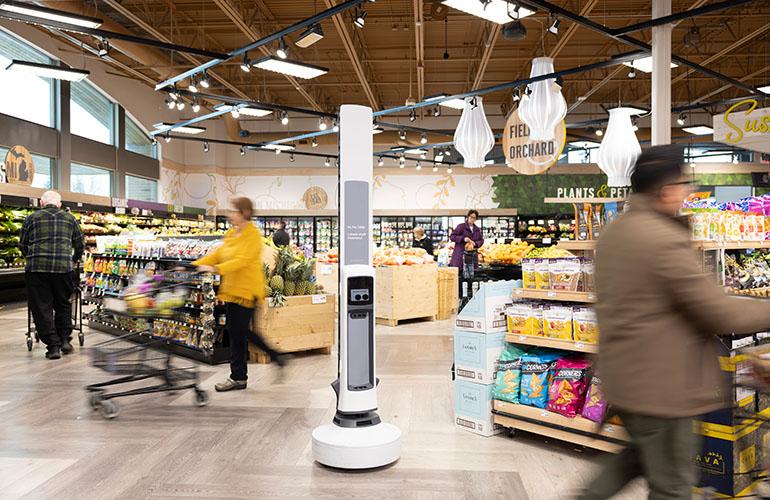
For years, retailers treated robotics as an experiment.
One chain tested an inventory robot. Another bought autonomous floor scrubbers. Others installed electronic shelf labels or experimented with artificial intelligence to help employees answer customer questions. Most of those efforts were viewed as isolated technology projects — useful, perhaps, but unlikely to reshape one of the world's largest industries.
That assumption is beginning to look outdated.
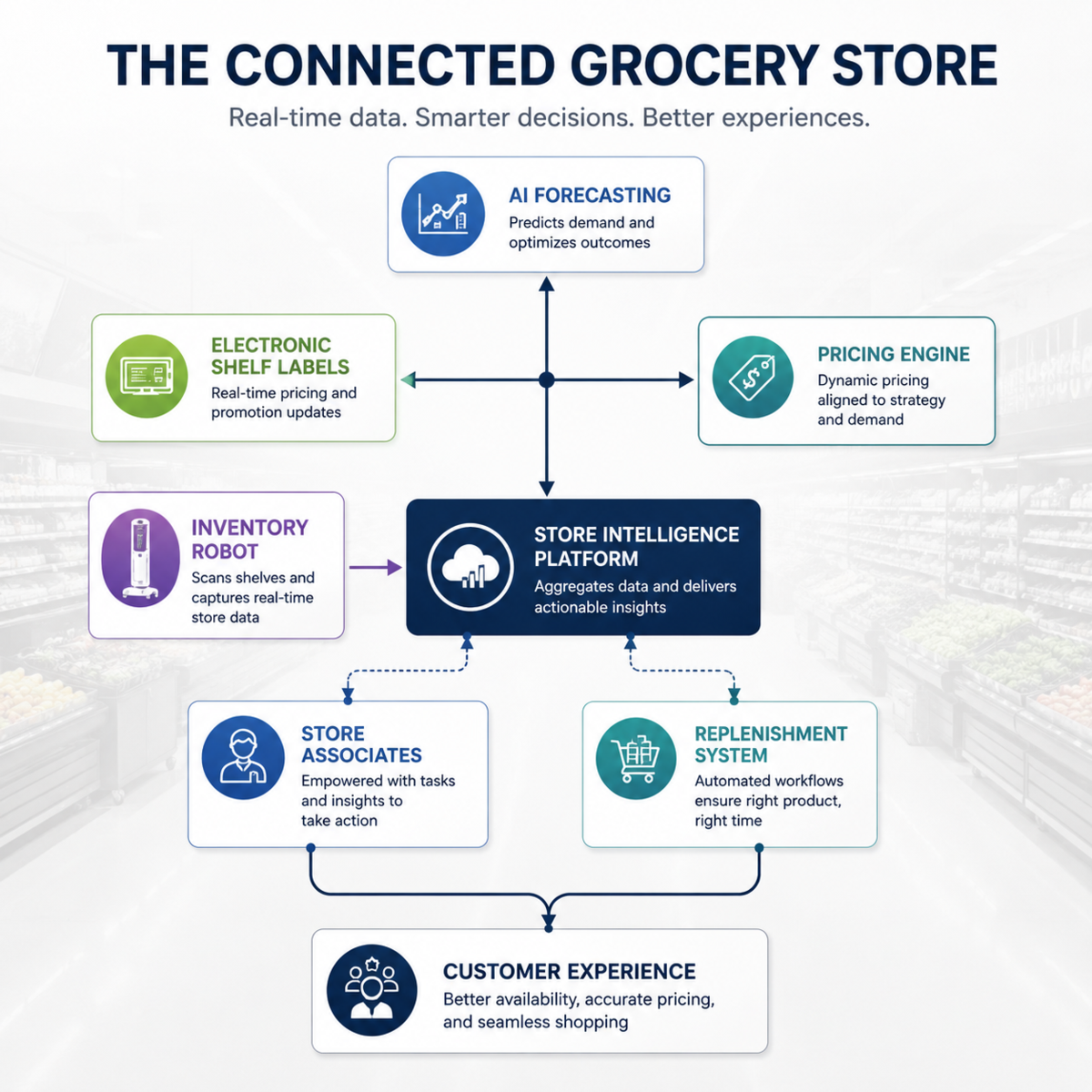
A growing number of grocery retailers are no longer investing in individual technologies. They are assembling interconnected operating systems that combine robotics, artificial intelligence, computer vision, digital shelf infrastructure, and real-time analytics into a single platform designed to manage stores with the same precision manufacturers now manage factories.
The implications extend well beyond grocery retail.
For automation companies, semiconductor manufacturers, software developers, and industrial suppliers, supermarkets may be emerging as one of the industry's largest untapped growth markets.
A Different Kind of Automation Race
The recent announcements have come from companies with little in common beyond their desire to run stores more efficiently.
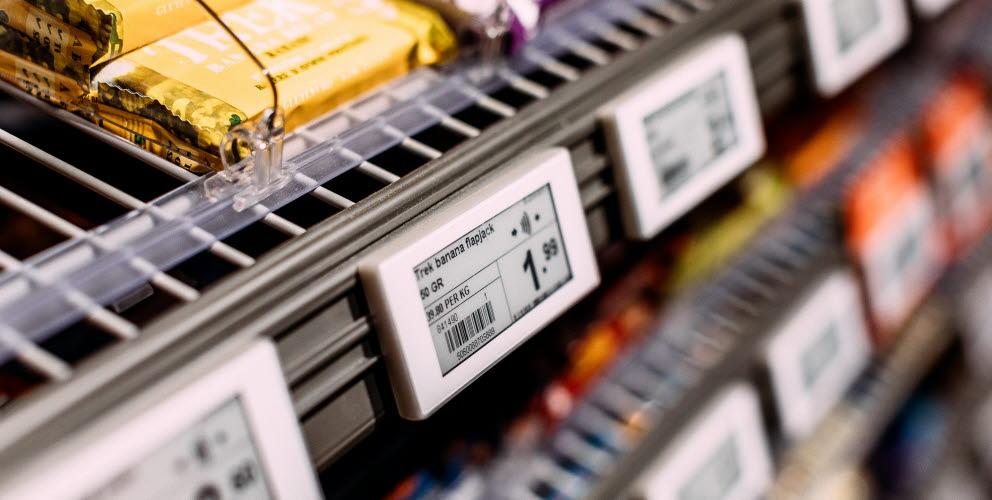
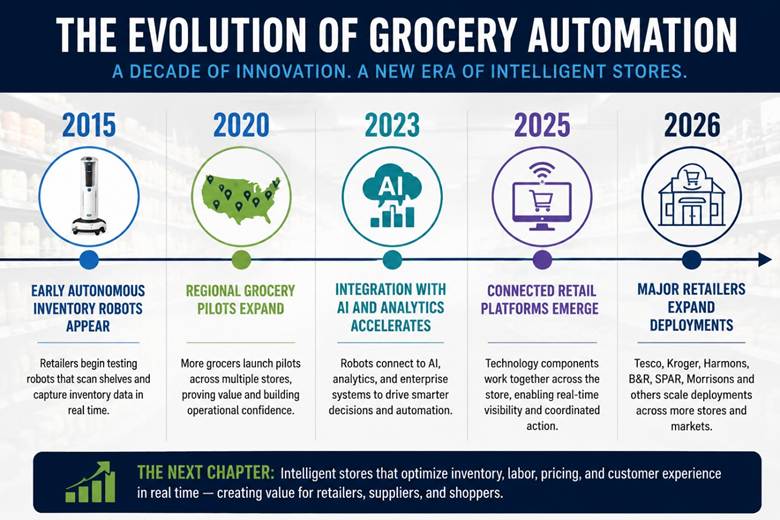
In the United Kingdom, Tesco is testing Simbe's autonomous inventory robot, Tally, while simultaneously introducing autonomous cleaning robots, deploying electronic shelf labels across approximately 3,000 stores, and rolling out an AI assistant for employees.
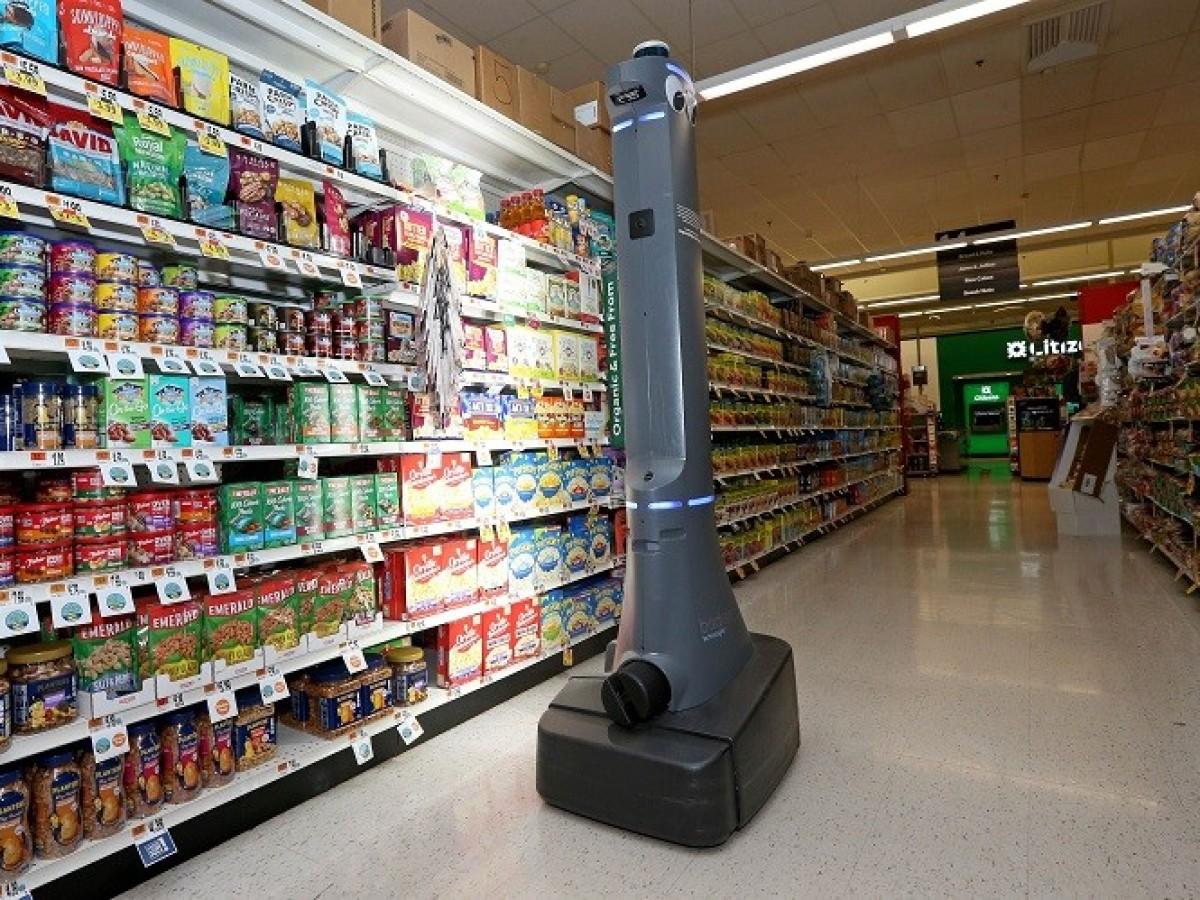
In the United States, Kroger is evaluating competing inventory robots from both Simbe and Badger Technologies across stores in Cincinnati and Indianapolis.
Regional retailers are moving as well.
Nebraska-based B&R Stores recently introduced Simbe's inventory platform at select locations, joining a growing list of operators that includes Harmons, Morrisons, SPAR Austria, BJ's Wholesale Club, SpartanNash, Schnucks, Wakefern Food Corp., Stop & Shop, The Giant Company, and Woodman's Markets.
Viewed individually, none of these announcements appear transformative.
Viewed collectively, they suggest grocery retail has reached the point where automation is shifting from isolated pilots to enterprise strategy.
The Store Is Becoming a Data Platform
The robot moving quietly down an aisle is the most visible part of the story.
It is also the least important.
What retailers are really buying is a continuous stream of operational intelligence.
Every pass down an aisle generates information about inventory levels, misplaced products, pricing errors, promotional compliance, and shelf conditions. That information flows into forecasting systems, replenishment software, employee task management platforms, pricing engines, and increasingly, artificial intelligence.
Instead of discovering an empty shelf hours after a customer encounters it, retailers can identify the problem almost immediately.
The supermarket begins to function less like a collection of departments and more like a connected network of sensors.
Manufacturing has spent decades building digital factories. Grocery retail is beginning to build digital stores.
The Economics Are Becoming Difficult to Ignore
The strongest evidence that the market is maturing is not the number of robots being deployed.
It is the results retailers are beginning to report.
ROI Calculator
Discover the potential cost savings of robotic automation over a 20-year system life
This calculator compares your current manual labor costs against the total cost of owning and operating a robotic system over its 20-year lifespan.
Harmons, the Utah-based supermarket chain, says autonomous shelf scanning has reduced out-of-stock conditions by more than 50% while cutting pricing errors by 75%.
The robots scan stores several times each day. In contrast, manual inspections typically occurred only a few times each week.
Those improvements affect far more than inventory accuracy.
Better shelf data improves replenishment, strengthens promotional execution, reduces pricing discrepancies, and increases confidence in e-commerce fulfillment. Every percentage point of improvement carries financial implications in an industry where margins are routinely measured in pennies.
That changes the investment conversation.
Robotics is no longer competing solely against labor costs. It is competing against lost sales, poor inventory accuracy, pricing errors, and customer dissatisfaction.
The Human Equation Hasn't Disappeared
Perhaps the most surprising aspect of the current wave of deployments is how retailers describe the role of automation.
The narrative is noticeably different from earlier discussions about replacing workers.
Bruce Hatch, chief information officer at Harmons, has repeatedly argued that inventory robots exist to give employees more time with customers, not less.
The company has intentionally avoided technologies that diminish personal interaction, taking a cautious approach to self-checkout while rejecting self-service kiosks in departments where knowledgeable associates remain part of the shopping experience.
Inventory robots fit because they remove repetitive work rather than human relationships.
That philosophy is becoming increasingly common.
Retailers appear less interested in replacing associates than in eliminating tasks that customers never see but consume hours of labor every day.
The Real Winners May Be Suppliers
The most valuable companies in this transition may not be the robot manufacturers.
Every autonomous inventory deployment creates demand for industrial cameras, edge computing, AI processors, wireless networking, batteries, cloud software, cybersecurity, fleet management systems, and systems integration.
As stores become increasingly instrumented, the robot becomes only one component of a much larger technology stack.
That may explain why competition is broadening.
Simbe has expanded beyond mobile robotics into fixed shelf-monitoring sensors designed to work alongside autonomous systems. Badger Technologies continues adding capabilities that extend beyond inventory into broader store intelligence.
The competitive advantage is shifting from hardware toward software and data.
A Familiar Pattern
The trajectory resembles transformations that have already reshaped manufacturing and logistics.
Factories first automated individual machines before connecting entire production lines.
Warehouses initially deployed autonomous mobile robots before integrating them with warehouse execution systems, inventory platforms, and predictive analytics.
Retail now appears to be following the same path.
The industry's biggest opportunity is unlikely to come from selling another robot.
It will come from connecting thousands of devices into a unified operating platform capable of understanding — and eventually optimizing — every aspect of how a store functions.
The grocery industry has always depended on moving products efficiently.
Increasingly, its competitive advantage may depend on moving information even faster.
Association for Advancing Automation
Discover how Association for Advancing Automation can support your automation journey with their complete range of solutions and expertise.
Visit Company Website


The Robotmakers – Yesterday, Today and Tomorrow – Part 2
After another record-breaking year for robotics, we offer this retrospective.