
Industry Insights
The Great Knowledge Transfer: Safeguarding Manufacturing Expertise as Veteran Workers Retire
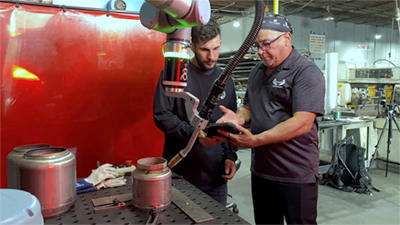 Manufacturing depends on more than machines, materials, and formal process documents. It also depends on the accumulated judgment of people who know when a part is slightly out of position, when a machine sounds wrong, and when taking a shortcut will — and won’t — cause problems.
In the United States, the median manufacturing worker is 43.9 years old, while roughly one quarter of the workforce is 55 or older and fewer than 8% are under 25.
American Welding Society workforce data projects that the U.S. will need 320,500 new welding professionals by 2029, with an average of 80,000 welding jobs to be filled annually between 2025 and 2029 and more than 157,000 welding professionals approaching retirement. Likewise, the Manufacturing Institute estimates that the U.S. manufacturing industry will need 3.8 million new employees between 2024 and 2033, with a projected 2 million jobs unfilled partly attributed to the rapid retirement of the baby boomer generation.
The same pattern is visible across other major manufacturing economies. In Germany, the Organisation for Economic Co-operation and Development (OECD) projects that the working-age population will shrink by about 9% over the next decade. In Japan, the pressure is even more acute. The country’s working-age population fell from 87.3 million in 1995 to 73.7 million in 2024, and the OECD projects a further 31% decline by 2060.
Knowledge Not Found in Manuals
As experienced technicians, engineers, welders, and operators get set to retire, manufacturers risk losing operational knowledge that has never been fully documented. Often described as ‘tribal knowledge,’ this shop-floor know-how can be central to how a plant actually runs.
“I guarantee you there isn’t one product made on the planet that doesn’t have two to five secret steps that are not in the documentation,” says Will Healy III, director of product and industry marketing, Teradyne Robotics, parent company of Universal Robots.
Those hidden steps include how experienced workers recover from faults, handle variation, keep quality stable, and maintain output under pressure. Losing them can mean slower production, more scrap, and longer training cycles.
For Healy, the answer is not necessarily simply to ask senior employees to write everything down.
“A lot of tribal knowledge isn’t necessarily found in things you can write down in a Word document,” Healy says.
The challenge is knowledge transfer from expert to trainee, from person to process, and increasingly from humans into automation systems and digital tools.
Knowledge at Risk
Welding is one example. Veteran welders combine formal training with years of refinement through practice. At the highest level, their work involves judgment, rhythm, and adaptation.
“Welding is highly skilled and can be really beautiful,” says Richard Meyer, general manager, customer service group, customer training at FANUC America. “From our perspective, I think you can achieve the same level of skill with a robot. And the question becomes ‘How do you make sure that the robot is doing that quality of weld?’”
The knowledge preservation challenge is also a training challenge, says Meyer, who notes that manufacturing roles are also changing due to the rise of industrial automation.
“With the adoption of robotics, manufacturing jobs are cleaner, less physical, and more intellectual,” Meyer says. That shift may help attract younger workers to manufacturing roles, but only when training pathways are in place, says Meyer, who highlights FANUC’s CERT initiative, apprenticeship efforts, and expanded training academies.
Robotic welding can bring consistency and repeatability, but it does not eliminate the need for welding knowledge. In an effective setup, that knowledge lies partly in the worker, partly in the program, partly in the process, and partly in the robotic cell itself.
Manufacturers still need people who understand welding fundamentals, robotic systems, inspection, and process control, says Universal Robots’ Healy, pointing to the gap between human adaptability and the current limitations of automation.
“One of the welder’s main tools is a hammer,” he explains. “You’ve got to be able to bend or move metal. With the robot, typically, the metal has to already be in the right place.” Hammering, and knowing when to hammer the part, remains an extremely challenging application to automate.
Despite the increasing capabilities of physical AI systems, humans are still better at adapting to imperfect real-world conditions. This type of tacit knowledge is also difficult to formalize, however. And while work instructions describe an ideal process, skilled manufacturing workers know what happens in practice.
Matt Malchano, Boston Dynamics’ vice president of software, describes the knowledge most at risk of being lost as “hands-on process-oriented knowledge.”
“The robots that you see in manufacturing today are typically designed to do simple, repetitive tasks,” Malchano explains. “A distinction that you see when you look at humans is that we know how to do complicated tasks with many variations, and we’re able to adapt to uncertainty in those tasks. Many of those skills are passed from person to person as they train the next individual to come into their role. They're not things that are written down in an employee handbook.”
ROI Calculator

Discover the potential cost savings of robotic automation over a 20-year system life
This calculator compares your current manual labor costs against the total cost of owning and operating a robotic system over its 20-year lifespan.
Start With People, Not Technology
Knowledge capture only works if you understand the work first, says Universal Robots’ Healy.
“I always say ‘People, process, product’, in that order. People always come first. Go talk to the people doing the work, and watch what they do,” he says.
Formal work instructions and documentation often miss what actually happens on the floor. And experienced workers quietly refine processes over time.
“If you’re going to implement technology, you’ve got to understand what the person is actually doing versus what’s in your work instruction,” he says.
This becomes critical when it comes to handling exceptions.
“The ‘old dogs’ know how to be successful in the crisis moments,” Healy continues, “and that’s knowledge you need to figure out, because that’s probably knowledge you could apply to improving your processes and its knowledge that doesn’t surface in interviews until the crisis moment.”
For manufacturers looking to get a handle on ‘tribal knowledge,’ Healy advises looking beyond normal operations to see how manufacturing workers handle breakdowns, rush orders, and recovery scenarios.
Documentation Matters
While documentation alone is not enough to capture the totality of experienced manufacturing workers’ know-how, it remains critically important.
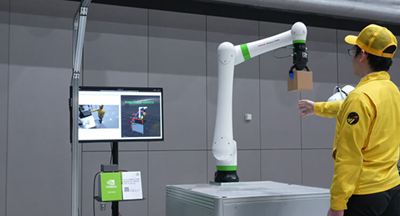 “Documenting tasks really is key,” says FANUC America’s Meyer. “It then becomes a digital knowledge base of the knowledge held by workers that may be heading into retirement.”
That means central repositories, accessible instructions, and cross-training across teams.
“In some manufacturing facilities, you will find only one or two people that know how to do a particular task,” he says. “That is very risky.”
But experts are not always the best at documenting their roles.
“Experts sometimes don’t recognize the importance of some of the things they do when performing a task,” he says. “Maybe they’ve just been doing it for a long time, and it doesn’t even register with them that that’s critical.”
One solution is to involve newer workers in capturing the process information.
“If you have the new person create the work instruction, you increase your chances of capturing all of the data,” he says.
In this way, documentation becomes a training session for new workers while simultaneously ensuring that any ‘hidden’ steps are recorded.
Technology does not capture expertise by default. A robot program, digital work instruction, or AI model is only as useful as the process understanding behind it.
Manufacturers still need to decide what knowledge matters, who holds it, how it shows up in practice, and how it should be validated once transferred into a training program, digital tool, or automated system.
AI and Imitation Learning
Imitation learning — training robots by demonstration — could play an important role in capturing worker expertise.
“Physical AI enables algorithms to be applied to large pools of collected data,” says Universal Robots’ Healy, “And then we’re able to have the robot execute the tasks. There’s a really fascinating use case for manufacturers looking to capture skill data from skilled operators and then automate it.”
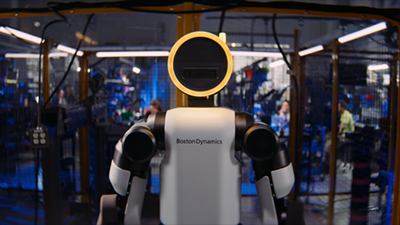 Malchano describes how humanoid robots are trained at Boston Dynamics.
“Human operators put on goggles and gloves, and as they move around in a space, the robot will move with them,” he says. “All of that activity is essentially stored as data, and then we use that to build an AI model.”
This does not mean tacit knowledge can easily be transferred wholesale. But it introduces a new starting point where workers demonstrate a task directly to a physical AI system, rather than their skills being translated into code from documentation.
“Whether it’s the motion of the tip of the welding torch, or a particular way to efficiently assemble a component or to connect two components together, these are the kinds of things that we want to be able to make easy to transfer from person to robot, so that we can preserve the cleverness of the person who invented those techniques,” says Malchano.
From Knowledge Loss to Leverage
The retirement of experienced workers is a real challenge, but not an inevitable crisis.
“I don’t think it’s Armageddon like the traditional news cycle wants you to believe,” cautions Universal Robots’ Healy. “But I do think manufacturers who engage with capturing that knowledge will gain value and those who don’t will lose value.”
Moreover, manufacturers that act now can use that information to improve processes, strengthen training, and deploy automation more effectively.
Robots, AI systems, and digital tools will carry more of the physical and repetitive workload. But human expertise remains central.
The “great knowledge transfer” is not a single handoff. It is a shift from fragile, person-dependent knowledge toward systems that can capture, share, and amplify expertise for both humans and robots. And in that sense, the coming retirement wave is an opportunity to rethink how manufacturing knowledge is captured, shared, and used.
Association for Advancing Automation
Discover how Association for Advancing Automation can support your automation journey with their complete range of solutions and expertise.
Visit Company Website


