
Industry Insights
Robotic Application Research: Past, Present, & Future
In 1961, the first manufacturing robot, the Unimate, hit the assembly line for GM. This welding robot, which received its commands from a magnetic drum, continued a centuries old interest in mechanizing tools to move automatically.
In the decades since, robot manufacturers have worked to develop economically viable manufacturing robots. Modern robots work 24/7 in almost any environment with the ability to change over part lines quickly. Because of this, robots have become common in a broad range of industries.
|
|
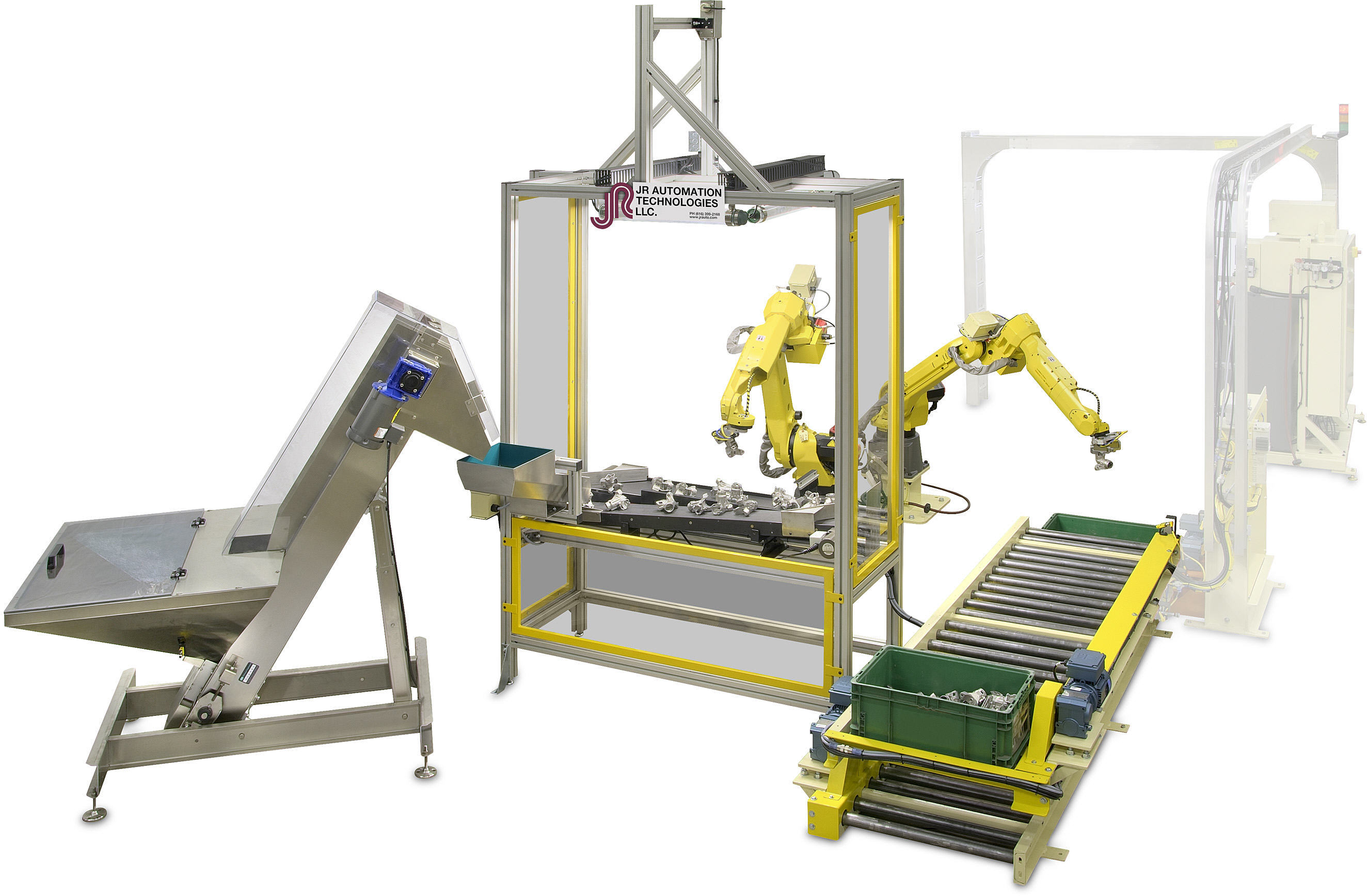
- Less expensive than internal development (people/resources)
- Mechanical and electrical engineering, fabrication
- Readily available equipment: Facilities, robots, tooling
- Development through prototype and computer simulations
- Faster time to market
- Development results carry over directly to production equipment, reducing engineering, build & debug time
|
An external engineering resource should provide: |

Get the Training You Need for a Safer Workplace!
Autonomous mobile robots are one of the fastest-growing segments of the robotics industry. During this live virtual training, you'll be introduced to safety protocols and best practices for working with mobile robots in industrial settings.
Learn more and register now for upcoming training dates.

JR Automation – A Hitachi Group Company
JR Automation is a leading systems integrator of intelligent automated manufacturing and technology solutions that solve customers’ key operational and productivity challenges. JR Automation serves customers across the globe in a variety of industries, including automotive, life sciences, and energy.
Discover how JR Automation – A Hitachi Group Company can support your automation journey with their complete range of solutions and expertise.
Visit Company WebsiteJR Automation – A Hitachi Group Company 


JR Automation is a leading systems integrator of intelligent automated manufacturing and technology solutions that solve customers’ key operational and productivity challenges. JR Automation serves customers across the globe in a variety of industries, including automotive, life sciences, and energy.