
Industry Insights
Here are the 10 Finalists for the 2026 Automate Startup Challenge
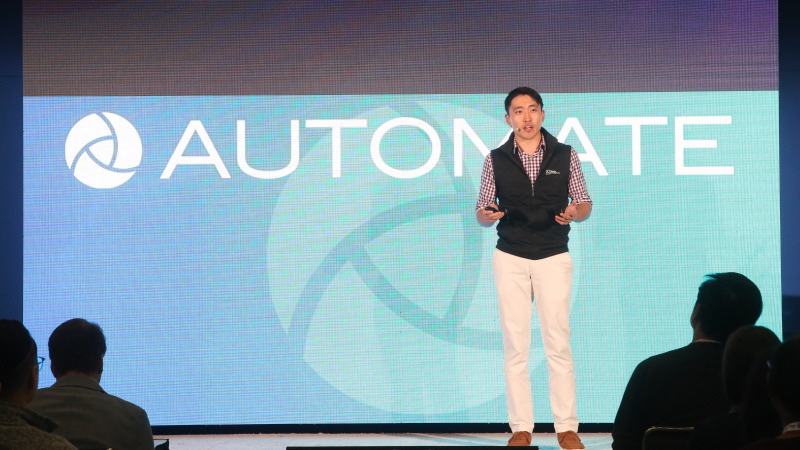
On June 22, automation startups will compete for bragging rights, a large novelty check, an interview on Automate Live, and 10,000 real U.S. dollars. The Automate Startup Challenge highlights the next generation of brains and brands transforming this industry.
Ten finalists will pitch their companies on stage at Automate in Chicago, while a panel of industry experts whittles the list down to one winner. It’s easily one of the conference’s most electric elements, offering a peek into what’s next for automation, manufacturing, robotics, and AI.
Since taking the top prize in last year’s contest, Kinisi has been making its mark with its wheel-based KR1 system. Just last week, founder Brennand Pierce was the guest on the Automated podcast. The week prior, the startup was among a very small number of firms with a functioning humanoid at one of the industry’s major trade shows.
Today we’re excited to unveil the list of finalists set for this year's Automate Startup Challenge. Get to know a bit more about each below.
Axomind: Robotics has reached the same inflection point personal computers did in the 1980s, according to the folks behind Axomind. The factory automation startup is building AI-powered robot orchestration software that can autonomously plan and execute robot tasks from computer-aided design data using AI models and 3D perception. The company’s first focus is on metal fabrication and final assembly.
Ceilix – You don’t need to worry about wheels or legs when you don’t touch the ground. Ceilix’s SkyBot is an industrial robotic system that travels along modular rails mounted to a factory ceiling. The positioning means it doesn’t have to maneuver around existing machines, people, and other traffic, unlike traditional AMRs. The track system can be configured freely and integrated into brownfield factors more easily than many other forms of automation.
Copper Robotics: While some envision a future where robots will be smart enough to make their own decisions, Copper Robotics aims to make them more predictable. The company is building a deterministic operating system for physical AI that is rooted in reliability. This open system gives developers the ability to break down a robot’s potential tasks into as many tiny components as they want without slowing the system down, and provides observability into all of a robot’s runtime data.

Get the Training You Need for a Safer Workplace!
Autonomous mobile robots are one of the fastest-growing segments of the robotics industry. During this live virtual training, you'll be introduced to safety protocols and best practices for working with mobile robots in industrial settings.
Learn more and register now for upcoming training dates.
Daxo Robotics – Sure it looks like a human hand, with four fingers and a thumb, but there’s a lot more going on than meets the eye. Daxo aims to build “complex systems, rather than complicated ones.” What that means in practical terms is actuators — and a whole lot of them. More than 100 per hand, in fact. The effector’s soft, flexible nature, coupled with physical AI means new forms of manipulation we humans can’t accomplish.
Mbodi AI – Why hard code a robot when you could just have a nice chat instead? Mbodi’s physical AI combines spoken commands and visual demonstration in a manner that can adapt to real-world changes and scale across robotic fleets.
Mowito Robotics - NeuralPick utilizes a combination of tactile sensing, physical AI, and vision to help robot arms better understand the task in front of them, and adjust as needed. The system learns through real-time feedback, while constantly updating its cloud control and models.
Hardhat Robotics – Hardhat is tackling construction’s ongoing labor shortage with easy-to-deploy robotic workstations. The team is starting with dangerous electrical jobs, allowing human workers to operate remotely, reducing industry and gathering import data in the process, as the startup looks to automate its system.
KoiReader Technologies: Supply chain logistics is a complex web of tiny data points and details that can be hard to keep track of. KoiReader Technologies’s KoiVision Platform is meant to give companies a better handle of it all. The software suite helps digitize and automate every aspect of supply chain logistics and can help customers do everything from AI-powered barcode scanning to autonomous tracking of shipping containers.
Luffy AI: Whether your company makes robots or thermal heating systems, Luffy AI is building an AI layer to control them. The company builds neuroplastic neural networks that are designed to learn continuously and adapt to new information the same way human brains do. The result is adaptive neural controllers that learn each physical system and adapt in real time.
ReOps Intellitech: One of the benefits of robots is that they can replace people in environments that are either too small or too dangerous for humans. ReOps Intellitech’s BIROS snake-shaped ground robot is designed to navigate disaster zones or cramped conditions and can be controlled both manually and autonomously. The company’s BIROS Subsea takes that same tech underwater.
Association for Advancing Automation
Discover how Association for Advancing Automation can support your automation journey with their complete range of solutions and expertise.
Visit Company Website


Design Your Product for Producibility, Design for Automation
Forget naughty or nice. Consumers want what they want, when they want it. Manufacturers have to deliver...
10 Finalists Named in Cowen Startup Challenge; Winner Chosen at Automate June 7
Competition during North America’s largest automation and robotics showcase, June 6-9, will spotlight cutting-edge technologies driving innovations
Stealth Bombers
Dusty CEO Tessa Lau discusses the challenges of launching the construction robotics startup.