
Industry Insights
Everyone Was Talking About Humanoids and Physical AI at Automate 2026
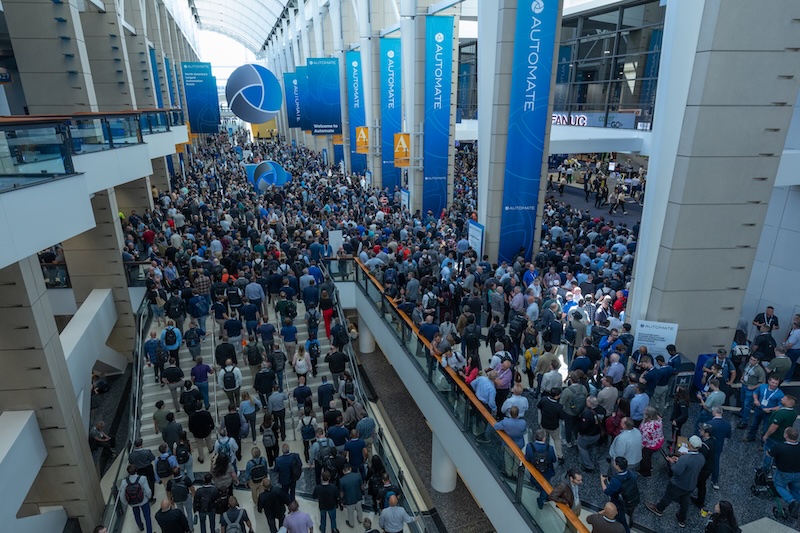
More than 50,000 human beings registered for A3’s 10th annual Automate conference. This time, there were plenty of humanoids amongst the McCormick Center throngs, as well, thanks in large part to the presence of the NVIDIA-sponsored Humanoid Robot Pavilion, coupled with the similarly named Forum (HRF), which was folded into the larger tradeshow after two years as a standalone event.
A3’s puts the combined number of humanoid and quadrupeds (a large net, admittedly) at more than 50. While the figure is a relative drop in the bucket in the overall context of on-site industrial robots — 1,230 exhibitors registered for the event — it represents a sharp uptick from last year’s show, where humanoids were much discussed and mostly absent.
The dynamic has shifted significantly in 2026. The humanoids are increasing, and so, too, has the skepticism. It’s a shift that came into sharp focus in — of all places — last September’s HRF. Increased mainstream media attention, mind-boggling fundraising numbers, and… aggressive production projections from prominent figures have put companies’ claims under the microscope.
Skepticism is distinct from cynicism, of course, and having played a key role in programming these last two HRFs, I can tell you that pragmatism is foundational to our discussions. I moderated the closing panels for both days, focusing on the biggest challenges to the form factor, deployment, adoption, generalization, training, and dexterity.
During the event, Agility announced that it was set to become the first U.S. humanoid firm to go public. The Oregon-based firm behind Digit will use a SPAC merger to accomplish this, raising a good deal of revenue in the process. At the event, CTO Pras Velagapudi told me the decision was motivated by the need to deal with some of the aforementioned challenges commercialization presents.
“[The purpose of the SPAC] is to support us in things we're doing,” he told me. “They understand how to communicate our progress. Because as we're growing, we are going to be strengthening our commercial pace. We're also introducing new technology. It's a lot of, we're introducing new features like safety into Digi and that's a bit different than a traditional company [that] might just be putting out quarterly reports of the products. We're doing a lot more than either. And so being able to tell that story effectively and show measurable progress towards our goals, they can help us with that because they've been doing it with other companies that are in similar positions and being really innovative.”
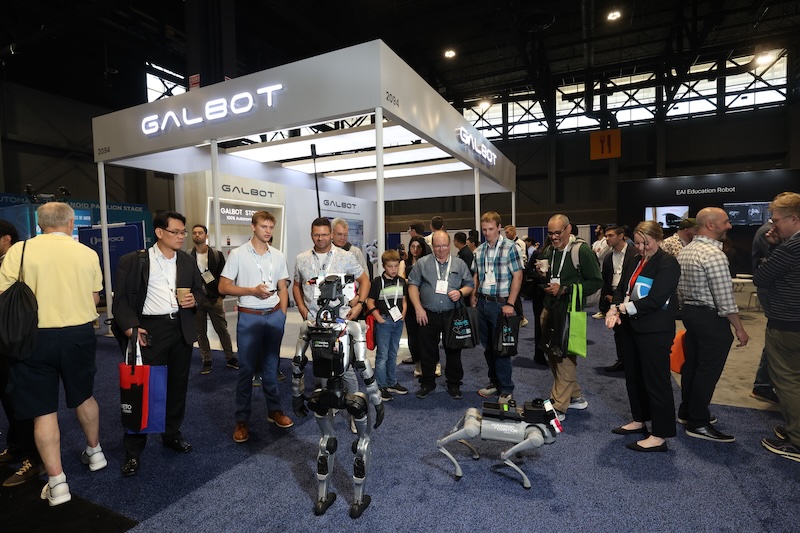
This past year has also seen a blurring of the lines for the form factor. As I’ve noted previously, it always seemed we were skipping a few important steps as the industry attempted to jump immediately from AMRs to bipedal humanoids. Unveiled at Modex a few months back, Locus’s Array finds a kind of happy medium.

Get the Training You Need for a Safer Workplace!
Autonomous mobile robots are one of the fastest-growing segments of the robotics industry. During this live virtual training, you'll be introduced to safety protocols and best practices for working with mobile robots in industrial settings.
Learn more and register now for upcoming training dates.
The new version of Proxie that Cobot unveiled last week at Automate is another take on this category. The system features a modular two-arm optional upgrade designed to “cover a wide array of human-scale, two-handed tasks including hospital resupply, warehouse kitting, life sciences lab operations, and manufacturing line tending,” per the company.
A more hybridized approach arrives in the form of last year’s startup challenge winner, Kinisi. The U.K. company returned to Automate/HRF, this time with its wheeled humanoid in tow. It also had some big news for the event, as it was being acquired by restaurant service robotics firm Bear. Both companies were cofounded by current Kinisi CEO, Bren Pierce.
Here’s another non-coincidence: Kinisi got a major headstart in robot design by adopting Bear’s platform for its wheeled base. In a very real sense, you can call it a humanoid/AMR hybrid.
AI — and more specifically physical AI — was a big theme both in and out of HRF. Many of the major news announcements tied to the event centered on the topic, which aims to deliver a level of machine intelligence that no longer requires programmers to hard-code robotics. That, in turn, promises a flexibility well beyond the sorts of single-purpose, repetitive machines that have dominated the industry for decades.
Apptronik, whose CEO Jeff Cardenas presented at day one of HRF, revealed its new Apollo 2 robot, built in collaboration with DeepMind. Google’s AI wing also played a formative role in the development of the humanoid maker’s new Robot Park, a 90,000-square-foot facility dedicated to a sort of brute force collection of physical AI.
Some prominent physical AI startups were on-hand, including Generalist. The Bay Area firm was sharing booth space with Universal Robots and Flexiv to showcase the promising breakthroughs the company has made in dexterity with its GEN-1 model.
I also had the pleasure of recording a live episode of the Automated podcast with Ali Agha of FieldAI. We kicked things off with a discussion about his time helping to develop space helicopters for NASA (true story), and the subject of DARPA challenges came up. It’s been doing that a lot lately with prominent startups, including Persona AI and Apptronik. It’s difficult to state how much of an impact these programs have had in accelerating U.S. robotics.
FieldAI also announced an impressive milestone over the week, noting that it has now brought in more than $100 million through revenue and customer contracts. It’s encouraging to be seeing big numbers in physical AI that aren’t just fundraising.
Association for Advancing Automation
Discover how Association for Advancing Automation can support your automation journey with their complete range of solutions and expertise.
Visit Company Website


SNAP Resources Premieres the SNAPMate Collaborative Robot Station at Automate 2019
SNAP Resources (SNAP), a Motion Controls Robotics’ affiliated company, will join READY Robotics in their Automate 2019 booth #7571.

Automate 2019 Closes Last Show in Chicago with Record Attendance and Leads
Automate, North America’s largest showcase devoted to automation industry trends, leading-edge technology and business innovation, ended its eight year run...
Sterling Engineering to Attend Automate 2026 in Chicago
Sterling Engineering will attend Automate 2026 in Chicago to connect with automation, robotics, controls, and advanced manufacturing leaders.