
Editorials
ISO 21423: Building Global Consensus for Mobile Robot Interoperability
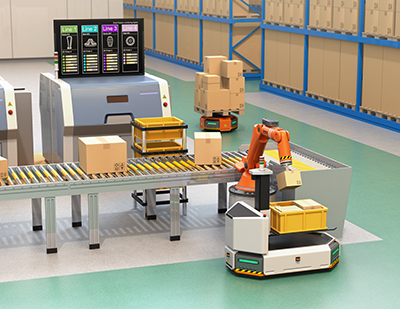 Interoperability is one of the defining challenges of the mobile robotics industry. End users are increasingly deploying mixed fleets from multiple vendors, across diverse environments, and under varying control architectures. A global standard that enables these systems to work together seamlessly is not just desirable, it is essential for the growth and scalability of automation. A group of experts in ISO's TC 299, Robotics, Working Group 10 (WG 10) has been developing the first global standard to solve this challenge.
"Enterprises deploying mobile robots expect them to work together effectively, regardless of the vendor or underlying technology," said Florian Pestoni, founder of InOrbit.AI, a platform for robot orchestration. "While this is already possible today, there’s still too much friction due to fragmentation. The new ISO 21423 standard will help move the robotics industry forward and accelerate scaled robot deployments."
A Truly Global Working Group
The development of ISO 21423 for interoperability of Industrial Mobile Robots (IMRs) has been an inclusive and international effort. Almost 90 participants have contributed to the working group to date, representing countries such as France, the United States, India, England, Germany, Denmark, Japan, Korea, Singapore, China, Canada, Sweden, Norway, Turkey, and Spain. This broad participation ensures that perspectives from around the world are being considered.
Importantly, the group includes end users, robot manufacturers, software platforms, system integrators, and academics, bringing together practical insights from real deployments, technical expertise from developers, and forward-looking ideas from research. This diversity of voices has helped shape a standard that is both pragmatic and forward-looking.
Built on Proven Foundations
ISO 21423 does not start from scratch. It builds on existing, widely-adopted frameworks—most notably the MassRobotics Interoperability Standard and VDA 5050. By leveraging these established efforts, the standard provides familiarity for developers while extending functionality to address broader use cases.
VDMA members have been instrumental in ensuring congruence between the approaches. In particular, the alignment around using widely adopted MQTT and JSON as foundational technologies lowers the barrier to adoption and creates a bridge between existing implementations and the new ISO framework.
Complementary Standards, Not Competitive Ones
It is important to recognize that industry standards are always evolving, and there is usually not a single answer that applies in all cases. Different customer needs may call for different approaches.
VDA 5050 was conceived for environments with centrally-controlled systems, where fleet management and task allocation are coordinated by a central authority. ISO 21423 will provide a more flexible framework, allowing for both centralized and distributed architectures, where robots and systems from different vendors can interoperate while still supporting various approaches to navigation, control and monitoring for a broad range of applications.

Get the Training You Need for a Safer Workplace!
Autonomous mobile robots are one of the fastest-growing segments of the robotics industry. During this live virtual training, you'll be introduced to safety protocols and best practices for working with mobile robots in industrial settings.
Learn more and register now for upcoming training dates.
These two approaches are not in conflict. They are complementary tools in the global robot deployment landscape. Together, they expand the options available to operators, integrators, software platform providers, and manufacturers, allowing them to choose the solution that best suits their environment and operational goals.
"General Motors has supported this effort right from the start," said Steven DuMont, Advanced Automation Development Manager at the automotive and industrial giant. "As an end-user of multi-branded industrial mobile robots around the world, GM is looking forward to a global standard helping to solve the interoperability challenge."
A Practical Example of the Need
Consider a real-world scenario: a fleet of autonomous forklifts from Vendor A might share space with autonomous floor-cleaning robots from Vendor B. Today, these machines cannot communicate or interoperate effectively. When two IMRs from different vendors encounter each other, they may block each other’s movement or create a traffic jam. This creates a productivity stall until a worker notices the issue, investigates, and resolves it.
By stating common requirements for IMRs to coordinate their operation effectively, ISO 21423 helps solve this problem. Instead of standoffs and manual intervention, interoperable robots can negotiate shared space, maintain smooth workflows, and deliver on the promise of automation.
"Industry has needed this standard for some time now," said Mark Lewandowski, Director of Robotics and Machine Safety at Procter & Gamble. "That's why we at P&G have been actively participating in the effort to develop ISO 21423. By enabling interoperability for industrial mobile robots, this new ISO standard will enhance flexible productivity at scale around the world."
Moving Forward Together
The publication of ISO 21423 represents an important milestone, but the work is far from over. Standards evolve through real-world application, feedback, and iteration. The strength of ISO 21423 lies in its ability to serve as a shared framework, reducing project-specific reinvention while leaving space for innovation.
With continued collaboration across regions, industries, and stakeholders, ISO 21423 can help make interoperability a reality—accelerating the adoption of mobile robotics worldwide and enabling systems that are more scalable, flexible, and user-friendly.
Daniel Theobald, founder of multiple automation-related start-ups including Mekable and Vecna Robotics, had this to say. "For automation to achieve its potential worldwide, it is vital that mobile robots in industry communicate effectively and interoperate smoothly. Just as people learn to pass each other peacefully on the sidewalk, so too must mobile robots in the workplace. As one of the earliest proponents of mobile robot interoperability, I am excited about the potential productivity gains that ISO 21423 will enable once it's published."
Next Steps
The ISO 21423 is currently at the Draft International Standard (DIS) stage, and is undergoing its approval ballot within ISO TC 299, Robotics. ISO's process for passing an approval ballot requires that at least two-thirds of TC 299 member countries must vote to approve a standard, while no more than one-quarter of member countries disapprove. Member countries can also propose edits to improve the final document. If approved, ISO 21423 could be published as early as mid-2026. End users of industrial mobile robot fleets can look forward to a truly global interoperability solution soon.
Association for Advancing Automation
Discover how Association for Advancing Automation can support your automation journey with their complete range of solutions and expertise.
Visit Company Website


ABB to Bring the “Factory of the Future” to Life with Latest Robotics Technologies at IMTS 2016
Over twelve demos to showcase the Collaboration, Simplification and Digitalization that are the hallmarks of the factory of the future.

Kassow Robots Honored by 2025 EDGE Awards
Kassow Robots was honored in the Robotics category at the 2025 EDGE Awards for its advancements in collaborative robotic technology for industrial automation.