
Editorials
How Robots in the Workplace Maximize Efficiency and Automation
Integrating Safety and Intelligence: The Future of the Robotic Automation Process
Facing persistent labor shortages and the demand for increased output, modern robotic solutions have become critical tools for manufacturing success. Robots in the workplace are the definitive answer for plant managers seeking to boost efficiency. By strategically deploying robots in the workplace for repetitive tasks like palletizing, companies not only reduce physical strain and improve throughput, but also lay the foundation for a more flexible, skilled workforce. This approach enables the scalable growth required to remain competitive, making the implementation of robust integrated safety systems paramount for protecting this valuable new operational environment.
In the article “How Robots Maximize Workforce Efficiency and Automation,” published in Plant Engineering, ACS Lead Automation Engineer, Austin Levin, discusses how the robotic automation process can significantly boost manufacturing efficiency by automating demanding tasks, optimizing workforce deployment, and future-proofing operations with modular, centralized control systems. While the physical robot does the work, the brain behind its efficiency is the Robotic Control System (RCS). Unlike traditional setups where each robot operates with its own separate controller, an RCS centralizes control of multiple robots in the workplace and all peripheral devices into a single, unified system. This approach offers several advantages that directly contribute to long-term efficiency. He talks specifically about the role of intelligent control systems, including:
- Simplified management: Allows plant control engineers (proficient in PLCs) to manage, adapt, and troubleshoot the entire system, reducing reliance on niche robot programmers. The management of the entire robotic automation process is streamlined.
- Space optimization: Centralized control eliminates separate control cabinets and programming space for each robot, enabling tighter layouts and saving valuable floor space.
- Modularity and flexibility: RCS architecture is future-proof and modular; new components can be added or reconfigured easily, demonstrating the flexibility of intelligent control systems.
The successful integration of industrial robots hinges on prioritizing safety through a dual-layer approach: combining essential physical barriers (fences, light curtains) with mandatory programmable controls (geofencing). This strategy ensures a safe and protected collaborative environment for robots in the workplace. Ultimately, the robotic automation process offers a path to scalable manufacturing. By strategically deploying automation and leveraging intelligent control systems, manufacturers can solve operational problems, enhance efficiency, and build a flexible, competitive production framework without simply replacing workers.
Read the full article here.

ACS
ACS designs, engineers, and builds innovative equipment, machines, controls, and facilities for industry leaders in automotive, aerospace, and manufacturing. As a systems integrator, we maximize facility efficiency using expertise in R&D test, process systems, and automation.
Discover how ACS can support your automation journey with their complete range of solutions and expertise.
Visit Company WebsiteACS designs, engineers, and builds innovative equipment, machines, controls, and facilities for industry leaders in automotive, aerospace, and manufacturing. As a systems integrator, we maximize facility efficiency using expertise in R&D test, process systems, and automation.
Association for Advancing Automation (A3) Mourns the Loss of a Beloved Friend
Mike Kunkle unexpectedly passed away on October 25, 2023. Kunkle contributed to several of A3’s robotics safety & certification programs.
Webinar: Safeguarding On Robots And Robot Cells
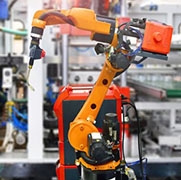
There are many advantages to robot integration, but there are also safety concerns and challenges. This 1-hour webinar introduces the basic concepts and considerations for safeguarding robots and robot cells, covering both tradition industrial robots and modern collaborative robots.
Case Study: Wireless E-Stopping Improves Safety Around Warehouse AMRs
Case Study: How a leading producer of autonomous mobile robots (AMRs) improved safety for warehouse customers with a wireless e-stop