
News
Programmable Electric Actuators Rapidly Replacing LVDT’s, Ball Screws in Pin Insertion and Height Gauging
Programmable electric actuators have been increasingly favored as airless substitutes for LVDT’s and ball screws in connector pin insertion and connector pin height measurement. Unlike ball screws or LVDT’s, electric actuators have programmable positioning. They can press the pin in with the correct force, verify its position, and provide a tight fit every time.
This change has been spurred by increasing dependency on critical electronics in a variety of industries. The automotive industry, with its need for 100% quality, has seen some of the greatest change. A misalignment of even a single pin in an automobile can result in recalls, layoffs and a wide-spread loss of consumer trust. A missing signal could ruin a car, a series of cars and/or an entire system.
Manufacturers need to fit contact pins into PCB boards with high speed and have the optional ability to choose orientation. They need a fast and flexible solution with 100% quality.
For example, an automotive manufacturer wanted to replace a ball screw and LVDT arrangement, which was the slowest part of the process in their testing machine. In addition, the spring loaded LVDT did not offer repeatability that they were looking for. They needed devices that are high speed and precise with flexibility in programming.
Many manufacturers have adopted programmable electric actuators, like SMAC Moving Coil Actuators, for its high speed, high precision, and flexible programming. SMAC electric actuators have programmable velocity, position and force, and the ability to give feedback on the work being done, while it is done. To measure the height of pin, SMAC uses a patented Soft-Land function. The Soft-Land function is a patented unique routine which allows the actuator rod to land on the surface of a component with a low programmed force. It gives extremely accurate sensing of product location or dimensions. This is particularly useful for handling delicate or high value components.

Get the Training You Need for a Safer Workplace!
Autonomous mobile robots are one of the fastest-growing segments of the robotics industry. During this live virtual training, you'll be introduced to safety protocols and best practices for working with mobile robots in industrial settings.
Learn more and register now for upcoming training dates.
When it comes to pin insertion, SMAC Moving Coil Actuators can push a pin into place and make sure it is not loose simultaneously, literally doing work and verifying its quality at the same time. The device presses the pin in with precise programmable force, verify the position, and achieve a tight fit with high repeatability. The result is higher speed, higher throughput, higher repeatability, and additional checks during the move. The SMAC actuator performs a fast approach, does the Soft-Land routine on a pin to avoid damaging it, and checks if forces are within given tolerances, up to +/- 10 – 15 grams force resolution. Position and force are checked during the entire motion profile in order to abort the process if there is any misalignment, force variations that are out of tolerance, incorrect pin heights, and other possible faults that need to be checked.
A similar method could be used for thread checking, dimensional inspection, or anything that needs 100% inspection, especially in automotive where quality is key.

SMAC Moving Coil Actuators
SMAC offers precision programmable electric actuators and custom encoders, delivering high-speed, accurate, and flexible automation for modern manufacturing.
Discover how SMAC Moving Coil Actuators can support your automation journey with their complete range of solutions and expertise.
Visit Company Website

SMAC offers precision programmable electric actuators and custom encoders, delivering high-speed, accurate, and flexible automation for modern manufacturing.
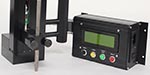
SMAC Measurement Tool Replaces Height Gauges
SMAC Moving Coil Actuators has released details on their upcoming Measurement Tool available in Q3, 2020.
senswork presents cutting-edge inspection for battery production at The Battery Show North America in Detroit
senswork will display its robot 3D inspection cell at The Battery Show in Detroit.