
Industry Insights
Motion Control: Enabling & Optimizing Automation
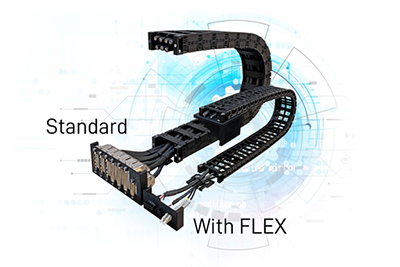 Motion control — the process of managing the movement of robot limbs and components using specialized systems — turns otherwise disorganized, immobile lumps of metal and plastic into versatile, coordinated automation solutions.
From industrial robots assembling items at high speeds and with great precision to medical robots performing careful incisions during surgery and mobile robots delivering packages in a crowded warehouse facility, motion control doesn’t just enable automation, it optimizes it too.
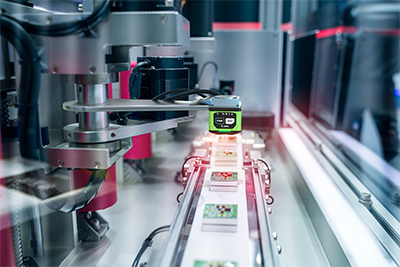 “Motion control is the foundation of modern automation. With motion control, machines can carry out repetitive, dangerous, or dirty tasks without human intervention. This not only increases efficiency but also reduces the risk of accidents and frees up human workers to focus on more complex or creative aspects of their jobs,” says Sam Hostvedt, president, Automation Distribution, an automation solutions provider specializing in robotics, pneumatics, electrical control and motion control products.
Today’s motion control systems incorporate actuators, sensors, and algorithms to enable precise control of the position, speed, and acceleration of robotic limbs and components.
Moreover, motion control optimizes automation by ensuring that machines move and operate in the smartest, most efficient, and effective way possible, explains Hostvedt. Advances in usability have made it easier than ever to achieve these goals.
“In the past, motion control needed programmers to do that optimization through creating that code themselves. These days, manufacturers of motion control products have spent a lot of time developing automated tools that self-optimize things like robotic path planning. AI coding is the latest advance in this area, and while in its infancy, will eventually revolutionize how motion control is optimized.”
Evolution in Motion
Motion control technology is continuously evolving, says Brian O'Connor, VP of marketing at Aerotech, a company that specializes in the design and manufacture of motion control systems.
“This can be partially attributed to the increased processing power available in motion controllers. As the semiconductor industry pushes to keep pace with Moore's Law, motion control stands as one of numerous applications reaping the benefits. The development of smaller, more powerful, and more efficient processors facilitates higher servo loop rates, faster communication buses, and increased trajectory generation rates, ultimately enhancing the accuracy and speed of processes.”
A key trend emerging from these advancements is “decentralized control,” which allows the placement of control electronics in closer proximity to the actual motion equipment than was possible using traditional technologies and approaches, explains O’Connor.
“It becomes feasible to integrate motion controllers and amplifiers directly into the positioning mechanics. This approach minimizes cabling requirements, resulting in automation machines with a smaller footprint. The reduction in cabling not only contributes to improved reliability in motion equipment but also mitigates particulate generation, especially critical in cleanroom applications for semiconductor and medical applications.”
ROI Calculator
Discover the potential cost savings of robotic automation over a 20-year system life
This calculator compares your current manual labor costs against the total cost of owning and operating a robotic system over its 20-year lifespan.
Combined with advancements in additive manufacturing, which enables the manufacture of new mechanical structures, and advancements in AI vision which enables users to deploy robotics in applications with extremely high product variability, the future of motion control is an exciting one. Nevertheless, motion control faces many of the same challenges being encountered by the wider automation sector.
Challenges in Motion Control
“The supply chain crisis hasn’t completely gone away, and availability of parts is still problematic. It has improved but we still run into availability issues on a daily basis,” says Automation Distribution’s Hostvedt.
Meanwhile, the pace of automation’s advance will be determined by end user budgets.
“I think that 2024 and 2025 are shaping up to be good years as far as automation budgets are concerned,” he says, “But there are some macro reasons that call for a level of pessimism, from multiple wars that the US has been pulled into, the 2024 election, exploding consumer and government debt, and gridlock in Washington.”
Companies consistently face the challenge of enhancing their products in terms of efficiency, speed, and cost-effectiveness — creating pressures that permeate through the entire supply chain, impacting motion control vendors, says Aerotech’s O’Connor.
“To remain relevant in a rapidly evolving market, motion control suppliers must continually innovate and deliver value to their customers. Failure to do so could render them obsolete. The competitive landscape propels companies to innovate and bring more value to their offerings, ultimately benefiting both industry participants and end-users.”
Future trends
Propriety communication protocols aren’t going to disappear, says Hostvedt, but there is a general move towards open communication protocols happening throughout the motion control space.
“The post pandemic supply chain crisis has made it clear to the manufacturers of motion control products that they need to open up and allow easy integration of their products on other’s platforms. We are also seeing more demand for open source or non-proprietary architecture such as OPC/UA and IO Link and I see that demand only increasing.”
Hostvedt also sees “standard robotic solutions” growing in effectiveness and popularity over the coming years.
“One of the reasons that automation has been so difficult to deploy at scale is because each application at each customer is a custom job. Even palletizing, which is probably the easiest and most prolific robotic application, is different from one customer to the next. That is changing as more and more OEMs have been coming out with ‘standard’ solutions that are highly customizable.”
Meanwhile, O’Connor envisages advances in more powerful and cost-effective processors having a significant impact on the motion control sector.
“This progress is expected to drive innovation within motion control and automation companies, fostering the development of new control approaches and expanding the accessibility of precision motion control to a broader range of businesses.”
AI is another major trend to watch, especially as AI tech is integrated into industrial motion control and automation applications.
“AI is on course to play a pivotal role in enhancing user experience, reliability, and overall system performance. This intersection of AI and motion control holds promise for transformative advancements in the field.”
Association for Advancing Automation
Discover how Association for Advancing Automation can support your automation journey with their complete range of solutions and expertise.
Visit Company Website


Flow Waterjet Delivers Faster, More Accurate Shape Cutting Solutions with Omron Automation
Flow Waterjet's partnership with Omron Automation has revolutionized shape cutting, increasing travel speeds by over 200%, improving precision