
Industry Insights
Functional Safety in Motion Control: Understanding Its Critical Importance in Motor Control Systems
With humans and robots sharing space, safety at every level is essential, from overall cell design down to the motors that control a robot’s movement. While motion control may not be the first aspect that comes to mind when considering robot safety, it plays a critical role. Motors can generate significant torque and speed, and if they fail, the consequences can be severe, ranging from serious injury to property damage and expensive downtime. That’s why functional safety features are so important: they ensure motors respond appropriately in fault conditions, helping prevent these potentially catastrophic outcomes.
For example, if a limit switch fails or an encoder gives corrupted feedback, a properly designed safety system will halt the motor without creating additional hazards. Safety features like these provide peace of mind regarding the safety and predictability of automation and other machines.
Importance of Function Safety
Safety and motion control requirements tend to be similar across multiple application domains, says Jesse Dowd, general manager at Allient Inc., a global specialty motion control technology company headquartered in Buffalo, New York.
“We focus on aerospace and defense, vehicle-based robotics, semiconductor equipment, and medical equipment and the systems used in these sectors all require precision and reliability. They are all highly regulated. And they all need to work safely for many, many years.”
With such systems requiring the integration of multiple complex processes into a single process or machine, the application challenges can be tricky, says Dowd, making motion control and functional safety critical to design success.
Functional safety has become a major topic over the past ten years, says Tom Knauer, global industry manager - robotics & automation at Balluff Inc., a global supplier of safety interface I/O blocks for robots and automation systems.
“We’re focused on the networking aspect of safety, which connects to motion, robotics, and changing paradigms around safety and productivity. Whether we’re talking about a robot or a conveyor, any equipment that has motion has the potential to cause injury or damage, making motion control a core part of the functional safety process.”
Safety Functions for Motor Control
Today’s motors integrate a variety of safety functions that align with widely accepted functional safety standards.
Safe Torque Off (STO), for example, is a safety function designed to ensure that when certain conditions are met the motor stops generating torque, preventing it from moving. STO is essential for safely stopping machinery, including robots, without physically disconnecting power and is used in both maintenance and emergency stop scenarios. When a tool change is required on an industrial robot arm, it is common for an STO to be enabled to ensure that none of the axes have any torque during the switchover.
Motor designers work to achieve defined levels of redundancy and electrical immunity, so that if certain events are detected or triggered, the hardware is designed so that it's not possible for the servo drive to move the motor.
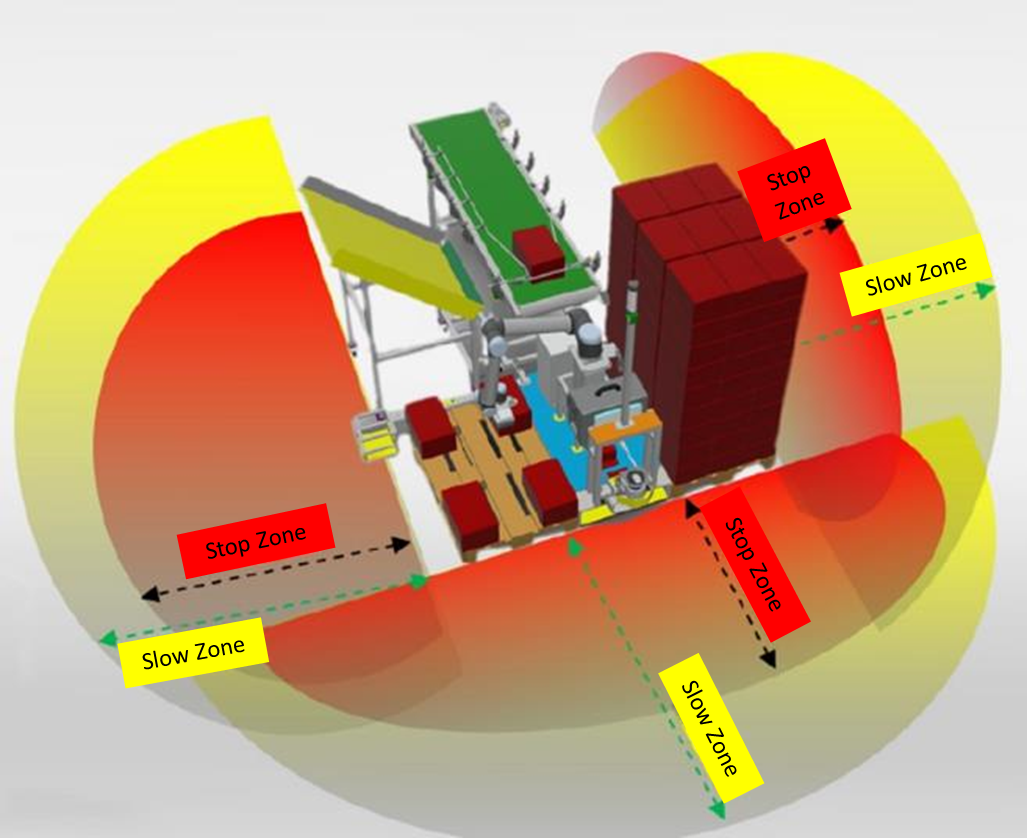
Credit: Balluff/Biuro Inżynierskie
Meanwhile, Safe Stop (SS) brings a motor to a controlled stop before torque is disabled. A version of SS that’s often used in vertical axes can bring a motor to a stop while maintaining a holding torque. This ensures that equipment raised on an external axis doesn’t crash to the ground when a SS is initiated. Similarly, if a fault is detected in a fast-moving conveyor system that feeds product to a robot arm, the SS safety function can be initiated to slow both conveyor and robot down in sync before cutting torque completely to minimize risks to persons and product.
Setting the Standards
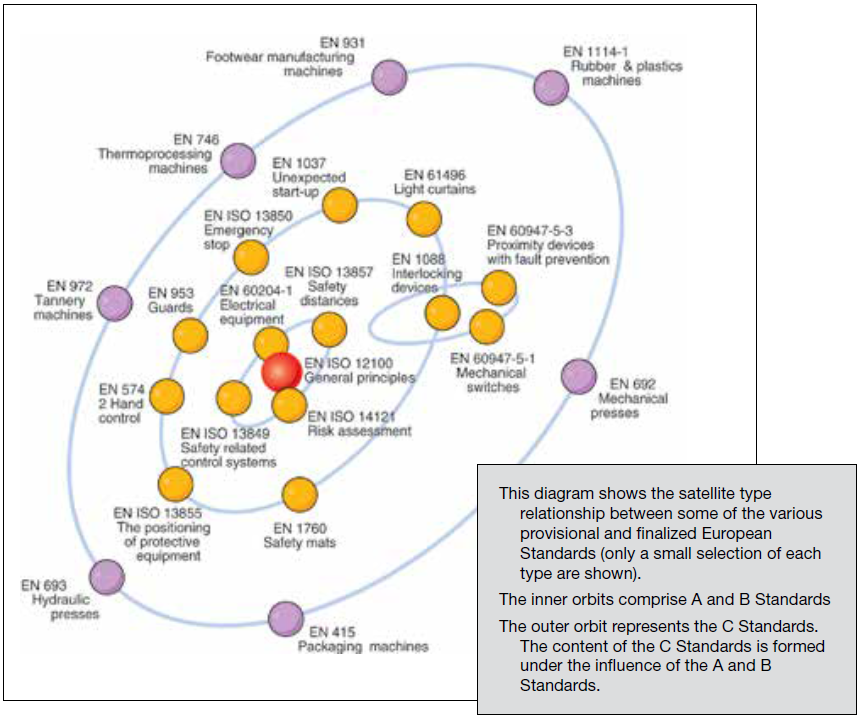
The rules governing how functional safety features like STO and SS are defined and implemented are laid out in multiple regional and international safety standards documents.
There is increasing harmonization of international standards, particularly between Europe and North America, says Balluff’s Knauer.
“There is a slew of standards ranging from broad ‘A’ standards like ANSI B 11 and ISO 12100:2010 through ‘B’ level standards that cover devices and methods of providing safety to ‘C’ level standards that tend to be machine specific.”
ISO 12100:2010 relates to the safety of machinery and sets out general principles for design, risk assessment, and risk reduction. Meanwhile, ANSI B 11 describes how to safeguard new, existing, modified, or rebuilt power and manual-driven machines used to process materials and associated equipment that is used to transfer material or tooling. The ANSI B 11 standards series also provides general performance and safety requirements for integrated manufacturing systems.
Meanwhile, the IEC 61508 standard covers the functional safety of electrical, electronic, or programmable electronic safety-related systems. And ISO 13849 lays out a methodology and provides requirements, recommendations, and guidance for the design and integration of safety‐related parts of control systems that perform safety functions, including software design. IEC 61800, which applies to adjustable speed electric DC power drive systems with semiconductor power conversion, is another standard often applied in this space.
Credit: Omron
Certified Motion Control Professional Program
Strengthen Your Skills and Enhance Your Career
Become a Certified Motion Control Professional (CMCP) and join the elite group of system integrators, machine builders, manufacturers, end-users and others recognized in the industry for their professional knowledge and expertise.
The emergence of functional safety standards over recent years is having a major impact on how safety is integrated into automated systems, says Allient’s Dowd.
“Historically, you built the machine with all its moving parts, and you deployed all kinds of equipment to protect the operators, machines, and work products, including light curtains, safety relays, protective switches, and emergency stops. Collectively, these make the machine safe, so that if somebody goes anywhere near something they shouldn't, it shuts off. This hard stop protection approach has been the paradigm for a long time.”
Functional safety standards change this paradigm by providing machine builders with multiple standardized ways to approach safety, explains Dowd.
“There are many different approaches available today. In the motion control components, you can do things in the circuitry and the circuit design to create intrinsically safe systems designed in such a way that you may not require additional safety equipment such as light curtains and safety relays. And you can design machines that will under specific conditions shut off or slow down or limit the amount of torque they put out so they can't hurt anybody.”
Increasingly, functional safety goes beyond hardware to cover firmware and software components too.
“You might be running parallel processors within the same DSP to monitor each other. One of them is like a heartbeat, keeping track of the safety of the system. And if something goes awry, the system will shut down safely, or it will reduce speed or reduce torque in a very controlled way defined by the safety standards, utilizing the motion control electronics and embedded firmware and software to manage the safety of the overall system.”
Networking and Communication
In complex industrial systems incorporating many machines with several moving parts all of which must be configured and integrated, network connectivity is critical to implementing functional safety effectively, says Shishir Rege, automation and technology specialist at Balluff.
“The IO-Link consortium is attempting to unify access to these devices, enabling data to be communicated via standardized communication and connection protocols. Harmonizing a standardized interface to all safety devices with a standardized communication protocol makes it much easier to integrate these complex devices. The IO-Link Safety standards constitute the first attempt at that and they are the next frontier when it comes to solving these integration challenges.”
IO-Link Safety extends the capabilities of the standard IO-Link protocol to include safety related communications and devices. Moreover, while previous networking solutions connected signals only, IO-Link communicates data between devices instead, says Rege.
“IO-Link connectivity enables rich communication with sensors. This supports functional safety, but also supports and enhances condition monitoring, predictive maintenance, and overall plant efficiency. As safety curtains, e-stops and other devices have become commodities, IO-Link creates a new era for these commodities to become more functional.”
Motor Integration
Allient has enjoyed success with motors that have integrated servo drives or motion controllers, says Dowd.
“Intelligent actuators with integrated servo control electronics and software embedded inside an overall package that also has mechanical features and gears is pretty clever. Considering the industry trends around electrification, automation, power efficiency, miniaturization, and safety, there are many reasons to integrate control electronics into mechanical features.”
The end result for Dowd is a “new era of safety”, with the emergence of functional safety, encoders, motion controllers, and master control software giving machine designers and component manufacturers different architecture approaches.
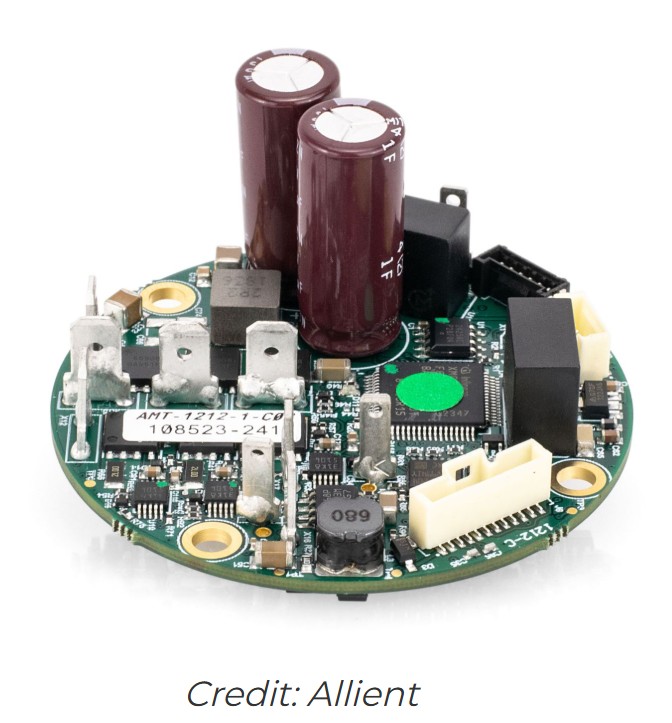
“They could achieve functional safety by having a servo drive with a certain safety integrity level. Or, to meet a lower safety level, they could use a combination of a servo motion controller, a servo drive and an encoder, or a second encoder. Now the burden of each one of those individual components might be a little bit less, while still achieving functional safety and there are more opportunities for machine designers to achieve ‘just right’ safety for their systems,” explains Dowd.
Future Trends
Technologies like the Industrial Internet of Things (IIoT), machine learning, and AI all have an impact on how functional safety is implemented in motor control. Sensors built into motors and drives can monitor factors such as temperature, vibration, and load. These capabilities can drive predictive maintenance strategies by enabling early detection of issues that may compromise overall safety. Meanwhile, machine learning models can be used to predict abnormal behavior such as fluctuating current draw and can then trigger safety interventions before faults escalate.
AI can also adjust motor behavior in real-time, enabling dynamic safety even in complex cells and cluttered environments like busy warehouses and manufacturing facilities. The convergence of motor control and digital intelligence means functional safety will increasingly rely on data-driven insights and real-time adjustments.
As functional safety technologies and standards get more established, innovation opportunities will grow for machine builders, says Allient’s Dowd.
“It’s getting easier to make better machines with the right set of safety certifications using different components and suppliers and technologies. New possibilities for achieving safety are changing overall system architecture, empowering builders to design the most effective and safe machine designs using the right component and system technologies.”
Association for Advancing Automation
Discover how Association for Advancing Automation can support your automation journey with their complete range of solutions and expertise.
Visit Company Website


How to Size a Motor
Key criteria include inertia, speed, acceleration, torque, and duty cycle.

maxon: Integration made easy.
The maxon motor EPOS2 motion controllers for DC brushed and brushless motors are enhanced.
How does the Piezoelectric Effect Work for Motion? Piezo Mechanisms for Motion Control
The inverse piezoelectric effect enables precision motion and is employed in piezo mechanisms for ultra-precision positioning and motion control.