
Industry Insights
Automation Solutions for an Aging Society: The Future of Elder Care
By 2030, one in six people in the world will be aged 60 years or older, according to the World Health Organization. By 2050, the population aged 60 and up will double to 2.1 billion. That’s expected to be 22% of the world’s population.
As the ratio of older to younger adults increases, there are fewer young people to pay for and provide elder care. An aging society poses mounting challenges to the world’s healthcare and social services resources.
Technology will be a vital tool in confronting these challenges, now and in years to come, by providing independence and reducing the level of support older adults need. By utilizing robotics and automation, artificial intelligence, and smart, connected electronics, these technologies can help control costs and reduce societal impact.
AI-Powered Elder Care Assistants
Robotic solutions such as the temi V3 Robot, an autonomous personal AI assistant, bridge the gap between medical care providers and residents in nursing care facilities. These types of AI-powered mobile robots also help family members as well as medical personnel stay engaged remotely with older adults who wish to age in place at home.
UBTech Robotics, winner of the prestigious Bronze Edison Award for their “Smart Elderly Care Solution,” is developing an entire elder care ecosystem of AI-enabled robotic and automation solutions to enhance seniors’ quality of life. Their seven-prong approach includes solutions in operational management, safety and security, health management, daily care, rehabilitation, mental and physical activities, and nutrition and diet.
 Automated Mobility Solutions
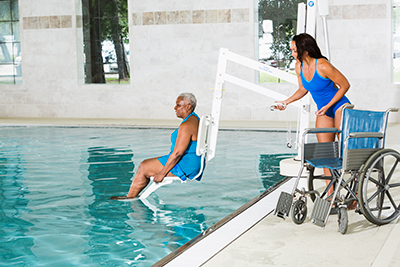
For seniors on the go struggling with mobility challenges, automation solutions support independent living and a more robust lifestyle. Whether at home or in a hospital, assisted living, or rehabilitation facility, mobility solutions including electric scooters, powered wheelchairs, stairlifts, and patient hoists, empower older adults and ease the burden on caregivers.
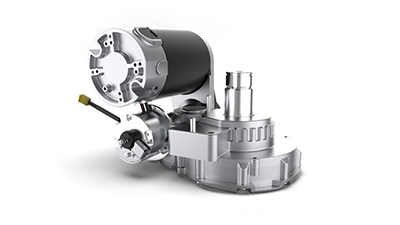
Parvalux by maxon makes the motors and gearboxes that put the motion control in these mobility solutions. The company’s geared motor designs provide high torque, precise control, and smooth operation in a compact envelope.
Developed and manufactured in the UK, the Parvalux core technology is a fractional horsepower, low-voltage DC permanent magnet motor. Often combined with a high-performance worm gearbox, the motor’s conventional iron-core construction provides a cost-effective design for the consumer market.
“Not only are aides and healthcare workers very expensive, but there are not enough of them to support our aging population,” says Parvalux business development manager John Uzzolino. “We support our customers with solutions that give the user more independence and better comfort at a good price. Products that provide users with these benefits translate into significant savings for both users and our healthcare system.”
 With healthcare workers in short supply and the shortage only expected to worsen, reliable and affordable solutions are critical. Safety and comfort go hand-in-hand.
“Parvalux has the most efficient worm gearboxes and power-dense motors using a conventional motor design, in their class, on the market,” says Uzzolino. “This means less power usage to operate our gearmotors and often a quieter design.”
Quiet, Compact, and Cost-Effective
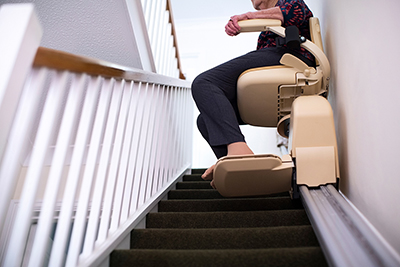
A smooth ride with less vibration, jolts, and noise is important, especially when these mobility solutions operate in the home. Electric stairlifts and powered wheelchairs allow older adults to age in place and get around more safely and securely.
 Most of the Parvalux powered mobility solutions run on rechargeable batteries. Energy efficiency is vital whether you’re out and about, or halfway up the stairs. In the case of stairlifts, explains Uzzolino, they must go up and down the stairs multiple times on one charge. This is important in case there is a power outage.
A powered wheelchair has two motors, one for each wheel that draws power from the battery. The motors and gearboxes need to be powerful enough to move the user for a prolonged period without draining the battery, as well as handle heavy loads. Parvalux worm gearboxes can transmit high torques in a very small package, making them highly efficient and allowing users to go further on a single charge.
Rapid Prototyping and Beyond
Parvalux gearmotor technology already had a rich 70-year history when Swiss mechatronic drive systems manufacturer maxon acquired the company in 2018. Maxon is world renown for precision drive systems used in industrial automation, aerospace, medical technology and robotic rehabilitation.
“Combining the motor technology from maxon and the gearbox technology from Parvalux has provided us with solutions that are highly unique in the industry,” says Uzzolino.
ROI Calculator

Discover the potential cost savings of robotic automation over a 20-year system life
This calculator compares your current manual labor costs against the total cost of owning and operating a robotic system over its 20-year lifespan.
Mobility solutions are often designed in conjunction with customers to optimize both price and performance, while supporting a fast time to market. The Parvalux modular series offers a wide selection of products that provide a competitive advantage for the prototyping phase of any project.
“Our modular series is good for rapid prototyping,” says Uzzolino. “We stock and configure it in the U.S., and ship out quickly, so customers can start proof of concept faster.”
By harnessing Parvalux gearmotor solutions, manufacturers can design next-generation mobility solutions that will improve the quality of life for people at any age.
While an aging society poses unprecedented challenges to the global healthcare sector, smart technology allows older adults to age in place with more independence and dignity.
 Smart Home Solutions for Seniors
Home automation is often viewed as a luxury or convenience. But for older adults, it can profoundly impact their ability to live independently. Smart home technology can help minimize the dependence on caregivers or family members for daily tasks, enabling seniors to live comfortably in their homes for longer.
Smart home solutions by ABB provide users with the ability to control their connected devices from a central location and create custom scenes to automate certain aspects of their daily routine. These scenes are activated using an app, voice commands, smart switches, or touch panels on the wall. For example, a voice-activated “Goodbye” scene can be programmed to turn off lights and entertainment devices, activate a robot vacuum cleaner, and adjust temperature and window blinds when a resident leaves home.
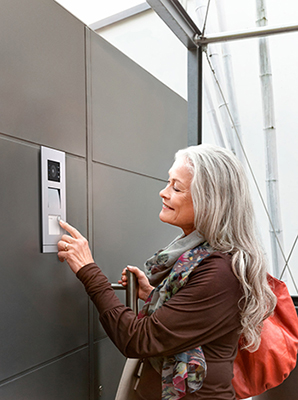
Older adults or people with mobility issues particularly benefit from voice control of integrated devices, door entry systems, and motion detection that can activate lighting. Through the connected door entry system, family members or caregivers can enter by using a QR code, or granted access by the resident via app, touch panel, or voice control.
Bernhard Caviezel, product marketing director for ABB Smart Buildings, part of the multinational’s Electrification business area, explains how one of their smart home systems works. ABB-free@home® is a holistic home automation system that offers an intuitive and easy-to-learn commissioning process for the installer, while end users value the possibility of performing changes to the system on their own. Intuitive user interfaces along with several partner integrations with home appliances, entertainment devices, or smart blinds are available, and most recently also with the Samsung SmartThings platform.
Safety and Security at Your Fingertips
By incorporating smart home technology, older residents enjoy greater independence and security, while also promoting their well-being and quality of life. A unique apartment-living concept in Switzerland called bonacasa combines contemporary architecture with integrated smart technology to provide a safer and more convenient lifestyle for active families and seniors alike.
 “We have been collaborating with bonacasa on several assisted living projects that utilize our home automation technology,” says Caviezel. “Residents live in smart, barrier-free apartments that, among others, feature the ‘Goodbye’ scene, activated by a smart switch located next to the door, helping residents avoid leaving appliances like the stove or iron on when they leave their apartments.”
The presence simulation function can record the weekly sequence of connected devices, so that daily routines can be mimicked and activated whether residents are home or away. With the smartphone app, remote control and a safety check is possible from anywhere.
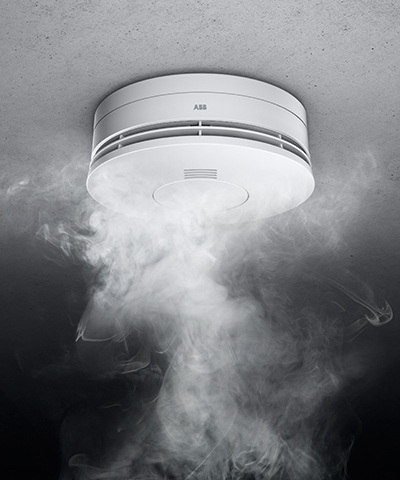
Smart detection for smoke, heat, and carbon monoxide adds more peace of mind. If an alarm is triggered, all detectors will sound, and the system will automatically send a push notification to the resident’s smartphone. It can also activate additional measures, such as turning on lights or opening blinds.
Interconnectivity for Independence
ABB-free@home has an open API to enable partner integrations with suppliers of smart blinds, home appliances, sound systems, and motorized windows. An ongoing partnership with Samsung Electronics and their SmartThings platform includes thousands of smart partner devices, as well as their own smart-enabled dishwashers, robot vacuum cleaners, TVs, and refrigerators. The ABB-Samsung smart home solution also enables partner integrations like smart garage doors, heated mattress pads, pet feeders, and even panic buttons.
“With one easy-to-use interface, even if multiple device manufacturers are integrated into the smart home system, there’s no need to have multiple different apps,” says Caviezel.
Interoperability between different systems and devices is easing adoption of these technologies. Seamless interconnectivity makes the lives of older adults easier, automating daily tasks and empowering independence.
With an eye to the future, Caviezel looks forward to holistic integration with health systems and care facility management to include daily schedules, such as using the smart home to remind and inform residents about appointments, group activities, or to take medication.
“More manufacturers (such as stairlift suppliers) should make their products ready to be integrated into smart home systems by following the protocols and standards established by the industry,” adds Caviezel. “This enables a more unified and easy-to-use smart living experience.”
As ease-of-use, interoperability, and integration continue to improve, adoption will expand, allowing more people to enjoy independence, dignity, and comfort at every stage of life.
Association for Advancing Automation
Discover how Association for Advancing Automation can support your automation journey with their complete range of solutions and expertise.
Visit Company Website


Humanoid Robots Are Evolving
Humanoid robots are still in their early stages, yet evolving fast.
Photoneo wins the RBR50 Award 2021
Photoneo's MotionCam-3D was recognized by Robotics Business Review as one of the most creative and influential innovations in the world.
Automated repair of parts
The ADAMS Lab of the University of Alberta developed a solution for automated repair of parts. The system is based on precise 3D reconstruction, for which it uses 3D vision by Photone