
Industry Insights
Bridging the Gap: Advances in Human-Robot Interaction
Robots are evolving quickly in the manufacturing space, becoming more intelligent, adaptable, and collaborative — moving beyond their position as useful tools and becoming active partners in a variety of applications.
As robot technologies and form factors continue to evolve, so does interaction between robots and humans. Developing technologies like artificial intelligence (AI), natural language processing, and advanced sensors are helping robots interact more effectively with their human counterparts. And innovations like advanced gesture recognition, voice commands, and adaptive learning allow robots to better understand and respond to human intent.
“In the last five years, we’ve seen technology evolve so quickly, and it’s actually allowing this human-robot interaction to take place,” says Jon Battles, vice president of technical strategy at Cobot.
Even as the industry evolved from fixed industrial robots to autonomous mobile robots (AMRs) and collaborative robots (cobots), many robots remained behind barriers of one kind or another, so they were not truly collaborative. The industry continues to move to a more collaborative model, though.

“The form factor is going to continue to evolve,” Battles says, pointing to the first Humanoid Robot Forum, put on late last year by the Association for Advancing Automation (A3), and other moves toward increasingly collaborative robots.
“Robots, once confined by physical barriers, now collaborate with humans with the help of advanced sensors and adaptive safety systems,” says Mark Gagas, vice president of Sensory Robotics. “Collaborative robots and AMRs enable real-time responsiveness, flexibility, and seamless integration into workflows.”
Safety Is Priority Number One
Safety is top of mind for all players, and it’s the key ingredient to tightening the relationship between robots and humans. “That’s where our industry is really going to have to focus — certifying this next generation of robotic systems to actually work directly with people,” Battles says.
With fenced robots, manufacturers often face the challenge of two competing interests: productivity and safety. “Traditional approaches, like using physical barriers, ensure safety but can significantly limit flexibility and slow down workflows,” Gagas says.
Newer form factors, like cobots and AMRs, introduce flexibility into the workflow but bring new safety considerations into play. Robots interacting more closely with human workers brings worries about managing the unpredictability of humans in dynamic environments.
“Robots must be able to adapt quickly and effectively without compromising safety or disrupting operations,” Gagas says.
But even collaborative robots are still generally bound by an area scanner or a sensor, Battles notes. “When people get too close, they shut down,” he says. “The next generation can actually work directly with people because of the enhanced safety, the enhanced sensors.”
In the humanoid space, for example, there are zero cooperatively safe robots so far, which means they are currently confined to work cells, noted Melonee Wise, chief product officer at Agility Robotics, at A3’s Humanoid Robot Forum in October.
Cooperatively safe robots can share a workspace and detect human presence but are generally designed to work with minimal interaction. AMRs typically fall within the cooperatively safe category. Getting to the status of collaboratively safe goes a step further — designed for direct interaction with humans.
In February, A3 released the first major revision of ISO 10218 — the global standard for industrial robot safety — since it was developed in 2011. Nearly eight years in the making, the revised documents bring needed clarity and integration to robot safety.
But more work will be needed to keep up with this rapidly evolving, AI-driven generation of robots, says Battles, who also serves on the A3 Artificial Intelligence Technology Strategy Board.
“We’re going to see a big push in industry to get the right certified component parts that actually build up to this full, completely certified, collaborative autonomous robot market,” he says. “But it’s not only the physical and control hardware that we have to be thoughtful about. It’s the artificial intelligence software behind this, the generative AI, the agentic code that is developing. How do we safely certify that and the commands that it’s giving to the robot? That’s also a big part of the conversation.”
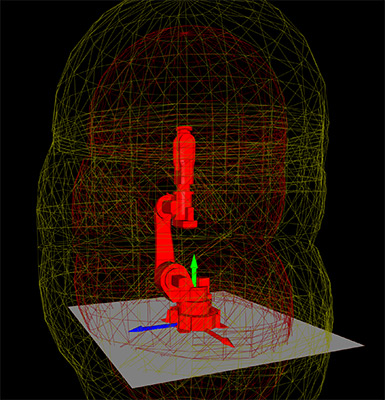 Unfencing Industrial Robots
Sensory Robotics makes robotic safety systems that track both robots and human workers to allow collaboration even with traditional industrial robots. “Our SR-1 solution uses 3D sensing technology to detect humans with precision. It creates adaptive safety zones, so robots automatically slow down or stop when people get too close,” Gagas explains. “This eliminates the need for fences, making workspaces safer and more flexible without sacrificing productivity.” This improves the interaction between machine and human by building trust.
SR-1 can integrate with multiple robots and AMRs to enable collaborative workflows even in complex environments. The automotive industry, which has long been a proponent of industrial robots on its manufacturing and testing lines, serves as a great example of this capability.
Gagas points to a particular automotive manufacturer that was looking to improve both safety and efficiency on a production line with multiple robots, AMRs, and human workers. “With the SR-1, we allowed for a fenceless cell with small safety zones, so workers could inspect components during production and rapidly improve the process,” he says.
The solution is helping the manufacturer transform its operations. It has seen a 25% reduction in downtime because robots no longer have to stop entirely when humans are nearby. The company also realized a 15% boost in productivity as workflows became smoother and more collaborative; mobile robots are now able to tend the line without tripping the safety system.
This sort of adaptability continues to advance, and robots will need to continue to better handle unexpected human movements in busy environments, Gagas says. But worker confidence is still a challenge. “Even with safety systems like the SR-1, it can take time for employees to feel comfortable working closely with robots,” he says.
Robots Come in Peace
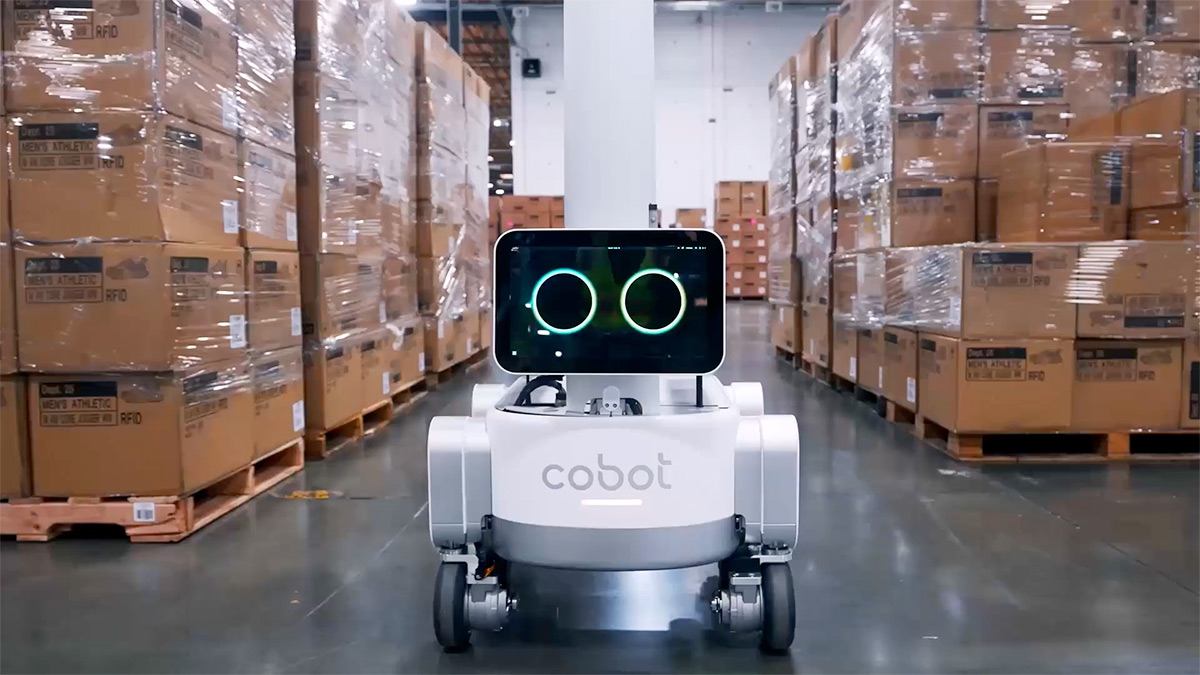
Believe it or not, a friendly face can go a long way in making robots less threatening to human workers, according to Battles, who says facial expressions can help build trust.
“You have robots that have no expressions that are kind of creepy to humans. And you have this generation of robots that are coming up that are going to have a much more friendly interaction with humans,” he says. “We believe a very trustworthy, friendly, approachable robot is really important. That could be visual cues like friendly eyes, a friendly smile, that type of thing, versus a very sterile humanoid robot that people can’t really tell what’s going on. I think that’s a big evolution you’re going to see with trustworthy interactions with machines and robots.”
Cobot’s Proxie robot — which lies somewhere between the AMR and humanoid realm — aims to put workers at ease. “We want a very trustworthy, approachable robot form factor,” Battles says. “We have a very clean form factor. We have a nice set of friendly eyes and a little smile on the robot. We’re trying to make the robot very approachable.”
The Ameca humanoid robot, created a few years ago by Engineered Arts, might come to mind, with its incredibly realistic facial expressions and humanlike movements. But that’s likely more than what’s needed in a manufacturing environment.
“We don’t necessarily want a full humanoid robot that’s super complex, where you might have 80 actuators,” Battles says. “We think there’s a more simplified mechanical and physical form that can still unlock a massive amount of usefulness.”
In a couple pilot projects with Proxie, workers have shown a high level of curiosity about the robot and are eager to work with it. “That’s a great sign,” Battles says. “People like to work with the robot. They see the help that it’s actually giving them.”
In one of those pilot projects, Proxie is working for Maersk, one of the world’s largest third-party logistics providers, to transport freight carts. “Think about people pulling and pushing these heavy freight carts,” Battles says. “Our robot is actually moving those now and sorting those, taking care of the fulls and the empties as part of their work function.”
In another pilot project, the same robot — without any modifications — is working in a laboratory, handling medical samples and other small lifts. “Those are both great examples of the same robot being able to work in an industrial freight environment but also come into a very structured laboratory environment and do that work,” Battles says. “Our journey is to have our same robot work health care, manufacturing, logistics, distribution, and fulfillment services industries. That goes back to this highly adaptable, highly useful robot.”
The Role of Artificial Intelligence
AI will be instrumental in unlocking a robot’s ability to adapt to different tasks and to interact with different types of workers. AI will play several important roles as human-robot interaction continues to develop.
AI is instrumental, for example, in helping robots predict human movement, so a robot can adjust proactively rather than just reactively. And AI can process sensor data in real time to make split-second decisions for safety and efficiency, Gagas adds.
“Over time, AI systems become smarter, learning from their interactions and adapting to changing environments,” Gagas says. “This continuous improvement allows them to make more correct decisions, improving efficiency and integrating into complex workflows.”
At Maersk, Cobot is testing its natural language models on its Proxie robot. This branch of AI could be a game changer for human–robot interactions.
“Natural language allows people to talk to the robot, but it’s really the agentic AI behind that, being able to give it a command,” Battles says. “The robot — essentially the software AI — is going to interpret that command and respond back, ‘Is this what you want?’ and then go and execute that.”
This sort of scenario might be particularly beneficial in more limited use cases to provide a very easy integration of a robot into a work environment. “You wouldn’t necessarily have to fully integrate it with all of the warehouse management features, all of the software features,” Battles explains. “We’re working on that too, but we do think this next generation of technologies is going to be heavily in natural language-driven interaction.”
Agentic AI is a type of artificial intelligence that can operate autonomously and adapt to changing environments without continuous human intervention. Agentic AI agents are designed to interact with their surroundings and refine their behavior based on feedback, enabling robots to interact more effectively with their human counterparts.
AI is the new space race, Battles says, with organizations and governments around the world committing huge resources to development.
“It’s going to be the foundation of the smarter, more functional collaborative robots that are coming out,” Battles says.
With AI developing so quickly, though, the discussion circles back around to the need for attention to safety.
“There’s going to be AI running at the edge with all this new compute capability. How do we ensure that’s actually safe?” Battles asks, aiming the same question at the large language models that could be directing collaborative autonomous robots.
The integration of AI brings tremendous potential for efficiency in manufacturing, Gagas notes, but it will be critical to align AI capabilities with safety standards. “We need to ensure that these systems can be trusted to run safely in dynamic environments,” he says.
Robots Look to the Future
As human-robot interaction moves forward, other cutting-edge technologies will help along the way. “Tactile sensors, for example, could enable robots to manage delicate tasks alongside humans,” Gagas says. “Augmented reality interfaces would allow workers to see live safety zones or robot behavior, making collaboration more intuitive.”
Edge computing, which processes data closer to the source rather than relying on a central data center or cloud, would enable faster data processing to improve robotic response times.
Gagas envisions an ever-evolving collaborative workspace. “We’re going to see robots and humans working together in ways that feel completely natural,” he says. “Robots will become more adaptable, able to respond in real time to human actions and environmental changes. We’ll also see a shift toward fully autonomous workspaces, where robots handle repetitive tasks and humans focus on higher-level work.”
Association for Advancing Automation
Discover how Association for Advancing Automation can support your automation journey with their complete range of solutions and expertise.
Visit Company Website


Meili Robots Partners with InOrbit to Boost Their Fleet Management Solution
COPENHAGEN, DENMARK (OCTOBER 13, 2021) – Meili Robots, the provider of the universal fleet management system Meili FMS, has now partnered with the cloud-based RobOps platform InOr
The Bot Brief
The Bot Brief is a weekly newsletter regarding corporations and their price movements
Jobs and Careers at Güdel
Güdel cares about development of high-tech products, and also with promoting the personal strengths of our employees.