
What Is NVIDIA Omniverse?
NVIDIA Omniverse is a platform for building and operating physically accurate 3D simulation environments and digital twins, enabling real-time collaboration, AI integration, and photorealistic rendering for robotics, manufacturing, and automation applications. Built on Universal Scene Description (USD), Omniverse connects various design, simulation, and visualization tools into a unified workflow where engineers can create virtual factories, test robotic systems, and optimize processes before physical implementation.
Unlike traditional simulation software designed for specific tasks (robot path planning, process simulation, layout design), Omniverse provides a comprehensive platform integrating multiple simulation types, AI capabilities, and real-time synchronization with physical systems. Engineers can combine robot kinematics, physics simulation, sensor modeling, and AI training in photorealistic environments that accurately represent real-world conditions.
NVIDIA positions Omniverse as infrastructure for the industrial metaverse, where digital twins of factories, warehouses, and logistics operations enable testing, optimization, and operation of complex automated systems. The platform leverages NVIDIA GPUs for real-time rendering and physics simulation, supporting applications from individual robot cells to entire manufacturing facilities.
How Does NVIDIA Omniverse Work With Automation and Digital Twins?
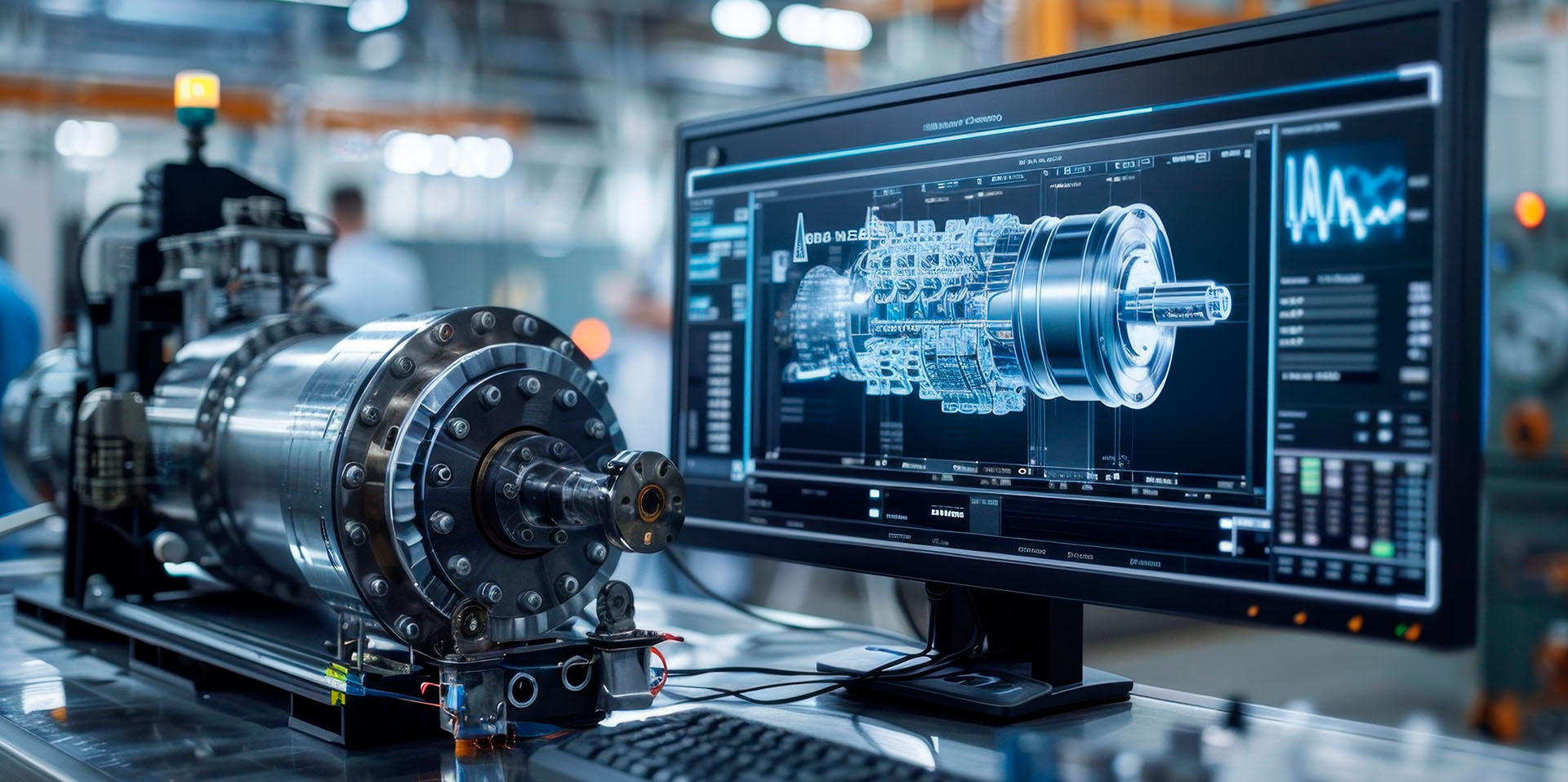
NVIDIA Omniverse creates physically accurate virtual environments where robots, sensors, and automation equipment behave as they would in reality, enabling engineers to design, test, and optimize systems virtually while maintaining bidirectional synchronization with physical assets for operational digital twins.
Physical Accuracy and Simulation Fidelity
Omniverse incorporates NVIDIA PhysX for physics simulation, accurately modeling:
- Robot dynamics: Joint friction, inertia, motor torque characteristics matching real hardware
- Material properties: Object weights, surface friction, deformability affecting manipulation
- Contact physics: Gripping forces, collision responses, part-to-part interactions
- Sensor simulation: Camera characteristics, lidar point clouds, depth sensing matching real sensors
This physical accuracy enables simulation results to predict real-world behavior. A robot gripper designed and tested in Omniverse exhibits similar performance when deployed physically, reducing the sim-to-real gap that plagues traditional simulation.
AI Training and Synthetic Data Generation
Omniverse generates photorealistic synthetic data for training vision AI and reinforcement learning algorithms. Engineers create virtual manufacturing environments with:
- Variable lighting conditions (different times of day, various fixture types)
- Product variations within tolerance
- Defect types and positions for inspection training
- Cluttered environments for robot perception training
This synthetic data supplements or replaces expensive real-world data collection. Training vision systems for defect detection might require 5000+ labeled images collected over months in physical facilities. Omniverse generates equivalent datasets in hours with perfect labels, accelerating AI development.
Digital Twin Integration
Omniverse digital twins maintain synchronization with physical systems through IoT connectivity:
- Physical robot sends joint positions, velocities, and sensor data to virtual twin
- Virtual twin mirrors physical state in real-time 3D visualization
- Engineers interact with digital twin to test modifications before implementing physically
- Optimizations developed virtually deploy to physical systems through control system integration
This bidirectional connection enables monitoring remote facilities, training operators on virtual replicas, and testing process changes without production disruption.
Collaborative Workflows
Multiple engineers work simultaneously in shared Omniverse environments. A robot designer modifies end-effector geometry while a controls engineer tests path planning and a facility planner evaluates layout changes, all in the same virtual environment with changes visible to all participants in real-time.
This collaboration extends across different software tools through USD. A mechanical engineer uses SolidWorks for CAD design, a simulation engineer uses Isaac Sim for robot programming, and a visualization specialist uses Unreal Engine for rendering, all contributing to the same Omniverse project with automatic synchronization.
How Does NVIDIA Omniverse Compare to Traditional Automation Simulation Platforms?
NVIDIA Omniverse provides integrated multi-physics simulation, photorealistic rendering, and AI training capabilities in unified environments, while traditional platforms specialize in specific simulation types (robot kinematics, discrete event simulation, process modeling) with limited visual fidelity and separate workflows for different tasks.
NVIDIA Omniverse vs Traditional Automation Simulation Software: Feature Comparison
| Feature | NVIDIA Omniverse | Traditional Automation Simulation |
|---|---|---|
| Visual Fidelity | Photorealistic, ray-traced rendering | Simplified 3D or schematic representation |
| Physics Simulation | Real-time multi-physics (rigid body, soft body, fluids) | Kinematic or simplified physics |
| AI Integration | Native reinforcement learning, synthetic data generation | Limited or requires separate tools |
| Sensor Simulation | Accurate camera, lidar, depth sensing modeling | Idealized or absent |
| Collaboration | Real-time multi-user in shared environments | Sequential file-based workflows |
| Interoperability | USD-based, connects multiple tools | Proprietary formats, limited integration |
| Digital Twin Support | Bidirectional real-time IoT connection | Offline or limited connectivity |
| Hardware Requirements | High-end NVIDIA GPU required | Moderate CPU-based systems |
| Learning Curve | Steep, requires 3D/simulation expertise | Moderate, domain-specific |
| Best For | Complex environments, AI training, photorealism | Specific simulation tasks, established workflows |
Visual Fidelity Advantages
Omniverse renders environments photorealistically using ray tracing, accurately simulating lighting, shadows, reflections, and material appearance. This visual fidelity serves multiple purposes:
Realistic sensor simulation: Vision AI trained on Omniverse synthetic data generalizes better to real cameras because lighting, shadows, and material appearance match reality. Traditional simulation's simplified graphics create a sim-to-real gap where AI performs well in simulation but poorly on actual cameras.
Stakeholder communication: Photorealistic renderings help non-technical stakeholders understand proposed automation systems. A CFO evaluating a multi-million dollar robotics investment understands photorealistic factory simulations more readily than abstract schematic representations.
Operator training: Training operators on photorealistic digital twins that look and behave like real equipment improves skill transfer. Operators trained in simplified simulations face steeper learning curves transitioning to physical systems.
Integrated Multi-Physics
Traditional platforms typically specialize. FlexSim excels at discrete event simulation for logistics, RobotStudio focuses on ABB robot programming, and AutoCAD handles facility layout. Each tool addresses specific needs but requires manually transferring data between tools when combining simulation types.
Omniverse integrates:
- Robot kinematics and dynamics
- Material handling and logistics flow
- Sensor physics (vision, lidar, force-torque)
- Environmental conditions (lighting, temperature for thermal analysis)
- Fluid dynamics (for applications involving liquids)
This integration enables analyzing system interactions that traditional separate-tool workflows miss. How do changes in conveyor speed affect robot cycle times? How does warehouse lighting affect vision system performance? These questions require integrated simulation unavailable in traditional platforms.
AI and Machine Learning Integration
Omniverse includes NVIDIA Isaac Sim for robot simulation with native reinforcement learning support. Engineers train robots to perform tasks (bin picking, assembly, navigation) by having them practice millions of attempts in accelerated simulation, learning optimal behaviors before physical deployment.
Traditional simulation platforms lack this AI training integration. Engineers must export simulation data, set up separate machine learning environments, train models, then import results back to simulation, creating friction that Omniverse eliminates through integration.
Limitations Compared to Traditional Tools
Traditional platforms offer advantages in specific domains:
Domain expertise: Software like DELMIA, Tecnomatix, or Process Simulate represents decades of manufacturing engineering knowledge codified into workflows, templates, and best practices. Omniverse provides powerful technology but less accumulated domain knowledge.
Established workflows: Companies have existing processes, trained personnel, and validated methodologies using traditional tools. Switching to Omniverse requires retraining and workflow redesign.
Hardware requirements: Omniverse demands high-end NVIDIA GPUs for acceptable performance. Traditional tools run on standard PCs, reducing infrastructure cost.
Specialized analysis: Traditional tools provide specialized capabilities (cycle time analysis, reachability studies, ergonomic analysis) developed over decades. Omniverse requires custom development for equivalent specialized functionality.
What Automation Applications Benefit Most From NVIDIA Omniverse?
Warehouse and logistics automation, robotic manipulation in cluttered environments, autonomous mobile robot navigation, vision-guided assembly systems, and multi-robot coordination benefit most from Omniverse's photorealistic rendering, sensor simulation, and AI training capabilities.
Warehouse and Logistics Automation
Automated warehouses involve complex interactions between autonomous mobile robots (AMRs), conveyors, picking systems, and human workers. Omniverse simulates entire facilities including:
- AMR fleet management and traffic coordination
- Pick and place operations with robot arms
- Human-robot interaction for collaborative picking
- Sensor coverage analysis for vision and safety systems
Companies use Omniverse to:
- Design warehouse layouts optimizing robot efficiency before construction
- Test software updates on digital twins before deploying to physical fleets
- Train reinforcement learning algorithms for task allocation and path planning
- Generate synthetic data for training vision systems on diverse products and conditions
The ability to simulate hundreds of robots interacting in complex environments with realistic sensor behavior provides insights unavailable from traditional simplified simulations.
Robotic Bin Picking and Manipulation
Picking parts from cluttered bins challenges traditional simulation because success depends on accurate physics (how parts rest on each other), realistic vision (lighting, shadows, occlusions), and learned behaviors (grasp strategies for different orientations).
Omniverse enables:
- Physics-accurate simulation of part interactions in bins
- Photorealistic rendering for training perception algorithms
- Reinforcement learning training where robots learn manipulation strategies
- Testing thousands of part configurations and lighting conditions virtually
Engineers validate robot cells entirely virtually, then deploy with high confidence the system will perform similarly in reality.
Autonomous Mobile Robot Navigation
AMRs navigating factories and warehouses require sensor fusion (cameras, lidar, ultrasonic) to perceive environments, detect obstacles, and plan safe paths. Omniverse accurately simulates:
- Lidar point clouds reflecting real sensor characteristics
- Camera images with accurate lighting and material appearance
- Dynamic environments with moving obstacles (humans, forklifts, other robots)
- Edge cases (reflective surfaces, transparent materials, challenging lighting)
This enables training perception and planning algorithms on synthetic data representing far more scenarios than practical to collect physically. An AMR can experience millions of miles of virtual navigation before first physical deployment.
Vision-Guided Assembly
Assembly operations using vision for part localization, orientation detection, and quality verification benefit from Omniverse's photorealistic rendering. Vision algorithms trained on synthetic data generated with accurate lighting, material properties, and part variations generalize better to real cameras than algorithms trained on simplified simulations or limited real datasets.
Applications include:
- Electronics assembly with vision-guided component placement
- Automotive assembly using vision for part identification and alignment verification
- Pharmaceutical packaging with vision inspection for correct contents and labeling
Multi-Robot Coordination
Applications involving multiple robots working cooperatively (collaborative assembly, material handoffs between robots, synchronized motion) require simulation capturing robot interactions, shared workspaces, and coordinated control.
Omniverse simulates multiple robots with accurate physics and timing, enabling:
- Validating safety systems ensure robots don't collide
- Optimizing task allocation and sequencing
- Testing communication protocols and failure recovery
- Training coordination algorithms through multi-agent reinforcement learning
Traditional simulation platforms struggle with multi-robot scenarios requiring integrated physics, accurate timing, and realistic sensor simulation that Omniverse provides.
Conclusion
NVIDIA Omniverse represents a new generation of simulation and digital twin platforms specifically designed for complex automation environments requiring integration of physics simulation, photorealistic rendering, AI training, and real-time collaboration. The platform's strength lies in unifying previously separate workflows into comprehensive virtual environments where mechanical design, control system development, AI training, and operational digital twins coexist.
Compared to traditional automation simulation software, Omniverse offers superior visual fidelity, integrated multi-physics simulation, and native AI capabilities at the cost of steeper learning curves and higher hardware requirements. Traditional platforms maintain advantages in specialized domain functionality and established workflows, making tool selection dependent on specific application requirements and organizational capabilities.
Applications involving complex perception (vision, lidar), learned behaviors (reinforcement learning), multi-robot coordination, or requirements for photorealistic visualization benefit most from Omniverse capabilities. As automation systems incorporate more AI, operate in less structured environments, and require more sophisticated sensing, Omniverse's integrated approach to simulation, training, and digital twins becomes increasingly valuable for developing and operating next-generation automated systems.
Recommended Resources
Explore additional materials to deepen your understanding of NVIDIA Omniverse, AI simulation, and industrial digital twins.
What is NVIDIA Omniverse and How Will it Affect U.S. Manufacturing?
NVIDIA Omniverse is redefining what it means to design, operate, and optimize industrial systems in a digital age. More than a visualization engine, it's an extensible development platform for industrial digital twins, synthetic data generation, and physical AI simulation.
Visual Components Leads the Way in Industrial Simulation Solutions with NVIDIA Omniverse
Visual Components announces its collaboration with NVIDIA and Lotus Technology to roll out a powerful and immersive simulation solution that will redefine how the manufacturing industry plans its systems.
NVIDIA AI & Robotics at the Edge Spanning Multiple Industries
See NVIDIA's Isaac platform deployed at the edge for autonomous mobile robotics across multiple industries and use cases, including: industrial automation, health care, retail, agriculture and more.