
What Is the Difference Between Global and Rolling Shutter?
Global shutter cameras expose all pixels simultaneously across the entire sensor, capturing a single moment in time, while rolling shutter cameras expose pixels row by row sequentially from top to bottom, creating a time delay between the first and last row captured. This fundamental difference in exposure timing affects how cameras handle motion, with global shutters producing accurate representations of moving objects while rolling shutters can introduce geometric distortions.
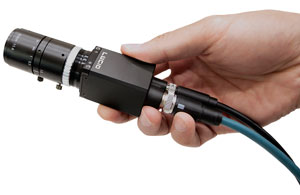
The shutter type determines whether a camera captures a true snapshot or a time-sliced view of the scene. Global shutter sensors include per-pixel storage that holds the captured charge while readout occurs, allowing all pixels to integrate light simultaneously. Rolling shutter sensors read each row sequentially, with exposure and readout happening row by row, reducing sensor complexity and cost but introducing timing differences across the image.
For static scenes, both shutter types produce identical results. Differences emerge when objects move, lighting changes rapidly, or the camera itself moves during exposure. Understanding these differences is critical for selecting appropriate cameras for machine vision, quality inspection, robotics, and high-speed imaging applications.
How Do Global Shutters Capture Images?
Global shutter sensors expose all pixels simultaneously, then transfer the accumulated charge to storage areas while the next exposure begins, enabling true snapshot imaging without motion-induced distortions.
Simultaneous Exposure
When a global shutter camera triggers, every pixel on the sensor begins integrating light at the same instant. This exposure period continues for the programmed duration (the exposure time or shutter speed), then all pixels stop integrating simultaneously. The result is a true snapshot representing a single moment across the entire image.
This simultaneous capture is achieved through pixel architecture that includes storage areas separate from the photodiode. During exposure, charge accumulates in the photodiode. When exposure completes, this charge transfers instantly to a storage region shielded from light. The stored charge then reads out while the photodiode begins the next exposure.
Charge Transfer and Readout
The charge transfer from photodiode to storage happens in microseconds, effectively freezing the image. After transfer, readout proceeds row by row to convert stored charge to voltage and digitize the signal, but this sequential readout doesn't affect image timing since the charge represents the simultaneously captured exposure.
This architecture requires additional transistors and storage capacitors per pixel, increasing pixel complexity and reducing the light-sensitive area (fill factor). The trade-off is accurate motion capture and elimination of rolling shutter artifacts in exchange for slightly reduced sensitivity compared to equivalent rolling shutter sensors.
Frame Rate Considerations
Global shutter frame rate is limited by readout speed and exposure time. If exposure time is 1 millisecond and readout takes 5 milliseconds, maximum frame rate is approximately 167 fps (1000ms / 6ms). Faster readout electronics and shorter exposures enable higher frame rates.
Modern global shutter sensors achieve hundreds of frames per second for typical resolutions, with some specialized sensors exceeding 1000 fps. The simultaneous exposure remains the key advantage, ensuring each frame represents a precise moment regardless of frame rate.
What Artifacts Occur With Rolling Shutters?
Rolling shutter artifacts include geometric distortion where moving objects appear skewed or bent, partial exposure effects with flash illumination, and spatial aliasing when capturing fast periodic motion.
Skew and Wobble
When objects move during the sequential row exposure, different parts of the object are captured at different times, causing geometric distortion. A fast-moving object appears slanted, with the top of the object displaced from the bottom. The severity depends on object speed and the time difference between first and last row exposure.
A camera with 10-millisecond rolling shutter time (typical for many sensors) capturing a car moving at 20 meters per second records the top of the car 10 milliseconds before the bottom. During this time, the car moves 200 millimeters, causing visible skew in the image where the car appears stretched or leaned.
Rotating objects show "wobble" where circular motion becomes elliptical or shows wave-like distortion. Propeller blades, rotating machinery, or spinning wheels exhibit this characteristic rolling shutter artifact, with straight edges appearing curved.
Partial Exposure Effects
Flash or strobe lighting synchronized with camera triggers may only illuminate part of the sensor due to sequential row exposure. If the flash fires while row 500 is exposing but lasts only 1 millisecond, rows 1-499 receive no flash illumination, rows 500-600 receive partial illumination, and rows 601-1200 receive none.
This creates horizontal bands of varying brightness across the image, making flash-based inspection systems unreliable with rolling shutter cameras. Applications requiring synchronized strobe lighting for motion stopping or consistent illumination need global shutter cameras.
Temporal Aliasing
Fast periodic motion can create unexpected patterns in rolling shutter images. Vibrating objects or regularly spaced features moving at specific speeds relative to the row readout rate produce interference patterns or appear frozen in incorrect positions.
A vibrating component oscillating at frequencies matching the rolling shutter timing may appear stationary or show multiple phantom positions in a single frame. This makes rolling shutter unsuitable for vibration analysis, resonance detection, or any application where accurately capturing periodic motion matters.
How Do Shutter Types Impact Motion Capture?
Global shutters freeze motion accurately across the entire frame, enabling precise measurement of moving objects, while rolling shutters introduce position errors proportional to object velocity and sensor readout time, limiting their use for high-speed inspection and robotic guidance.
Global vs Rolling Shutter: Feature Comparison
| Feature | Global Shutter | Rolling Shutter |
|---|---|---|
| Exposure Timing | All pixels simultaneously | Sequential row-by-row exposure |
| Motion Distortion | None, true snapshot imaging | Skew and wobble with moving objects |
| Flash Compatibility | Full frame illuminated if flash duration exceeds exposure | Partial frame illumination causes banding |
| Cost | Higher due to complex pixel architecture | Lower, simpler sensor design |
| Fill Factor | Lower (60-70%), reduced per-pixel light collection | Higher (70-90%), better light sensitivity |
| Pixel Size | Larger for equivalent resolution due to storage area | Smaller, allowing more compact sensors |
| Vibration Imaging | Accurate capture of vibrating objects | Temporal aliasing, inaccurate representation |
| Best Applications | High-speed inspection, robotics, sports analysis | Static scenes, slow motion, cost-sensitive applications |
Measurement Accuracy
Machine vision applications measuring moving objects require global shutters for accuracy. Measuring a part traveling on a conveyor at 1 meter per second with a rolling shutter camera having 5-millisecond readout time introduces 5-millimeter position uncertainty between top and bottom of the part. This measurement error is unacceptable for precision inspection.
Global shutters eliminate this timing-based measurement error. The entire part is captured simultaneously, and dimensional measurements accurately represent the part's geometry at the moment of capture. Inspection systems verifying part dimensions, checking assembly alignment, or measuring positions for robotic pick-and-place rely on global shutter accuracy.
Robotic Vision Guidance
Robots using vision to locate and grasp moving objects need accurate position information. Rolling shutter cameras introduce position errors that vary across the image, complicating the calculation of true object location and velocity. The robot's control system must either account for rolling shutter timing or risk positioning errors.
Global shutter cameras provide consistent timing across the frame, simplifying vision algorithms and improving pick accuracy. The robot sees the object's true position at a known instant, enabling precise trajectory planning for interception or grasping during motion.
High-Speed Process Monitoring
Monitoring fast industrial processes like bottling, packaging, or assembly requires cameras that accurately capture motion without distortion. A bottling line running at 1000 bottles per minute with bottles spaced 60mm apart presents a new bottle every 60 milliseconds. Rolling shutter cameras with 10-millisecond readout introduce visible distortion.
Global shutter cameras freeze each bottle's position accurately, enabling inspection systems to verify cap placement, label position, fill level, and other quality parameters on moving production lines without geometric distortion compromising measurements.
Which Industries Rely on Global Shutter Technology?
Manufacturing inspection, robotics and automation, sports and broadcast, automotive testing, and scientific research require global shutter cameras to accurately capture motion without distortion artifacts.

Manufacturing Quality Inspection
High-speed production lines moving parts at 1-3 meters per second use global shutter cameras to inspect products without stopping conveyors. Pharmaceutical blister pack inspection verifies tablet presence and integrity while packages move continuously. Electronics assembly inspection checks component placement on PCBs traveling through production lines.
The automotive industry uses global shutter cameras to inspect welds, verify assembly accuracy, and check paint quality on moving vehicle bodies. Parts tracking systems identify components moving through multiple production stations, with global shutters ensuring accurate barcode or datamatrix reading regardless of part velocity.
Robotics and Machine Vision
Robotic pick-and-place systems, bin picking applications, and automated guided vehicles (AGVs) use global shutter cameras for vision guidance. The cameras must accurately locate objects on moving conveyors, identify parts in bins where the robot or camera may be moving, or navigate warehouse environments where both camera and scene elements are in motion.
Collaborative robots (cobots) working alongside humans use global shutter cameras to detect human presence and track movements for safety systems. The accurate motion capture enables precise detection of approach velocity and direction for speed and separation monitoring.
Sports and Broadcast
Professional sports broadcasting uses global shutter cameras to capture fast action without motion artifacts. A golf ball traveling at 70 meters per second or a baseball at 45 meters per second would show significant rolling shutter distortion, producing unsatisfactory broadcast quality.
Goal-line technology in soccer, tennis line calling systems, and photo finish cameras at racetracks require global shutter accuracy to determine precise timing and positions for official rulings. The elimination of motion distortion ensures fair and accurate decisions.
Automotive and Aerospace Testing
Crash test analysis requires high-speed global shutter cameras to accurately capture vehicle deformation, airbag deployment timing, and dummy movement during collisions. Rolling shutter distortion would invalidate safety analysis by misrepresenting the timing and geometry of crash events.
Aerospace testing captures rocket launches, engine testing, and aerodynamic analysis using global shutter cameras that accurately record events occurring in milliseconds. The true snapshot imaging ensures measurement accuracy for engineering analysis and failure investigation.
Scientific Research
Ballistics research, fluid dynamics visualization, biomechanics analysis, and microscopy of cellular processes use global shutter cameras to capture accurate motion. Researchers studying fast phenomena need undistorted images where all parts of the frame represent the same instant in time.
High-speed microscopy capturing cellular division, protein movements, or neuron firing requires global shutters to ensure spatial accuracy. The timing precision enables researchers to measure velocities, track movements, and understand dynamic processes at microscopic scales.
Conclusion
The choice between global and rolling shutter cameras fundamentally affects image quality when capturing motion. Global shutters provide accurate, distortion-free snapshots by exposing all pixels simultaneously, essential for high-speed inspection, robotic vision, and any application measuring or analyzing moving objects.
Rolling shutters introduce geometric distortions proportional to object velocity and sensor readout time, limiting their use in motion applications. However, their simpler sensor architecture, lower cost, and higher fill factor make them suitable for static scene imaging, security cameras, and cost-sensitive applications where motion artifacts are not a concern.
Understanding these differences enables appropriate camera selection. Applications involving motion, requiring flash synchronization, or needing measurement accuracy should specify global shutter cameras. Applications with static scenes or where cost optimization is the priority can use rolling shutter cameras without compromising performance.
Recommended Resources
Explore more vision and imaging insights
Free Basler White Paper on Global and Rolling Shutter Camera Technology
Document explains different methods of exposure between global and rolling shutters and their pros and cons for specific applications with regard to heat, ambient noise...
LUCID Expands Triton™ Camera Series with 2.3 MP Global Shutter and 12.2 MP & 20 MP Rolling Shutter CMOS
Richmond, BC, Canada - LUCID Vision Labs, Inc., a designer and manufacturer of unique and innovative industrial vision cameras, today...
Active Silicon is Expanding its Range of Global Shutter AF-Zoom Cameras
We are delighted to share details of our latest autofocus-zoom camera modules. The Harrier 36x AF-Zoom Cameras combine a powerful 36x optical zoom lens, a Sony global shutter CMOS...