
What Is a Digital Twin?
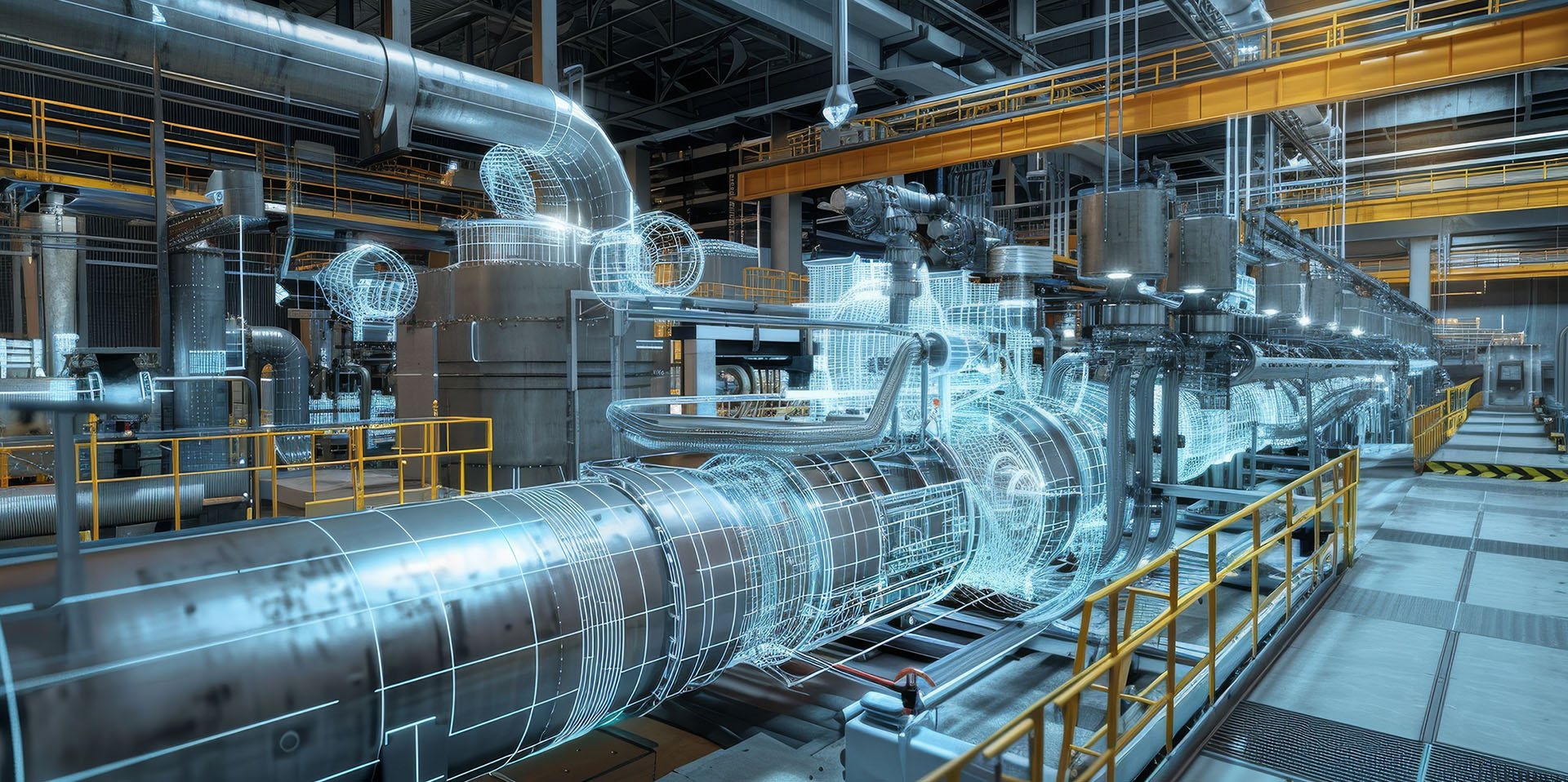
A digital twin is a virtual replica of a physical system that continuously synchronizes with real-world data to mirror current conditions, predict future states, and enable simulation-based optimization. Unlike static models or simulations, digital twins maintain bidirectional communication with their physical counterparts, updating in real-time as conditions change and feeding insights back to improve operations.
Digital twins combine sensor data, physics-based models, machine learning, and simulation to create living representations of assets, processes, or entire systems. The "twin" aspect emphasizes the continuous connection between physical and digital, where the virtual model evolves alongside the real system throughout its lifecycle.
Originally developed for aerospace applications to monitor spacecraft health, digital twin technology has expanded across manufacturing, robotics, logistics, and infrastructure. The convergence of IoT sensors, cloud computing, and advanced simulation platforms enables creating digital twins at scales from individual machines to entire factories, providing unprecedented visibility and control over complex automated systems.
How Do Digital Twins Simulate Systems?
Digital twins simulate systems by combining real-time sensor data with physics-based models and machine learning algorithms to replicate current behavior, predict future states, and test scenarios without disrupting physical operations.
Real-Time Data Integration
Digital twins continuously ingest data from physical systems through IoT sensors, PLCs, and industrial networks. A robotic work cell digital twin might receive:
- Joint positions and velocities from robot encoders
- Motor currents and temperatures
- Cycle times and throughput rates
- Vision system inspection results
- Environmental conditions (temperature, humidity)
This data flows into the digital twin at frequencies from milliseconds to minutes depending on application requirements, keeping the virtual model synchronized with physical reality.
Physics-Based Modeling
The digital twin incorporates physics-based models representing mechanical behavior, electrical characteristics, thermal dynamics, and process kinetics. For a robotic palletizing system, the digital twin models:
- Robot kinematics and dynamics (joint movements, inertia, torque requirements)
- Gripper physics (gripping forces, part contact behavior)
- Conveyor mechanics (belt speed, product spacing)
- Structural deflection under load
These models enable the digital twin to predict system behavior under different conditions, simulate "what-if" scenarios, and identify optimal operating parameters without physical testing.
Machine Learning Enhancement
Machine learning algorithms analyze historical data to improve digital twin accuracy and enable predictive capabilities. The twin learns relationships between operating conditions and outcomes that physics models alone might not capture:
- Predicting maintenance needs based on vibration patterns
- Optimizing cycle times by learning from successful operations
- Detecting anomalies indicating developing problems
- Compensating for wear and calibration drift over time
The combination of physics-based understanding and data-driven learning creates digital twins that become more accurate and useful as they accumulate operational data.
Visualization and Interaction
Digital twins provide 3D visualizations showing current system state, historical trends, and predicted future conditions. Engineers interact with the digital twin to:
- Monitor real-time operations remotely
- Replay past events to investigate issues
- Test process changes before implementing physically
- Train operators on virtual replicas before working with real equipment
- Validate new product designs against existing production capabilities
What Industries Use Digital Twins Today?
Manufacturing automation, robotics and logistics, automotive production, aerospace and defense, and energy infrastructure use digital twins to optimize operations, predict maintenance needs, and validate designs before physical implementation.
Manufacturing Automation
Manufacturers create digital twins of production lines to optimize throughput, reduce changeover time, and predict equipment failures before they occur. A digital twin of an assembly line simulates material flow, identifies bottlenecks, and tests production schedule changes without disrupting actual operations.
Applications include:- Production line commissioning (validating designs before building physical systems)
- Process optimization (testing parameter changes to maximize throughput)
- Predictive maintenance (monitoring equipment health to schedule repairs proactively)
- Quality prediction (correlating process parameters with product quality)
Digital twins enable manufacturers to achieve 15-30% reduction in downtime and 10-20% improvement in throughput by optimizing operations based on simulation rather than trial-and-error on physical systems.
Robotics and Automation
Robot manufacturers and integrators use digital twins throughout the robot lifecycle. During design, digital twins validate kinematic designs and identify interference issues. During deployment, they optimize path planning and cycle times. During operation, they monitor performance and predict maintenance needs.
Collaborative robot (cobot) applications use digital twins to validate safety configurations, ensuring speed and separation monitoring functions correctly before human workers enter the workspace. The digital twin simulates various approach scenarios, verifying the robot responds appropriately to human presence.
Automotive Production
Automotive manufacturers create digital twins of entire factories to plan production, manage supply chains, and coordinate complex assembly operations. A digital twin of a vehicle assembly plant includes:
- Hundreds of robots performing welding, painting, and assembly
- Conveyor systems moving bodies between stations
- AGVs delivering parts to line-side
- Quality inspection systems
- Material logistics and inventory
These plant-level digital twins enable simulating new vehicle introductions, testing production schedule changes, and optimizing resource utilization across the facility.
Aerospace and Defense
Aircraft manufacturers use digital twins to monitor fleet health, predict component failures, and optimize maintenance schedules. Each aircraft has a digital twin updated with sensor data from every flight, enabling condition-based maintenance rather than fixed-schedule servicing.
Digital twins simulate mission scenarios to validate autonomous systems, test sensor configurations, and optimize flight paths. Military applications use digital twins for training, mission planning, and real-time tactical decision support.
Logistics and Warehousing
Automated warehouses use digital twins to optimize robot fleet management, material flow, and order fulfillment strategies. The digital twin simulates order patterns, tests different picking strategies, and optimizes robot task allocation to maximize throughput while minimizing congestion.
Amazon, for example, uses digital twins of fulfillment centers to test new automation equipment, optimize layout changes, and predict how systems will handle peak demand periods before making physical modifications.
What Is the Difference Between a Digital Model and a Digital Twin?
Digital models are static representations used for design and analysis without connection to physical systems, while digital twins maintain continuous bidirectional communication with physical counterparts, updating in real-time and enabling ongoing optimization throughout operational lifecycles.
Digital Twin vs Simulation: Feature Comparison
| Feature | Digital Model | Digital Simulation | Digital Twin |
| Physical Connection | No connection to physical system | No connection to physical system | Continuous bidirectional connection |
| Data Flow | Static, uses assumed parameters | Uses predefined scenarios | Real-time sensor data integration |
| Update Frequency | Manual updates only | Run on-demand for specific analyses | Continuous automatic updates |
| Lifecycle Coverage | Design and planning phase | Design, validation, training | Design through operational lifecycle |
| Predictive Capability | Limited to theoretical analysis | Scenario-based prediction | Real-time prediction based on current state |
| Optimization | One-time design optimization | Periodic what-if analysis | Continuous operational optimization |
| Cost | Lower, no sensor integration | Moderate, software and computing | Higher, requires sensors and infrastructure |
| Best For | Initial design validation | Process planning, training | Operational optimization, predictive maintenance |
Digital Models
A digital model represents a system's design without connection to physical reality. CAD models, kinematic simulations, and process flowcharts are digital models. Engineers use them during design to validate concepts, check for interferences, and calculate expected performance.
Digital models use assumed parameters (theoretical part weights, estimated cycle times, nominal operating conditions) rather than actual measured data. They're valuable for design validation but don't reflect real-world variations, wear, or changing conditions.
Digital Simulations
Digital simulations add dynamics and scenario testing to digital models. A simulation might model a production line's behavior over a shift, showing throughput under various conditions. Simulations typically run specific scenarios rather than mirroring ongoing operations.
Discrete event simulation tools like FlexSim or Plant Simulation create digital simulations for manufacturing planning. These test "what-if" scenarios (what if we add another robot? what if cycle time increases 10%?) but don't maintain continuous connection to physical systems.
Digital Twins
Digital twins extend simulation with continuous physical connection. The key differentiators are:
Real-time synchronization: The digital twin continuously updates to match physical system state, reflecting actual current conditions rather than theoretical behavior.
Bidirectional communication: Data flows both directions. Sensors update the twin's state, while the twin's predictions and optimizations feed back to control systems, creating a closed-loop digital-physical system.
Lifecycle companion: The digital twin exists throughout the system's operational life, accumulating history, learning from experience, and continuously improving predictions. A digital model exists during design; a digital twin exists from design through decommissioning.
Predictive capability: Because the digital twin knows current actual conditions (not theoretical conditions), its predictions about future states and potential failures are more accurate than simulations based on assumed parameters.
Practical Distinctions
During robot system design, engineers create a digital model (CAD assembly, kinematic model) to validate the design. Before installation, they run digital simulations to test various operating scenarios and optimize programs. After deployment, they implement a digital twin that monitors actual performance, predicts maintenance needs, and continuously optimizes operations based on real conditions.
The progression from model to simulation to twin represents increasing integration between digital and physical, with corresponding increases in value but also in implementation complexity and cost.
Conclusion
Digital twins represent the convergence of IoT, simulation, and artificial intelligence to create virtual replicas that mirror physical systems throughout their operational lifecycles. By maintaining continuous synchronization with real-world data, digital twins enable optimization, prediction, and validation impossible with static models or periodic simulations.
The technology has matured from aerospace origins to widespread industrial adoption, with manufacturing, robotics, and logistics leading implementation. Digital twins deliver measurable value through reduced downtime, improved throughput, and optimized maintenance strategies, though they require substantial investment in sensors, connectivity, and computational infrastructure.
Understanding the distinction between digital models, simulations, and twins clarifies when each approach is appropriate. Models suffice for design validation, simulations enable scenario testing and planning, while digital twins provide ongoing operational optimization and predictive capabilities. As automation systems grow more complex, digital twins become essential tools for managing that complexity and maximizing system performance.
Recommended Resources
Explore more robotics and AI insights
Digital Twins: The Future of System Optimization and Maintenance
Digital Twin refers to the dynamic virtual clone of a physical system integrating real-time information from sensors and IoT devices with simulation models.
Digital Twins and Virtual Commissioning in Industry 4.0
With the dawn of the fourth industrial revolution, we're seeing a resurgence of interest in technologies that integrate simulation and automation.
Digital twinning and prototyping of car accessories
Facing the challenge of reducing R&D time, Weldbeat Australia used Photoneo's MotionCam-3D camera and 3D Instant Meshing software.