
Blog
3 Startups Making an Impact in Industrial Automation
 Industrial automation is continuously evolving. Modern automation systems are integrated, intelligent tools that optimize processes, address talent shortages, and promote agility and scalability. A3 spoke with leaders from three member companies to better understand the services they offer, the industries they serve, and the trends they see in industrial automation. Each of these companies illustrates how different segments of the automation ecosystem are responding to these pressures, each from a distinct but complementary angle.
TFA Solutions
Rob Gurr, President & Co-Founder
Headquarters: Ontario, Canada
tfasolutions.ca
.jpg "Source: TFA Solutions, 3D CAD software design model")
Company Overview
Founded with the explicit goal of becoming a true in-house turnkey automation provider, TFA Solutions delivers end-to-end machine design, fabrication, controls engineering, and integration. Because of their proximity to the automotive industry, TFA has primarily served automotive clients. Recently, TFA has explored other industrial automation verticals, including agriculture.
Unlike many integrators that rely heavily on third-party fabrication, TFA maintains its own machine shop, welding, cutting, and heat-treating capabilities. Keeping those capabilities in-house requires substantially more overhead but allows quick turnaround on deliverables by avoiding the need for third-party subcontracting. This vertically integrated approach enables TFA to implement rapid design changes, optimize machine performance, and offer services that would be impractical under a subcontracted model. Design, controls, and fabrication are the building blocks of turnkey projects, which means TFA can also provide three levels of consulting expertise. These additional capabilities offer additional revenue streams.
Current projects include robotic weld-cell deployments, alongside broader initiatives to improve machine performance. A notable recent deployment involved jug packaging and palletizing systems for multiple container sizes, where production gains were substantial — but customer requirements have continued to evolve, requiring rapid scope evolution.
Challenges in Commercialization
 One substantial challenge for TFA has been communicating the value proposition of complete turnkey services compared to piecemeal automation implementation. From a business-planning perspective, launching a business focused solely on turnkey automation projects can be challenging. By offering consulting services and subcontracting out shop capabilities, TFA was able to fill gaps between turnkey projects as it built its business and customer relationships.
Funding and Capital Access
TFA found it hard to access both private funding and commercial lending in the early years of starting up. Exploring grants from the Canadian federal and provincial governments, many would only apply for projects, such as those focused on green energy or EVs, so TFA didn’t neatly fit the requirements due to the business's broad scope. By utilizing nearly all of the revenue from the first year of projects, TFA was able to secure a physical space and a machine shop and expand staff. Without easy access to capital, careful cash flow management is critical.
Industry Trends
Rob points to the ongoing trend of simplifying electrical architecture, which he sees continuing, reducing the size of control panels or eliminating them entirely. Rob also noted, “Many large manufacturing clients have maintained their relaxed spec rules implemented during the COVID-era shortages, allowing them to evaluate and implement more cost-effective or agile solutions.”
Partnership with Conestoga College
TFA also partners with Conestoga College. The partnership serves two aspects of the business. TFA has consulted on and built the miniaturized automated production systems designed by the college to teach industrial automation coursework. Beyond being a direct client, Rob teaches several automation-based courses to the students, allowing him to evaluate new talent and create a hiring pipeline for TFA.
ProVIS.jpg)
John G. Hamburg, Founder; Gabe Giddings, Manager
Headquarters: Michigan, USA
provisusa.com
Company Overview
ProVIS specializes in custom machine vision solutions, feasibility studies, and on-site programming for industrial automation systems. ProVIS operates as a high-expertise vision partner, filling critical knowledge gaps for machine builders, integrators, and end users. Especially when manufacturers need to scale rapidly or make agile production changes, they may not have enough machine vision expertise on staff to fully design, implement, or optimize new vision implementations. ProVIS is a specialized service provider that can fill those talent gaps.
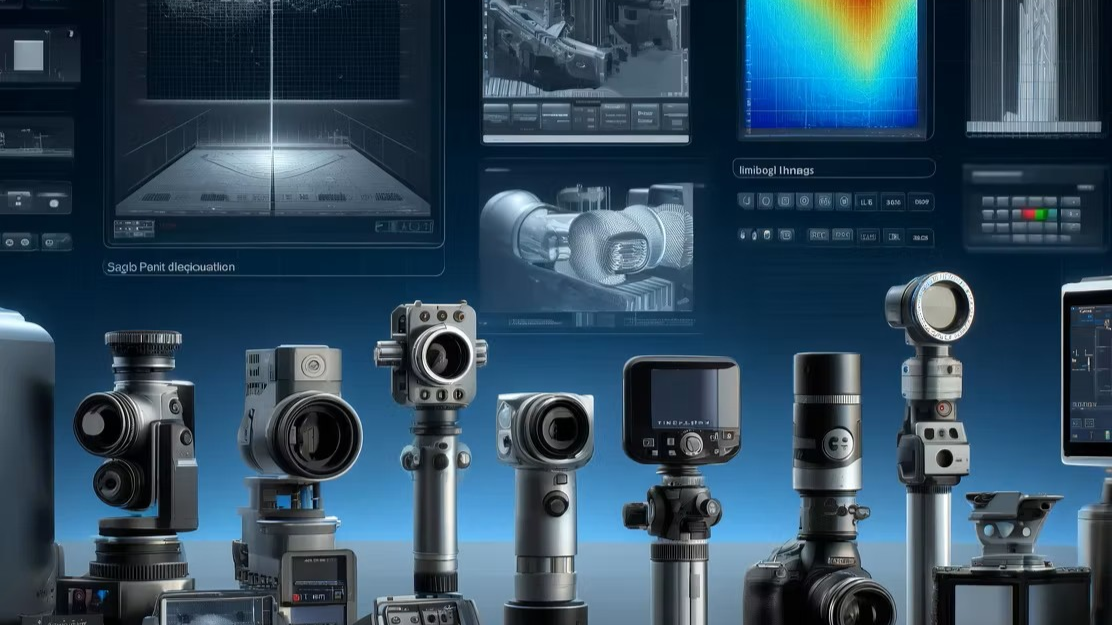 The company’s strength lies in deep experience with 3D line-scan inspection, robotic guidance, and advanced measurement systems, particularly in applications where off-the-shelf camera suppliers lack integration or production-level support beyond the point where integrator contracts end. In many automation projects, machine vision systems meet acceptance criteria but are not actually fully optimized for production. Optimizing performance, improving robustness, and resolving issues that arise under real-world conditions can create substantial production improvements.
Commercialization Challenges
ProVIS had the benefit of existing vendor and end-user relationships when the company was founded, which provided the basis for its initial business. Even with those relationships, operating a highly specialized, lean, agile service business across a wide geographical area is a significant challenge.
ProVIS has addressed this in two ways: First, by deep specialization among the team members hired. Instead of the common practice of having specialists wear multiple hats or simply requiring them to fulfil regular tasks outside their primary role, ProVIS hires team members to focus on specific, key responsibilities, onboarding them more quickly and greatly increasing their efficiency. Second, ProVIS employs a high level of inter-office knowledge sharing across all levels of project reasoning and execution, leading to faster issue resolution and minimizing the risk of repeating past mistakes. With this foundation in place, ProVIS has been able to expand strategically, adding team members when pre-established utilization benchmarks are crossed.
Funding and Capital Access
ProVis built the initial business on its first contracts and has not sought outside funding, choosing instead to operate as lean as possible and expand only as the volume of business dictates.
Industry Trends
John and Gabe described how machine vision is rapidly changing with the implementation of AI-driven systems, but that there are substantial risks to consider for any machine vision solution. They see more manufacturers weighing the costs and capabilities of AI systems versus traditional machine vision as processes demand vision solutions to optimize output.
In situations where legacy solutions were either impossible to implement or inaccurate, such as in highly variable processes, AI models have often made these applications feasible, opening new opportunities for machine vision to improve processes. In addition, they’ve seen AI machine vision solutions implemented that don’t follow vision best practices, and though they do meet minimum production standards, simply applying best practices from legacy vision implementations can vastly improve their performance.
On the shop floor, AI-driven solutions are not a universal replacement for traditional vision solutions. For a simple presence-absence detection application, legacy solutions can be simpler and cheaper. Some applications are perfect for AI, while others are not. New AI systems can be set up quickly, but without building an extensive dataset for testing and sufficient training, you are open to false detections, just like legacy systems would be for production variation not yet seen by the system. Coupling legacy tools with AI is typically needed to provide additional fail-safe mechanisms (e.g., the edge should never exceed 'x' distance, reflectance should never occur in this area). The cost of AI implementation will increase drastically if there is too much reliance on AI to handle 100% of the variation. John explained, “Limiting the scope of AI reduces implementation time by drastically reducing the dataset required for training and testing. This critical step is often missed during implementation and leads to poorly performing AI and/or customers who are unhappy with the cost required to achieve reliability from the system.”
Another trend in machine vision is the rise of smart, modular vision systems that can include integrated processing, lighting, zoom, or motion capabilities, and are self-contained sensor systems that require only data and power connections to operate. The ongoing trend towards reducing panel space makes these simple connections ideal for some applications, but the limitations of these combined solutions (e.g., heat, processing, resolution) mean they won’t work for every vision application.
Leveraging MQTT for Process Resilience
Recently, ProVIS created a standardized platform that receives data from cameras via the MQTT protocol and delivers it to MES systems for one of the largest automotive manufacturers in the US. MQTT queues data if the connection is lost and resumes, unlike Ethernet IP, which loses data if the connection is lost. This provides resilience to critical production machine vision systems, ensuring data is preserved. This sort of custom, application-specific solution, designed with the unique needs of this particular customer’s process in mind, is the core competency ProVIS delivers for its clients.
Navflex.jpg)
Chuck Stovall, CEO & Co-Founder
Headquarters: Denver Metro Area, USA
R&D: Munich Metropolitan Region
navflex.com
Company Overview
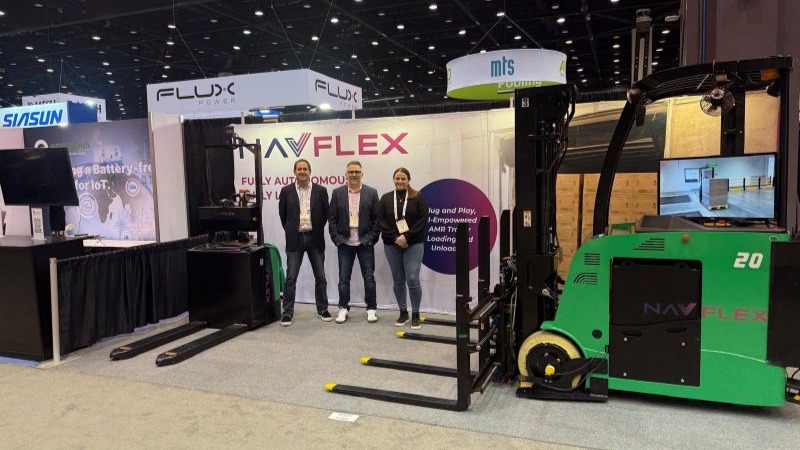
Navflex is focused on one of logistics’ most persistent challenges: trailer loading and unloading. The company delivers the highest safety-certified AMRs designed to operate in dynamic, brownfield dock environments with no infrastructure modification required.
According to OSHA, one in six workplace fatalities in the United States are caused by forklifts, with nearly 35,000 serious injuries each year. Loading and unloading trailers accounts for a significant portion of injuries and fatalities. Loading docks are highly dynamic environments. Pallets, people, forklifts, racks, all change positions frequently. In addition, environmental conditions such as weather, heat and cold, dust, and lighting are constantly changing on loading docks. The dynamic environment and substantial safety risks make automating loading and unloading incredibly challenging, yet also a considerable benefit for end users. Eliminating injuries and fatalities during loading and unloading is a priority.
 Finding the talent to fill demanding, dangerous positions is also difficult. Roughly a third of all forklift positions in the U.S. are unfilled, and loading dock positions are some of the most demanding. Working a loading dock shift in a forklift means exposure to the elements, working in confined spaces with tight clearances, high levels of liability and risk, and working one of the most repetitive forklift operator jobs. The physical and mental considerations enhance the safety risks and make finding and retaining operators for those undesirable roles difficult.
In this incredibly difficult and challenging use case, Navflex has thrived by being application-first. Driving innovation at customer sites and building solutions based on production-specific problems instead of building robots in a lab and then tuning them for production. By focusing on production solutions, Navflex has built solutions that address real-world variability in trailers, loads, lighting, weather, and human interaction by thinking and working like humans. Loading and unloading are among the last things to be automated in the logistics industry, and a solution needs not only to perceive and adapt, but also learn from each run to get smarter and more efficient. Ultimately, end users need trucks unloaded and loaded efficiently, but existing in-production facilities can’t afford the cost or time to redesign everything to facilitate automation. End-users need a solution that can work in their existing facilities, adapt to environmental variations, and perform like a human without breaking any concrete to implement it.
Commercialization Challenges
While developing the solution Navflex offers now, there was a key question: Do you design a better forklift, or automate readily available forklifts? Though it is tempting to create a better forklift from the ground up, working closely with clients to understand their needs led Navflex to conclude that the need for manual operator capabilities in any automated solution required automation for standard forklifts.
Starting in Germany, an AMR pallet jack was the first product deployed for the Navflex service. In 2025, the single-double forklift AMR was implemented in production, designed specifically to address the production challenges of loading and unloading. There are many unique environmental perception challenges for an AMR working in loading and unloading. Trucks aren’t perfectly aligned with the dock every time they are parked. They lift, sink, and bounce as they are loaded and unloaded. Soft-sided trucks pose challenges for presence detection, as the “walls” can shift and move. Changes in lighting and excessive dust in the atmosphere can affect sensors. Of course, as always, safety was the most critical challenge to address. Navflex worked to understand the unique challenges of working with AMRs in confined environments where humans may have no avenue to avoid or escape an AMR. Navflex ensured that its AMR solutions complied with ANSI B56.1 & .5, UL, CE and ISO 3691.4 all to safety standards of Performance Level D for safety in automation, making it the provider of the world's highest-safety-certified AMR for confined spaces. Navflex solutions are also VDFA 5050 compliant to interoperability in AGV and AMR fleets.
Funding and Capital Access
Initially customer-funded at its 2019 founding, Navflex later raised Seed funding after its 2021 U.S. incorporation and is currently closing a Series A round. Funding for robotics-focused startups has faced headwinds from limited robotics exits, as well as capital concentration in humanoid robotics and a handful of major robotics players. Tariff pressures have created additional capital constraints, though the reshoring trends driven by tariffs may ultimately benefit domestic deployment and investment.
Industry Trends
Chuck sees the industry at a tipping point. Algorithmic robots are giving way to AI-driven systems capable of handling real-world complexity. AI-powered automation is no longer a competitive advantage; it’s a requirement to compete. At the organizational level, automation is becoming a strategic mandate, with COOs increasingly hired to lead transformation efforts. As Stovall puts it, “Companies now need a clear automation plan, or risk being replaced by competitors who do.”
While TFA Solutions, ProVIS, and Navflex operate in different industries and offer different services, they share a common theme: Industrial automation is no longer about isolated technologies, but about resilient systems that scale, adapt, and operate safely in the real world. Whether through turnkey machine integration, vision expertise, or autonomous logistics, these companies exemplify the next phase of industrial automation maturity.
Recent Posts