
Blog
AI-Powered Vision Inspection: Practical Paths to Better Quality and Faster Decisions
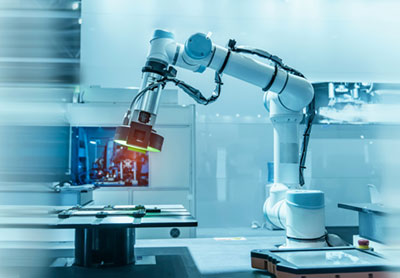 Quality teams have never had more data. The challenge is converting that data into reliable, real-time decisions that prevent scrap, reduce downtime, and maintain consistent product quality. That was the central theme of A3’s February 19, 2026 webinar: AI- Powered Vision Inspection: The Future of Quality in Manufacturing.
Moderated by Jim Beretta (Customer Attraction), the webinar featured Erin Barrett, CEO of Eigen Innovations, and Alex Finkelstein, sales manager for Automated & Integrated Systems at Teledyne FLIR. The discussion explored how AI-powered inspection systems, often combined with thermal imaging, are moving beyond experimental pilots and becoming practical tools for manufacturers looking to automate quality control and condition monitoring.
Rather than focusing on the technology itself, the panelists emphasized a practical perspective: manufacturers adopt AI inspection when it solves real operational problems and delivers measurable business outcomes.
Start with the Business Problem, Not the Technology
A key theme throughout the discussion was the importance of beginning with the business case, not the technology.
According to Barrett, successful deployments start by identifying the operational problem that needs to be solved: whether that’s scrap reduction, labor-intensive inspection processes, or equipment failures. Framing the conversation around the business impact helps teams align on what success looks like and prevents projects from getting lost in technical details that don’t affect the bottom line.
An example that was discussed was AI vision inspection delivering payback periods ranging from roughly three months to a year, depending on the application. In some quality inspection scenarios, automated systems can reduce scrap or manual inspection costs by hundreds of thousands of dollars per production line, while predictive monitoring systems may help plants avoid failures that could cost more than a million dollars annually.
Automation Only Works if it Replaces Manual Processes
Another practical takeaway from the session was the importance of designing systems that truly automate inspection tasks.
In some early implementations, AI systems are run alongside existing inspection processes as a validation step. While that can help organizations build confidence in the technology, long-term value requires moving toward full automation.
“If the system isn’t fully automated, you’re essentially managing two processes,” Barrett explained during the webinar. Maintaining both manual inspection and automated analytics can increase operational complexity and limit the financial impact of the technology.
For manufacturers evaluating AI inspection systems, that means defining early whether the goal is simply data collection or fully automated decision-making within the production workflow.
Why Thermal Imaging is Gaining Traction in Inspection
Thermal imaging played a central role in the webinar discussion because of its ability to capture a complete temperature profile across a product or process.
Finkelstein explained that traditional handheld temperature measurements or pyrometers capture only a single point of data. Thermal cameras, by contrast, generate a temperature map composed of thousands, or even hundreds of thousands, of pixels. Each pixel represents a temperature measurement, allowing manufacturers to analyze the full thermal pattern of a product moving through a process.
NEW ONLINE TRAINING COURSE
Designing Industrial AI Agents
Gain the skills to orchestrate advanced AI agents that learn, adapt, and collaborate like experts in real-world automation environments
This capability enables inspection systems to identify temperature anomalies across an entire surface rather than relying on spot checks. In production environments, that can be critical for detecting quality issues early in processes such as food production, plastics manufacturing, welding, or metal processing.
Fixed-mounted thermal cameras can also collect continuous data, giving manufacturers a constant view of process conditions rather than periodic manual inspections.
Training AI Models: Start with Anomalies
One common question manufacturers ask is how much data is required to train an AI vision system.
Barrett noted that some deployments begin with anomaly detection models, which identify patterns that fall outside normal operating conditions without requiring labeled defect images. This allows teams to begin evaluating system performance quickly.
For more targeted inspection models, training requirements vary depending on the application. In some cases, classification models can be developed with 250 to 1,000 labeled images, enabling systems to begin delivering insights within days. More complex defects, especially those that occur infrequently, may require longer data collection and model training cycles.
Adoption Often Begins with Proof-of-Concept Projects
Many manufacturers remain cautious when evaluating new inspection technologies, particularly if existing processes have worked for years.
Both speakers noted that proof-of-concept projects often help bridge that gap. Demonstrations that capture real production data can reveal issues that were previously undetected, allowing plant teams to see the potential impact of automated inspection firsthand.
Once trust is established and measurable value is demonstrated, organizations often expand successful applications to additional production lines or facilities.
The Future of AI Vision Inspection
Looking ahead, both speakers expect AI-powered inspection systems to become more integrated into manufacturing equipment and processes.
Greater collaboration between sensor manufacturers, software providers, and machine builders is already enabling inspection capabilities to be embedded directly into production equipment. At the same time, improvements in AI tools and analytics are making it easier for manufacturers to connect inspection data with broader operational insights.
Over time, these systems may move beyond defect detection to provide deeper process intelligence, helping manufacturers identify root causes of defects and make faster adjustments to production parameters.
For manufacturers focused on improving quality and operational efficiency, the message from the webinar was clear: AI-powered vision inspection is becoming a practical addition to the modern manufacturing toolkit, especially when applied to well-defined problems where automation can deliver measurable results.
Watch the full webinar here.
Recent Posts