
Thought Leaders in Automation
LEADING THE WAY IN INNOVATION
Learn from expert industry professionals and read their insight into the growth and opportunities in automation.
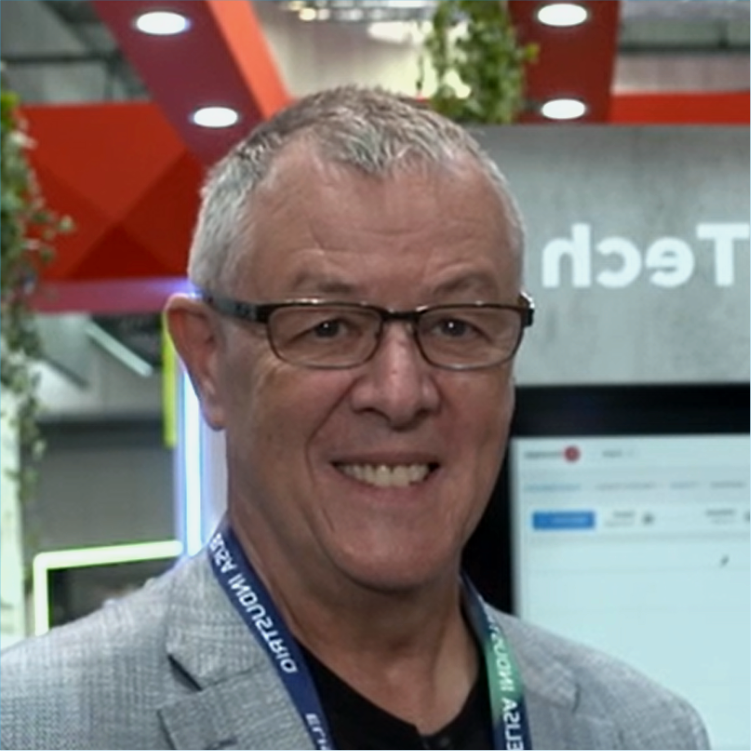
Ricky Watts
General Manager and Sr. Director Industrial and Robotics Division
Intel
Interview Posted: June 19, 2026
With over 30 years of global experience, Ricky Watts is a seasoned technology leader driving innovation at the intersection of industrial, telecommunications, and embedded systems. As General Manager and Senior Director of Intel’s Industrial and Robotic Division, he leads efforts to accelerate the adoption of smart manufacturing and robotics by advancing next-generation connectivity, automation, and software-defined edge infrastructure. Ricky’s work spans product marketing, business development, and strategy across critical sectors, including control automation, energy, medical devices, and transportation. He is deeply involved in enabling autonomous systems and collaborative robotics, helping industry partners deploy AI-powered solutions on Intel’s edge-ready silicon and software. His international experience—across Asia, the Americas, Europe, the Middle East, and Africa—brings a uniquely global perspective to market transformation. Prior to Intel, he held leadership roles at Motorola, British Telecom, Aircom International, and Wind River Systems, where he built a strong foundation in ecosystem collaboration and industrial innovation.
QUESTION
How has your industry evolved over the last decade?
ANSWER
The first wave was about possibility — running vision pilots and AI proofs of concept to understand what the technology could do. The second wave, which is where most serious manufacturers are now, is about outcomes. The question has shifted from 'does this work?' to 'what does this deliver, at what cost, and how do we scale it?' That shift changes everything: how you evaluate vendors, structure projects, measure success, and build your teams. The organizations moving fastest stopped treating AI as a technology initiative and started treating it as an operational transformation.
QUESTION
What are some innovative technologies you’re seeing or working on today?
ANSWER
I think about it in four layers. Awareness — sensors and cameras that tell you what's happening. Understanding — AI models that interpret the data. Decision — control systems that determine the appropriate response. Action — robotics that execute. Most manufacturers today have real capability at each layer. What's missing is vertical integration — the ability to move from awareness to action in real time, reliably, at production scale. When you close that gap, the system stops being a collection of technologies and starts behaving like a single operational intelligence.
QUESTION
How can customers quickly generate ROI from using automation applications?
ANSWER
Most manufacturers I talk to have roughly seventy percent of what they need. They have the sensors, the robots, AI models running somewhere in the business, maybe even a data platform. But the last thirty percent — the integration, the real-time data flows, the system-level coordination — is where they're stuck. These organizations don't need more technology. They need to finish what they started. The path forward is integration, not acquisition.
QUESTION
What are some of the challenges you have faced in your years of business? What have you done to combat those challenges?
ANSWER
Early in my career, I assumed the hardest part of this work was the technology. The hardest part is getting people, systems, and processes to move together. I've spent years watching brilliant engineers deploy incredible technology that never delivered its full potential — not because the tech failed, but because it wasn't connected to anything that could act on it. What I've learned is that you have to start with the outcome you're trying to change, then work backwards to the integration required to get there. That reframe — from technology deployment to operational transformation — is what changed how I approach every customer engagement.
QUESTION
How is your success helping customers in the field?
ANSWER
The most rewarding moments in my career have come from watching a customer who was stuck finally break through. I've sat with manufacturers who had invested heavily in AI and automation and were frustrated that the results weren't showing up in their business — and what I love about what Intel brings to those conversations is that we can tell them honestly: you don't need to start over. Most of them are already running on Intel infrastructure, which means we can help them build on what they have, move AI closer to operations, and close that last 30% without disrupting what's already working. When we help them close that integration gap, the outcomes they've been chasing for years start to materialize quickly. That's what drives me. Not selling technology, but helping operations actually work the way they were designed to.
QUESTION
What’s your best piece of advice for other leaders in the industry?
ANSWER
Manufacturing doesn't have an AI shortage. It has a coordination challenge. Most manufacturers are already 70% of the way there — the sensors, the AI, and the automation are largely on the floor. What's missing is integration across the four layers: from Awareness to Understanding to Decision to Action. You don't need to start over. You need to finish what you started. The organizations that solve the coordination challenge will define the next decade of industrial innovation.