
March 25, 2026
Erik Nieves on Why Humanoid Robots Are Failing the Most Important Test
Billions are flowing into humanoid robots. But on the factory floor, nobody cares what the robot looks like.
In this episode of Automated, Brian Heater speaks with Erik Nieves, CEO and co-founder of Plus One Robotics, about the gap between robotics investment and real-world deployment. Recorded live at the A3 Business Forum in Miami, Nieves explains why enterprise customers have one question and one question only: does it hit 2,200 picks per hour with three nines of uptime?
From the Cambrian explosion happening across warehouse automation to why dexterity remains the biggest unsolved problem in robotics, Nieves gives one of the most grounded, honest assessments of where the industry actually stands. He also explains why human-in-the-loop systems are not a limitation but a competitive advantage, and why robots are about to end the era of labor arbitrage entirely.
Sponsored by SANYO DENKI America: SANMOTION delivers precise, reliable multi-axis control for advanced robotics systems. Learn more at https://www.sanyodenki.com/america/.
We’d love to hear from you! Have thoughts or guest suggestions? Reach us at [email protected].
You can find the transcript and more episodes of Automated at automated.fm.
You can find more episodes of Automated at automate.org/podcast.
Transcript
[00:00:00] Erik Nieves: While I'm enthused about what's gonna happen as we try to replicate some of this human form factor, these enterprise level users don't really care. What doesn't change is their KPIs. It still has to be 2,200 picks per hour. It still needs to have three nines of uptime. They don't really care what it looks like or what you actually deploy, but does it deliver these things?
[00:00:38] Brian Heater: Hello everyone. My name is Brian Heater. I am managing editor for the Association for Advancing Automation. We've got another special episode coming up for you this week. This is actually the third ever IRL episode of Automated. This conversation with Plus One Robotics co-founder and CEO Erik Nieves was recorded back at the A3 Business Forum in Miami back in January. Really great chat with easily one of the nicest people in automation. Thank you so much to Erik for taking the time. Thanks to you as always for tuning in. If you like the show, don't forget to like and subscribe. Please subscribe to our newsletter over at Automated.fm and with that, please enjoy this conversation with Erik Nieves. In high volume warehouse automation, throughput only matters if it lasts shift after shift. When mixed parcels move through nonstop cycles, smart motion control helps keep the line consistent and productive. That's where SANMOTION motion controls from SANYO DENKI come in. The SANMOTION CS300 motion control supports up to 32 axes over EtherCAT with one millisecond control cycles for tight, stable, centralized control across complex systems. SANYO DENKI, Precision in Motion. Learn more at sanyodenki.com/america.
[00:02:08] Brian Heater: Astronomy.
[00:02:10] Erik Nieves: You wanna talk about astronomy?
[00:02:13] Brian Heater: You studied astronomy?
[00:02:15] Erik Nieves: I studied math and physics. But my college job, I was the TA for the astronomy undergrad course, which was cool. But the real thing was it had the largest observatory in North Central Texas. This tiny little school had a good observatory and I got to work there. Some of it was whatever they needed for classwork, but the other was once a month on a Friday night we'd open it to the public. At that time this was in the mid-eighties.
[00:02:44] Brian Heater: So you were doing like Laser Floyd?
[00:02:50] Erik Nieves: Yeah, wasn't quite that sophisticated, but we'd show and catalog stuff. But that was the year Halley's Comet was in the sky. And so when it was at its peak, we had people lined up for hours out the door.
[00:03:09] Brian Heater: Is this like every 70 years?
[00:03:10] Erik Nieves: Yeah, it's like, what, the last one before that was Mark Twain's birthday year or something like that. But if I had one more person climb up the little ladder, look in the eyepiece and go, is that it? I waited in line this long.
[00:03:31] Erik Nieves: That's right, and it's just crawling along in the eyepiece. But we were enthusiastic about it and you're just trying to promote that enthusiasm and you're just glad that folks took the time.
[00:04:05] Brian Heater: And maybe this does relate to robotics in a very roundabout way, but an interesting thing about space is obviously people get really excited about it. We see all these shows, the Hubble Telescope and everything is moving in fast motion because everything has been adapted for the TV age. And obviously this is like a glacial timeframe, a cosmic timeframe.
[00:04:21] Erik Nieves: Yeah. They called them wandering stars because they actually were curious in that they didn't hold their one spot in the cosmos all the time. That's what it was. It was a wandering star and people are intrigued by it.
[00:04:44] Brian Heater: So here's how I'm gonna bring it to robotics, because this is something that I've been thinking about quite a bit, especially now that we're two weeks out from CES. I didn't go this year. As you said, humanoids there and largely humanoids doing tricks, not necessarily doing real work. And I feel like maybe there is a parallel between space where it is this really exciting thing, but maybe the reality of it is a little bit slower moving day to day.
[00:05:13] Erik Nieves: Yes. I actually see space travel and conquest and humanoids as being two expressions of the same thing. Which is we have this innate desire to go there and replicate ourselves. These are like the two things that set the bar for us as a species. Can I go someplace we've never been? And can I make more of myself?
[00:06:05] Brian Heater: This is my intrusive thought every time I go to a fine art gallery and just stand there in front of the painting a foot away. I have to stop myself from trying to touch it. And I think that might be the impulse that's driving humanity to go out and colonize all of these distant planets, whether or not there's any mining or resources to be had.
[00:06:31] Erik Nieves: Yeah. I mean I think there's something to pretty much everybody's sort of icon for robots, which is a robotic hand and a human hand. It's the same expression.
[00:06:44] Brian Heater: How have your conversations changed, if at all, around this bubble that we're going through right now?
[00:06:52] Erik Nieves: You know, as the capital has flowed so heavily over the last couple of years. Are we in a place where the capital has outpaced the technology and where it's going and the returns that it can bring?
[00:07:20] Brian Heater: Let's do that one by one. So has it outpaced the technology currently? Yes, absolutely.
[00:07:37] Erik Nieves: I'm a human exceptionalist. I'm pretty open about the fact that I don't believe it's possible to recreate who we are and what we do and how we do it. The most advanced robot we'll ever make is still going to pale in comparison to what we offer. That might be ideology straight up. It's a belief. But it is mine.
[00:08:12] Erik Nieves: To the question of the capital inflows, the promise is, am I gonna see a return on all of this investment? I do think that you're in a place right now where the capital has just come in. Anytime you see that much money flowing into anything, the expectations for return outstrip the prospects of that return.
[00:08:49] Erik Nieves: Good luck. I mean, we're also waiting on autonomous drive. And fill in the blank. I do believe that markets are not rational creatures. And there is a lot of FOMO in the world. And humans for all their worth aren't always rational creatures either. Which is why the market isn't rational, because we're not.
[00:09:32] Erik Nieves: Plus One is now year ten for us. 2026, it's year ten. And if there's such a thing as an overnight success, ten years in the making, may this be the year. Because us and I would expect a lot of our cohort of warehouse automation companies are still in this cash-burning mode. Some of it is for growth and some of it is, hey, the market adoption is slower than anybody expected or anticipated or certainly put on a spreadsheet. So no, we'll be fundraising again at some point. We've been very fortunate that we've been very capital efficient. Some of that is just based on our DNA and some of that is based on the fact that we're in San Antonio, Texas. We don't have that same Silicon Valley ecosystem expectation or cost of living. The money just goes further, which has been accretive to Plus One's durability.
[00:11:15] Erik Nieves: I've been thinking a lot about what has changed over the last ten years and what has remained the same. What has changed is the underlying software stack. When we first started, a lot of what we do is computer vision. Computer vision when we were first doing it was all very traditional approaches, OpenCV. That was the cool part. Well, it wasn't too much longer and it was all just AI and segmentation and all of that. And now it's foundation models. But if you were to stand back and look at two of my systems in the same facility, one vintage 2018 and one from last year, you couldn't tell them apart because what hasn't changed is robot plus gripper plus camera. The plus software is what has changed, but it's still industrial robots. It's still a gripper of some kind. And the camera.
[00:12:25] Erik Nieves: While I'm enthused about what's gonna happen as we try to replicate some of this human form factor, these enterprise level users don't really care. What doesn't change is their KPIs. It still has to be 2,200 picks per hour. It still needs to have three nines of uptime. They don't really care what it looks like or what you actually deploy, but does it deliver these things? And that's why I believe industrial robots have been so stable, because they do offer that uptime and you can get support from them all around the ecosystem. The 2025 footage had the video of the humanoid doing parcel flipping and reorienting. It was fabulous to watch, but we understood right away this is going to be limited in its ability to meet the rates and the KPIs that these users are gonna require.
[00:13:28] Erik Nieves: I do believe humanoids have a role to play. I'm excited about some of the technologies that are gonna come from that effort. Industrial robots are largely single arm machines. Even in an automotive plant, they may have eight robots in one station doing spot welding. Those are eight individual arms and they're all sort of staying in their lane. They may have some interlocks between the neighbors to the left and the right, but they're treated individually and there's not a lot of coordination between them. In the human workspace, this is not going to work. They absolutely need left hand, right hand coordination.
[00:14:21] Erik Nieves: I believe foundation models are gonna solve that. The industrial robot market's not gonna solve that. I was at Yaskawa for 25 years and we didn't make any headway in left hand, right hand coordination. So they're going to solve that problem and you're gonna see all of the industrial people adopt those techniques and say, thank you for that. We're going to take this and now have industrial robots that can perform more complex operations, but still faster and still with three nines of reliability. But we couldn't do it ourselves. I'm not surprised, Brian, because the industrial robot space has never been big enough to drive our own tech. It's always been consumer electronics or whatever, and now there's all this influx of talent and capital in humanoids. I'm here for it because it's gonna make my life easier.
[00:15:23] Brian Heater: What does big enough mean?
[00:15:28] Erik Nieves: If you think there's three million robots deployed in the world, that is not big enough when you compare it to the scaling factors of iPhones, any consumer good.
[00:15:59] Erik Nieves: That's what I was looking at at CES. The demos are very compelling because they show so much, the mobility is expanded. And yet what I'm looking at is, what are the hands capable of? Because the business end of Erik Nieves on a factory line is not Erik's legs. It's Erik's hands.
[00:16:44] Erik Nieves: I'm glad we're all working towards these machines that can do fractional labor at different workstations. I think there's value there, but it's not gonna be realized value until you can do something about the hands. Robots today are effectively handcuffed. They have oven mitts for hands. Why is it that every demo you see for a humanoid is it moving a tote? Because it can. But it can't do much more than that. The dexterity and manipulation today is not as good as a toddler's. If you're gonna stack blocks, you can probably do that with a humanoid, but you're not gonna assemble anything. That's a big problem and it's a long-term problem.
[00:17:55] Erik Nieves: Or you pick the applications that don't require it. There's enough problems to solve with one arm. There's plenty of problems to solve in the warehouse context that are one-arm machines. That's what depalletizing is. If I have to depalletize, and by the way you need to flip it over and always make sure the label is facing a certain way, well now you are adding some complexity to the manipulation. Maybe a second hand would be helpful in that instance, but there's still a lot of, I don't want to be picking up a 35-pound box ten times a minute for the next four hours, please put a robot here. And that would be just a single-arm machine.
[00:19:33] Erik Nieves: The whole notion that you build a humanoid because it can go where people go and other things can't is true. The question is how much of that is there? If it isn't an edge case, it is certainly not the majority case. The majority cases, hey, it's still accessible to wheeled bases because a forklift went down there too. So the whole argument of legs versus wheels has been hashed out plenty. I think everybody can agree that if you can do it with wheels, please do.
[00:20:13] Erik Nieves: I would rather know that when I hit stop, when power is lost, whatever it might be, that it will just park itself. And if it is going to fall over in some way that I can't predict, that's a problem. It's gonna be a problem for the big enterprises. These big enterprises are also the ones that are most sophisticated in their risk analysis. And they'll be saying to you, I can't deploy this at scale because I can't get this insured.
[00:21:28] Erik Nieves: I do believe that the humanoid folks will ultimately have to deal with this uncontrolled fall problem. At least Agility Robotics thought about that from the jump and said, when this thing loses power, I just want it to collapse in place. That was a very wise design choice made early. Now they're wider and they can't make it down that same narrow aisle. But they can still do it safely.
[00:21:43] Brian Heater: Are the majority of your robots still behind a fence?
[00:21:43] Erik Nieves: Yes. And that's true even if I deploy a cobot. Some of it is at the rates that we run. Most of our implementations, nearly all our implementations are industrial robots. If you have to do this many cycles per hour, you're gonna be running really fast. And I don't care what the mass of the arm is, it's gonna be a risk. So yes, our robots are caged. The exception is sometimes at sort of end-of-line depalletizing or palletizing that might be cobot-friendly and can be more in the open. But even in those cases, you're gonna have a LiDAR doing presence detection of the people so you can slow the robot down. I'm not a big believer in just force as the safety mechanism. I don't ever want to answer the question, yes, I passed risk assessment because my robot hit you but it didn't hurt. I just don't want the robot to hit you.
[00:23:06] Erik Nieves: The robot isn't trying to escape the zoo. The fence is there to keep you away from the robot. A lot of that is just people inadvertently walking places where you don't want them.
[00:23:49] Erik Nieves: And you would just as easily have walked outside the fence and left that robot running at speed. But you didn't know, and you know why? Because there wasn't a fence there.
[00:24:14] Erik Nieves: You just don't want anything that somebody can defeat from a safety side. And so put a fence up. It's no different than locking your front door. You're only ever keeping out the honest people. If somebody's hardcore going to defeat your safety, they're going to. There is no foolproof safety system out there, but it is incumbent on us to do what we can.
[00:24:59] Erik Nieves: One of the things I think about over the last ten years is am I seeing more of the Cambrian explosion in robotics? And we sure are. Of course humanoids, but not just humanoids. Locus Robotics, Brightpick. There's all of these different high manipulation with motion robots. In a perfect world Locus would've gotten a lot of the press that a lot of these humanoid robots are getting. It's a really cool, impressive robot.
[00:25:34] Erik Nieves: And it's not something that we pictured ten years ago. This is what the Cambrian explosion means. You just have this evolution but it's on a very quick cycle. And so yeah, I do think that we're seeing a lot of it. You're seeing a lot of it on the mobile robots as well. Just think of all the different flavors of AMRs now. There's tugs, there's pushers, there's roller conveyor ones. There's just a lot of different morphologies now of robots.
[00:26:57] Erik Nieves: It's actually a little bit of a different story because it was my co-founder Shaun who is the instigator. Shaun was at Southwest Research Institute. I was running technology advancement at Yaskawa, spending a lot of time with one foot in industry and one foot in academia and research. And that meant I saw a lot of ROS initiatives at universities. We're talking 2012, 2013, 2014. And one of those institutes that did a lot of the early ROS work was Southwest Research Institute in San Antonio. That's where Shaun was, and Shaun was doing some important early work in computer vision for cluttered piles. A customer caught wind of it, had him go up there, said, we know what that is, we need that to help move packages, if you do this we'll buy a lot of them. He thought, we should make a company out of this. That's when he approached me. I was not really going to do it. I turned it down at least a couple of times. But I finally walked in to a breakfast and I saw it wasn't just Shaun Edwards, but it was also Paul Hvass, another Southwest Research Institute researcher. And I was like, okay, if these two guys are gonna do something together, I want in, because they're just that talented and that motivated. I changed my mind over a meal.
[00:28:56] Erik Nieves: It took me away from a really good job at Yaskawa. But when I sit back and go, okay, let me think about the macros here for a minute. Is anybody gonna have fewer packages arriving at their doorstep in a week? No, there's gonna be more of them. Are there going to be people longing to do that work on my behalf? No. Okay. This is gonna be a great opportunity for robots and automation.
[00:29:42] Erik Nieves: No, you're right. But this is also why I think our approach of human-in-the-loop was necessary. If this had been, we're gonna make a lights-out warehouse, I would not have done this. But because we were sober-minded that for as important a role as AI was going to play in every single system that we deployed, we knew it was going to disappoint you on occasion, and that was going to really matter at these enterprises where it is 99.9. And so if that's the case, and we went with this human-in-the-loop approach, it just meant we were going to be able to narrow the catastrophe gap in the mind of the user. And that's what was appealing to me.
[00:30:43] Erik Nieves: You have to understand these markets are such reticent adopters of technology. We largely service the parcel couriers, that is time-definite shipping. It's got to be there overnight. Because they're reticent adopters of tech, you can't go to a typical warehouse and say, I have this black box of AI and we're here to solve your labor constraint. They're just not going to sleep at night because they know that if this doesn't work, they're missing SLAs. They can't have that. So if you go to those same folks and you say, yes, AI is a very good tool, we use it all the time, but we also have this human-in-the-loop that steps in when the unexpected happens, you just help them sleep better. You are making them comfortable taking the step. That's been hugely important for us, and that's not gonna change.
[00:32:25] Erik Nieves: It was an exercise in understanding ROIs in low-cost labor markets. I was in Mexico over four years and it was a very important part of my professional development. It was the first time I had any sort of P&L responsibility. I was a robot engineer and a robot instructor, I just happened to speak Spanish. But it was formative in that sense. How do we think about the value robots bring in the face of, well, labor just doesn't cost me that much?
[00:34:27] Erik Nieves: Yeah. Robots are gonna be the end of labor arbitrage. And I think that's an important thing to think about. What happens when labor is no longer what dictates manufacturing footprint? Then it is, okay, I want to be closer to my customers and I want to be closer to engineering so that I can be responsive to my customers. And that might mean yes, my customers are growing in Southeast Asia, so I'm gonna put my manufacturing right there in Vietnam. Or it might be, my customers are in Dubuque, Iowa, so I'm gonna be building a facility in the Quad Cities.
[00:36:01] Erik Nieves: I have seen it. I do think the chip foundries for sure. But in terms of, is manufacturing coming back in a big way? Folks would tell you it hasn't materialized. I'm actually a proponent of nearshoring as opposed to just entirely reshoring. We might have to reshore given the political climate, because we don't have any friends in our neighborhood anymore.
[00:36:47] Erik Nieves: Having been in Mexico for as long as I was, it's a great partner to the United States for manufacturing. Sooner or later I do believe that cooler heads will prevail and we'll figure out what is it exactly we want to manufacture and what do we not want to manufacture. Does reshoring effort have merit? A hundred percent. We never want to be in another situation like we were at COVID, where we needed goods we no longer had access to. So of course medical devices and PPE and fill in the blank are things that we ought never to have to rely on anyone but ourselves. But there's a lot of things that we can build in Mexico, Canada, here that don't require us to be doing it in the Central Valley.
[00:37:53] Erik Nieves: San Antonio's proximity to Mexico is a marked advantage, and not just for Plus One but a lot of the engineering and manufacturing industry in San Antonio. Toyota has a giant facility in San Antonio. The Toyota Tundra comes out of that plant. A lot of their engineering talent might have come from the maquiladoras right across the border because they've been building for many, many years there. Wiring harnesses, I don't think a wiring harness has been built in the United States in probably 30 or 40 years. All of that's been in the maquilas.
[00:39:08] Erik Nieves: It historically has been a challenge, and it's been part of the appeal of, you should put your robot startup in Silicon Valley because look at all this access to talent. But AI is itself being democratized. San Antonio has access to UTSA, University of Texas, Texas A&M, Trinity University, and AI programs are growing everywhere. And you're not competing with eight million other companies. It is a competitive advantage for Plus One that we might be the bell of the ball in San Antonio, where we certainly would be competing with a lot of other really good companies if we were in San Francisco.
[00:41:04] Erik Nieves: At some point this software is gonna be targeted at a robot and that's a piece of hardware. You need to understand what it's going to do. Digital twin and simulation, there is nothing like the real machine. So no, we require our engineers to be in San Antonio or at least one of our facilities in Boulder or in the Netherlands.
[00:42:14] Erik Nieves: In addition to all the cultural stuff, it's the mentorship. We're getting all of this influx of young talent. They need direction from their seniors. And that doesn't work nearly as well over a Teams meeting. They really just want to go to them and say, okay, this is what I'm thinking, is this the right approach? And I want that senior engineer to go, come with me. Let me go out here on this machine and show you why I would do it a little bit differently. That level of mentorship is lost if you try to do the preponderance of your work remotely. So no, I'm a big believer. Software-enabled hardware is in-person work.
[00:43:31] Erik Nieves: Yeah, and it has to do with our market. You could make the case that any robotics startup in Europe needs to be in Germany because that's the bulk of the market in German manufacturing, but not for warehouse. In the warehouse space, maybe it's because the Dutch had been doing supply chain since the Dutch East India Company. There is a lot of talent and a lot of machinery built in the Netherlands. Vanderlande is in the Netherlands, just for one, and some of it of course is Rotterdam and the big port. So when we looked at where is the talent for what we do, warehousing and such, it became very evident that the Netherlands was a better place.
[00:44:37] Erik Nieves: In the Netherlands specifically, their labor laws are so much different. Everything here is almost effectively right-to-work, at-will employment. You're here today and gone tomorrow and we're still friends, but that was the job. Over there it's not quite like that. If you have to separate for whatever reason, a business reason, there's a process and it's kind of an expensive one. I'd never heard the term garden leave, but I learned it. Garden leave is, okay, I no longer have a job, but you're gonna be paying me for six months. It's a no-show job.
[00:46:34] Erik Nieves: You have to have a north star that crosses all of those cultures. And that's one thing I do believe Plus One did well. We only have one KPI for the entire company, and that's increasing our total customers' picks per day. That's it. Everybody knows they've got a role in that. Sales knows they just sell more, engineering knows make a better system, vision knows make the vision system faster. Everybody can work on total picks per day and it's the same across culture and geography. You don't have to speak English, Dutch, or French to make this number go up.
[00:47:35] Erik Nieves: If you come to San Antonio, there is a monitor that's running just inside the door that is a live feed of the picks happening in the world. It updates every two minutes and you'll see, hey, we're doing about 1.1 to 1.2 million picks in the world every day. And it shows cumulative and it'll be two billion picks before too much longer. That number going up and to the right is a good thing for everyone.
[00:48:13] Brian Heater: Erik, well always a pleasure. I'm sure that we'll speak again probably in about five minutes, but it's great speaking with you. Thanks for coming on.
[00:48:15] Brian Heater: Thank you so much to Erik and Plus One Robotics for the chat. Thanks to you as always for tuning in. If you're enjoying the show, please like and subscribe. Don't forget to check out our newsletter over at Automated.fm, which features exclusive interviews every Thursday morning. We have a lot of great interviews coming up this year on the podcast. We've got Serve Robotics, Boston Dynamics, Physical Intelligence, ESI Robotics, Carnegie Mellon. Lots of great stuff lined up. So stay tuned and thanks for joining us. We will see you next week for another episode of Automated.
Unlock Full Access to Automated and Explore Everything Automation.
Subscribe today and leave a review on YouTube, Apple Podcasts, and Spotify.
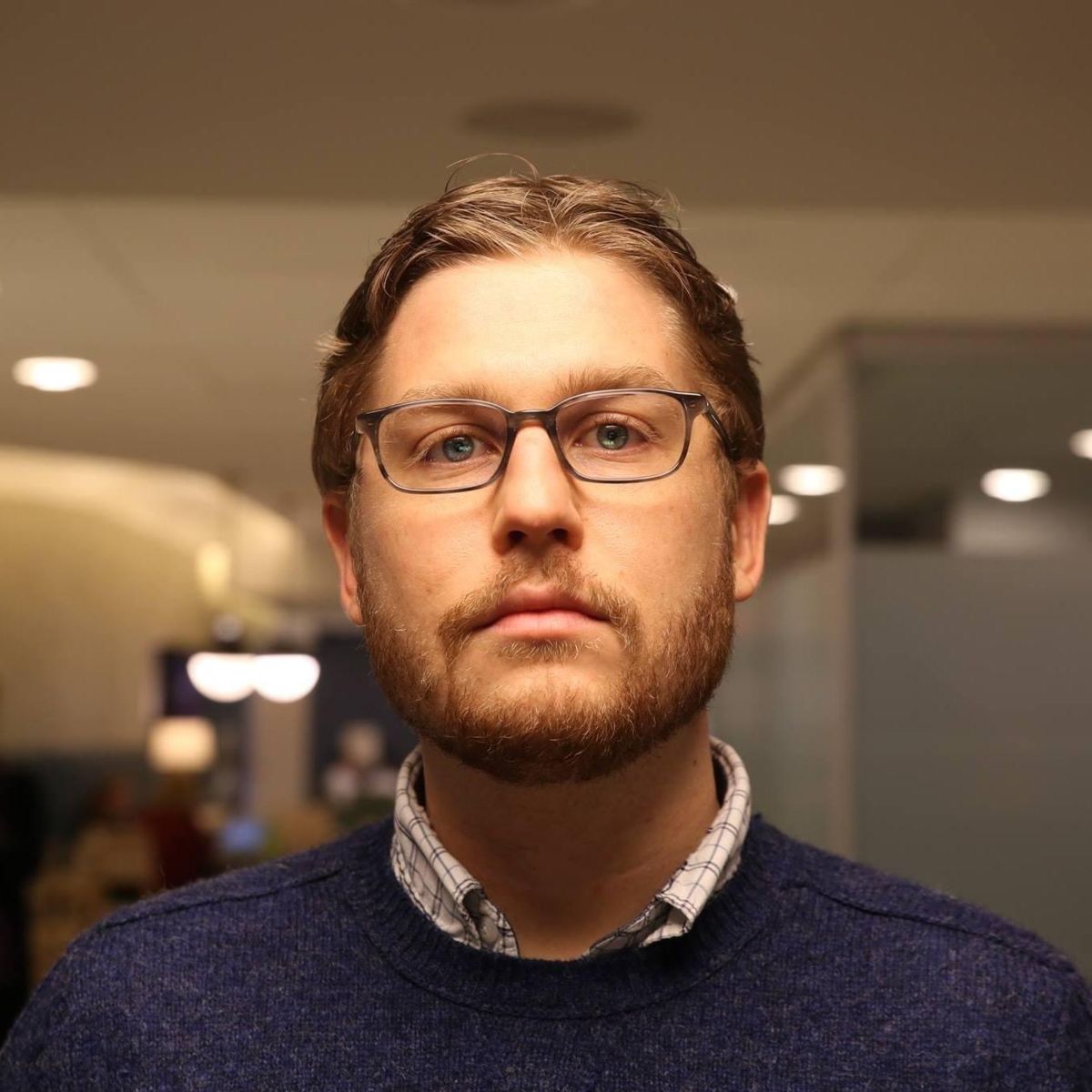
PODCAST HOST
Meet Brian Heater
Brian Heater is A3’s Managing Editor. During his 20+ year career in technology journalism, he has worked as Hardware Editor at TechCrunch, Managing Editor at Tech Times, and Director of Media at Engadget. He is the host of the RiYL podcast and lives in New York’s Hudson Valley with his two rabbits, June and Flash.
Subscribe to the Automated Newsletter
The future of automation delivered to your inbox every Thursday. Interviews with the top minds in robotics and AI, the week’s biggest news, the latest job openings, and more.
We’d love to hear from you! Have thoughts or guest suggestions? Reach us at [email protected]
Follow Us Everywhere: