
April 15, 2026
Ali Kashani on Last Mile Delivery, Robotics at Scale, and the Future of Autonomous Delivery
Last-mile delivery is one of the most expensive and inefficient parts of the global supply chain. While goods can travel across oceans for just a few dollars, getting them from a local hub to a customer’s door remains disproportionately costly.
In this episode of Automated, Brian Heater speaks with Ali Kashani, CEO of Serve Robotics, about the realities of deploying delivery robots in the real world and what it takes to scale autonomous systems beyond early pilots.
Ali explains how Serve Robotics evolved from an internal Postmates project into an independent company operating thousands of robots in live environments. This transition reflects a broader shift in robotics from controlled experimentation to real-world deployment at scale.
The conversation explores why building in the real world is essential for robotics. Lab environments often miss critical edge cases, while public deployment reveals the unpredictable human behavior, operational challenges, and environmental complexity that define real performance.
They also discuss the economic implications of reducing last-mile delivery costs. Lowering delivery from $10 to closer to $1 could unlock new demand, expand local economies, and create new categories of jobs that support and operate these systems.
The episode also examines safety, public perception, and the long-term impact of autonomous delivery on cities. From reducing reliance on cars to improving walkability and safety, these systems may reshape how urban environments function.
Brian and Ali also explore scaling challenges, lessons from acquisitions, and the operational realities of running thousands of robots in public. From unexpected real-world incidents to long-term infrastructure shifts, this conversation offers a grounded look at what it takes to bring robotics into everyday life.
We’d love to hear from you. Have thoughts or guest suggestions? Reach us at [email protected].
You can find the transcript and more episodes of Automated at automated.fm.
You can find more episodes of Automated at automate.org/podcast.
Transcript
[00:00:00] Ali Kashani: Right now it costs about $10 to move something from Chinatown to your door, but $2 to move it from China to your door in the last mile. Our productivity gain is two times rather than 5,000 times over the last couple hundred years - that's a really big difference. If our robots bring the cost of last mile from 10 bucks to a dollar, I am willing to bet everything I own on the fact that it's gonna create many, many more jobs than it's going to destroy, and these are gonna be better jobs.
[00:00:35] Brian Heater: Hello everyone, and welcome to another episode of Automated. My name is Brian Heater. I am the managing editor at the Association for Advancing Automation. We are back with another fantastic episode this week as we catch up with Serve Robotics CEO Ali Kashani. I actually didn't do a lot of robotic delivery coverage at my last gig - that ended up falling on our transportation editors - so I didn't get a chance to speak with Ali until the company announced it was buying Diligent Robotics earlier this year. That was a great chat that we did for the Automated newsletter, so we figured we would go ahead and record a full podcast episode, and this is it. If you've been enjoying the show, it would mean a lot to us if you would please like and subscribe. Please check out that weekly newsletter over at Automated.fm. And with that, please enjoy this conversation with Ali
[00:01:26] Ali Kashani: Kashani.
[00:01:28] Brian Heater: We talk a lot about what's coming up next in automation on the show, but if you really want to see the future in motion, you've got to be there in person. Automate 2026 is where the world's leading innovators, builders, and dreamers come together to show what's possible. Robots, AI, machine vision, motion control - you name it. All automation under one roof. Register
[00:01:53] Ali Kashani: for free at automateshow.com to join us in Chicago, June 22nd through the 25th. We'll see you there.
[00:02:01] Brian Heater: So according to a 2018 Wired story, at the time it was written you had never seen Star Wars. Is that still the case?
[00:02:10] Ali Kashani: It is, yes.
[00:02:12] Brian Heater: I completely understand that potentially being a point of pride, because I do have those things in my life where it's like, yeah, I'm just putting my foot down for perhaps arbitrary reasons. Do you have a good reason for not seeing Star Wars, or you just haven't seen it, so why do it now?
[00:02:30] Ali Kashani: It's not a point of pride. It's more like I'm surprised how surprised people are - so that becomes a conversation topic sometimes. But I recently, a couple of weeks ago, made a bet about some internal milestone. The team has made me promise that if we hit that milestone, I'm gonna watch it. So that may finally happen.
[00:02:50] Brian Heater: Obviously the reason why it comes up a lot in our respective lines of work is because it was very formative for a lot of people. I've had several people on the show come on and say that was the thing. We had Helen Greiner from iRobot on, and she said all the other girls in class had crushes on Luke Skywalker and Han Solo, and she had a crush on R2-D2.
[00:03:22] Ali Kashani: That's awesome.
[00:03:23] Brian Heater: R2-D2 is actually, I think, the reason why Star Wars comes up at all in the Wired story. This is like the early days - the pre-Serve, Postmates X days. There was a big picture of R2-D2, and what that represented something specific to you.
[00:03:42] Ali Kashani: I was working on one of the robots - I think I was actually laying on the ground trying to fix a robot - and one of our teammates took a picture of me. He was on the design side. He took my head and put it on that scene where I think Luke is discovering R2-D2. I mean, I don't know the full story, but that was framed and put on the wall, and that's kind of how the Wired magazine author saw it and the topic came up.
I do want to say - I haven't seen it, but it's just part of the DNA here. I didn't grow up here, that's why I didn't have a lot of the pop culture. But its influence is everywhere and I don't think I'm immune to it either. It's one of the few cases where these stories have been represented with a cute robot that everybody loves, rather than the negative version of the story that unfortunately is very prevalent.
[00:04:35] Brian Heater: There is this thing - it's obviously a nerd thing, it might be to a certain extent an American thing, and I do genuinely believe that to a certain extent it is kind of a male thing - when you have a partner in your life who has never seen movies that are important to you, you go through this ritual of showing them Star Wars. I've never done that for two reasons. One, because yeah, just live your life - we don't have to have all the same pop culture references. But two, I think there's a very real possibility that watching Star Wars for the first time in 2026, after seeing decades of movies that have been inspired by it, you're probably going to be very disappointed.
[00:05:17] Ali Kashani: I'll be honest, that's part of the reason why it hasn't happened. I have watched some classics that proved disappointing in retrospect, you know, after so much progress. But then occasionally you watch amazing things. Catherine O'Hara's passing just this week was really sad, and I watched a 25-year-old movie called Best in Show - oh my God, that was amazing. Here's a movie, 25 years old, that I absolutely enjoyed. It was just like watching how talented she was. But a lot of the time it is actually more about the lore and the excitement of seeing something for the first time at that age and in that era - that's really not possible to replicate. But anyway, I've made the promise, I'm gonna do it once we hit that milestone. I'll report back.
[00:06:08] Brian Heater: Okay. I'm gonna say three words and then we'll completely move on - but: Waiting for Godot. Just go figure out what that means after the conversation.
So, early days, Postmates X - that was always really interesting. At a certain point Postmates, a food delivery service, decides it's time to get into robotics. And that was effectively your entree both into the company and into food delivery.
[00:06:34] Ali Kashani: I was working on an AI startup in the food space that was quite relevant to Postmates. We got introduced because of that, and then it turned out that I had a robotics background and the founders were really considering having their own program because they believed they had some unique insights and approach. The more we talked, the more it all made sense. I was actually familiar with some of the work being done in this space. My background was also related to the DARPA challenge and self-driving cars, so I was following this space very closely. I didn't believe that self-driving cars were ready back in 2017, and I think that has proven to be true.
[00:07:19] Brian Heater: I think time has proven you extremely right.
[00:07:22] Ali Kashani: Yes. But I thought there was a real chance to bring the sidewalk version of this - a smaller form factor, less kinetic energy by like three orders of magnitude. We were able to launch that within a couple of years and have been doing commercial deliveries for a very long time. Now we're at a stage where we're really scaling it.
[00:07:43] Brian Heater: Was sidewalk last-mile delivery ready in 2017?
[00:07:49] Ali Kashani: The technology for that was orders of magnitude less complex to build. We did commercially launch it, and we were getting paid for doing actual real customer deliveries years before I think the self-driving car space achieved that milestone. Of course the amount of investment going into each one was very different. But if I were to, or most people in 2017 were to start in this space, the odds that you would be a Waymo and have that kind of, you know, infinite capital was probably not very high. So if you were to pick one, you wanted to pick one where the complexity and feasibility made more sense.
[00:08:28] Brian Heater: One of your big things - one of Serve's big things and one of Diligent's big things - is testing in the real world. One of the potential downsides of that is that when you fail, you fail in front of people, and these days you fail in front of people with camera phones. Obviously there was a very unfortunate Waymo accident recently and we're probably gonna be having conversations around that for a long time. Was the railroad track incident in Florida a Serve robot?
[00:08:58] Ali Kashani: No.
[00:08:58] Brian Heater: Okay, so the consequences are less dire when something goes wrong with a delivery robot than a self-driving car. But you are still taking a big risk by putting a robot out in the world.
[00:09:15] Ali Kashani: I would say you're taking a bigger risk by not doing so, which is building the wrong thing and not solving the problems you need to be solving. When we sit down in a lab and make plans and go on for a couple of years - and there are companies that have taken that approach, not just in robotics but in other spaces - I would mention Humane with the AI pin, for example. It was years of work, lots of capitalization, lots of excitement, but it wasn't built in real life. I was always watching that puzzled and quite concerned that this may not be the right approach, because you're gonna have false positives and false negatives as far as your plans go: you may think there's something you need to solve that's really important and it actually may not be, and vice versa. You may miss something you don't even know about, or think it's not important, and it ends up being the most important thing.
Being in the real world helps you calibrate and learn what and where you need to invest. When you have such limited resources, as most startups do, I think not doing so is a bigger risk than doing so. And look, being in public - you've gotta be in public at some point, so you better build those muscles and learn how to deal.
[00:10:31] Brian Heater: One of the other really interesting elements - we've been seeing it more recently with Waymo, particularly in San Francisco - is human behavior, which is often very unexpected. I remember in the earlier days of delivery there seemed to be a lot more weird stuff going on. There still is from time to time. But that also seems to be an important part of testing out there: you just don't know how people are going to react when these things are on sidewalks.
[00:11:01] Ali Kashani: My job as a founder, as an entrepreneur, and our organization in general as a startup - our job is to deal with the weird stuff. It's kind of what we signed up for, because we are making something no one has ever made. Generally that's true about any startup: they're doing some aspect of what they're doing - whether it's a product, the tech, the go-to-market - something is really new and novel and never tried before. We are really going into these uncertain environments with a lot of unknown unknowns.
A narrative way of explaining this is I think we are an entropy conversion machine. We are just reducing entropy and turning it into knowledge in a very effective way. That's what startups do really, really well. So once you rock that role in the world, it gets so much easier to wake up every morning and get punched in the face with something totally unexpected and say, okay, that's the job. That's what I signed up for. Let's go figure this out today.
[00:11:59] Brian Heater: Anything stand out to you in particular over the last eight or nine years once these things started being deployed? What's really, really weird?
[00:12:13] Ali Kashani: Being blackmailed.
[00:12:17] Brian Heater: Okay. That took a darker turn than I expected.
[00:12:21] Ali Kashani: Not by something that was done wrong, but by something that just happened to go viral that was misrepresented. And the nice thing about our field is we have video - it's right there. We can go and watch it. So you're kind of wondering, how do I deal with this? Do I show the video? Do I try not to be combative because you're in a community and we want to be good players?
I'll give you a funny example that happened fairly recently. Someone reached out to us and said our robot broke their guitar.
[00:12:53] Brian Heater: I want to pause real quick - that implies this has happened more than once.
[00:13:00] Ali Kashani: Oh yeah. The blackmail thing happened a couple of times. Extortion might be the right word for it. We had to come up with a policy. But I'll finish the guitar example - they reached out and said our robot broke their guitar. We said, whoa, that's awful. They said, this is how I make my livelihood. We asked them to send the robot back to our office so we could investigate. Within a couple hours we saw the video, which showed them trying to kick the robot for whatever reason. The robot was not in their path - it was going left, they were going right - and they just came forward, kicked the robot, and in the process hit their guitar on the back wheel and broke the neck.
So we're standing there reading this email that says 'I'm gonna sue you and I'm gonna tell the press,' and at the same time we're watching this video like... are you serious? What do we do with this? We ended up replacing the guitar. The way we decided was: we can tell them this is not what happened, we have the video and will show it if you try to escalate - or we can just try to be neighborly. This person said their livelihood depends on the guitar. Be a good neighbor. Replace the guitar even though it might make us look guilty. That's the kind of thing you deal with that is completely unexpected, but it's part of the job.
[00:14:32] Brian Heater: There's 'make us look guilty,' but then there's also you doing it and then telling the story and going on a podcast that presumably millions and millions of people are going to watch. Are you all of a sudden opening yourself up to having to give out free things to people?
[00:14:52] Ali Kashani: You have to have a bit of trust in humanity at the end of the day. Yes, there are bad actors. We will make that judgment call - and this was a case where it seemed like this person was genuinely in need. That's very different than someone trying to frame something.
There are cases where people made the same type of attempt and we simply told them, tell us what the damages are and we'll look at it through insurance. If insurance thinks we were at fault, we'll pay. In those cases they never did, because it was completely false - again, we had the video. But by the way, there are so many good stories too. Kids reaching out, parents reaching out who love the robots. We've actually sent people - little kids - Lego versions of our robots because they just want something to have. So there are a lot of positive ones that energize you, and every now and then you have to deal with this kind of thing.
[00:15:51] Brian Heater: First of all, you're gonna have to send me one for my Lego collection back there. But second of all, you put enough robots in the world, at some point a robot is going to break something - maybe a guitar or something else. It's going to happen. And that relates to the Waymo story, right? I think everybody in and around self-driving agrees that safety is paramount. But they also agree that at a certain point, with a certain number of vehicles, accidents are going to happen. It's gonna damage food or run into somebody. Something bad will happen.
[00:16:36] Ali Kashani: The safest vehicle is the one that's not moving. As soon as you start to move, there's a risk. We've tried to solve this with a couple of principles. One is we want to make cities safer than we found them. And I actually don't think that's a challenging task, because cars are just really unsafe. The rate of injuries and death caused by vehicles in some age groups is the number one cause of death. Hook accidents at intersections, exactly the kind of places we operate a lot. This kind of goes back to our famous mantra: why move two pounds of avocados in a two-ton car? We have 3,000 times less kinetic energy. So as long as we are thoughtful in how we navigate the sidewalk and interact with people, the idea that we can make cities safer is not very hard to believe or make happen.
The second one is - you're right, bad things are gonna happen. Because we are at scale, there are thousands of devices outside right now - 2,000 to be specific, and growing. One of our company values is principle over perception. The meaning behind it is: do the right thing first, independent of how it looks, and only after you've made the decision and decided what the right thing is and you're executing it - only then let's have a conversation about how to explain it. As long as we've always done the right thing, I would get on any stage or any podcast or any TV show and explain why we made a decision. To me, that's the only strategy to build a real business in this space and not get caught up in situations that could be really problematic.
[00:18:41] Brian Heater: That's really interesting. I've been doing journalism for a long time and something I've learned over the years is that you report out stories based on the information available to you, and sometimes later you find certain nuances or extra details about what was happening internally, as pressures go. Is there an example you can point to of something where maybe the optics weren't great, but in the long run proved you out?
[00:19:20] Ali Kashani: Look, this is new. It's something that people have a lot of strong feelings about. Part of it is the dystopian perception about robots. Part of it is just the fear of jobs - honestly, it's a tale as old as time, because we've had this same kind of discourse every time new technologies have been introduced. I think it's a very human reaction we're experiencing, and we all have to be very empathetic to that, even if we don't necessarily agree with the fears or the conclusions.
Some people are just going to not like this - and that's been true for every technology. As long as we can stand on what we've done and feel we've had the right approach and right way of doing things, it gets me up in the morning much more easily and helps me get our team comfortable.
Things have happened. There was a report once that we are collaborating with LAPD and sharing videos, and it was just completely false. The reporter literally refused to put our response in the story because it didn't fit their narrative. We explained that we have a set of protocols - we only share if our property is damaged or people are threatened, which has happened. In those cases we defend ourselves, but we don't have any kind of partnership with LAPD where we're just sharing videos with them. That, to me, is completely - I grew up in Iran in a police state, and this goes against everything I value, having moved as an immigrant so that I can have certain freedom. Unfortunately people frame it that way, and some people now believe it because of that report. But what are we gonna do? We just have every proof that this is how we've been operating, and I believe in the long run it will be shown that we've been good actors. In the short term, it's really hard, and at the end of the day we just gotta put our heads down and keep building.
[00:21:18] Brian Heater: I don't think it's necessarily a bad instinct to be suspicious - obviously there are instances of tech companies that have worked with law enforcement in concerning ways. But as a journalist, it's your job to work with all available information.
I want to back up, because I think the car argument is a really interesting one that I hadn't really considered. I spent the better part of two decades in New York City, which is a very walkable city with the best public transit system in the country. I'm a big fan of reducing car traffic and improving walkability, both in terms of safety and environmentally. But the jobs conversation is always interesting. Here at least, the one-to-one replacement is effectively the delivery person job, whether they're on a bike or in a car. Is there an argument that there's a positive knock-on effect - that it's ultimately creating more human jobs?
[00:22:57] Ali Kashani: I absolutely believe that. The model I use is looking at the impact that long-distance shipping had on the global economy. The amount of jobs created - in many countries - because of literally the shipping container. The fact that that brought down the cost of long-distance shipping so significantly that industries were born and so many people were lifted out of poverty as a result.
To give you some numerical examples: a single cargo ship today, which usually has about 20 sailors running it, moves more goods than the entire British Navy of a hundred thousand people moved a couple hundred years ago. That's the work of a hundred thousand people being done by 20. But you can bet there's so much more goods to move than ever before. And for every one of those ships, there is so much more manufacturing and production and consumption and benefits to the whole society.
If I use that as an example and compare it to last-mile, I believe the way that long-distance shipping cost reduction brought globalization - and the response to globalization that everybody wants is flourishing local economies - it would actually happen in the last mile. Right now it costs about $10 to move something from Chinatown to your door, but $2 to move it from China to your door. That's because of the cost reduction that happened in long-distance shipping. But in the last mile, our productivity gain is two times rather than 5,000 times over the last couple hundred years - that's a really big difference. If our robots bring the cost of last mile from 10 bucks to a dollar, I am willing to bet everything I own on the fact that it's gonna create many, many more jobs than it's going to destroy, and these are gonna be better jobs - for local businesses, for people who run and operate and help the robots. These are higher-leverage productivity than a single person moving a single package to every single door. I actually believe this is one of the best things that can happen at the local economy scale, which is an area we've always talked about wanting to improve.
[00:25:23] Brian Heater: Before the Segway came out, there was this huge hype cycle. And one of the lines people said - probably Dean Kamen, frankly, who said this - is that this is going to transform the way cities are built. I'm thinking about that in the context of these robots. Let's say hypothetically, 10, 15, 20 years from now, last-mile delivery robots have a transformational impact. People are driving fewer cars. Congestion is different because now it's these things primarily navigating on sidewalks. Is this going to require a fundamental rethink of how cities are built and laid out?
[00:26:09] Ali Kashani: I think there is going to be an evolution for sure on how cities are structured, and I hope it's a positive one. We've learned a lot about how to build cities and how not to build cities - like running highways in the middle of a city creates so many problems. There was a time where we were also excited about highways.
[00:26:28] Brian Heater: Read that Robert Moses book if you haven't - it's very good.
[00:26:32] Ali Kashani: Which one is that?
[00:26:33] Brian Heater: The Power Broker.
[00:26:35] Ali Kashani: I haven't, okay - added to my list. I've spent a lot of time in Vancouver. Right now I live in Silicon Valley, but Vancouver is where I moved from Iran when I was 19 years old. It's a city that doesn't have a highway running through it - I believe it's the only major North American city like that. And the walkability and the way the city is laid out, how businesses and residential towers are next to each other, it's a really good model.
[00:27:03] Brian Heater: One of the most beautiful cities in North America. Incredible. And you got the island there and you can take the ferries - great city.
[00:27:10] Ali Kashani: It's my favorite place. But the point I want to make is reducing dependence on cars has already been proven to make cities more livable and more friendly for people. That model is one we should be trying to replicate. And as we do new stuff, we're gonna learn new lessons and should be thoughtful about it. But I do think we're much more conscious about these decisions today than we've ever been.
When I'm talking about this local economy boom, I'm not talking just about our robots - I'm talking about the impact of robots, self-driving cars, drones, and all these new technologies that enable things to move. I think they're going to have potentially really positive impact in things we really care about: more social spaces and green spaces, less accidents, less congestion, less emissions. It's a vision I'm excited about, and I know a lot of people are skeptical, but I think it's what we should be striving for.
[00:28:07] Brian Heater: If you look at the early history of the electric car, coverage around that has suggested that maybe there were strong lobbies in place that made it more difficult. There are a lot of well-built-up industries, and if they perceive some new technology as a threat, they're gonna want to do what they can to continue to operate the way they have. Do you feel like you're at a point where food delivery services will be perceived as a threat to automotive or other large corporations?
[00:28:53] Ali Kashani: I've found automotive so far to embrace this, because they understand it's a whole new sector for vehicles basically. I believe it's like going from a horse carriage to a car - the industry grew. Not as many horse carriages are being built, but there are so many different forms of vehicles that now exist that couldn't exist when you had to have a horse attached. Now we are removing the dependency on a person, on a driver, and it's gonna have this explosion of new possibilities, new forms and applications. So I've found them to be generally very practical and excited. But I do believe there would be some pushback. There has been - if you look at broader autonomy, there are some unions that are pushing back, which is a tough argument to make given that it's literally life-saving.
[00:29:46] Brian Heater: You can't fault people - it's hard to fault the taxi union for being concerned when Uber comes into town. Those are people who have been doing that job for a long time.
[00:30:05] Ali Kashani: Absolutely. We have to be empathetic to these concerns, some of which are true. Yes, the taxi industry was disrupted by Uber. But there are also a lot of Uber drivers - probably more than there ever were taxi drivers - because we can reach that service much more easily now. I do think it's a conversation that sometimes happens with a lot of temperature, and a more thoughtful and nuanced version of it would be more productive. But we owe it to the next generation - just as how much our lives are better than the previous generations because of this progress - we can't be the brakes and say, okay, we're gonna stop because we don't want to lose a job. It's okay if car accidents kill people - that's just not a winning argument. It never will be.
[00:30:52] Brian Heater: If auto manufacturers have learned from the electric car situation and the early days of autonomy - and I think a lot of them have - we talked to Michael Taylor from GM [verify spelling], and she is leading a lot of the robotics research they're doing. They are transitioning to be more tech companies, and if they are smart and invested in the future, they are going to be invested in some of these alternative transportation systems.
The Postmates to Uber transition is always interesting to me, because you're effectively going from one food delivery service to another. It was spun out and developed internally at Postmates. Was that project not a good fit at the time, or was it just a better fit for what Uber was doing?
[00:31:50] Ali Kashani: I can't really speak for Uber, but I can tell you what I was thinking at the time. Your job as an entrepreneur is to make sure you always put yourself in a position where you can control your destiny. There are a lot of projects inside bigger organizations where when priorities shift, they get killed. From the day I started at Postmates, we had an 18-month plan budgeted and everything. But to the team I was building, I always told them we have six months - because after six months there is no guarantee the priorities haven't shifted, and even though we have a budget approved, it could all go away. So our job in the next six months is to show so much progress that we earn another six months.
There is a point at which you join a bigger organization and you really don't have that level of control. I think we had a bigger role inside Postmates than we were gonna have inside Uber, and I didn't know how that was gonna go - I just knew I was gonna be at the mercy of much bigger forces.
Interestingly, our process of wanting to spin out had already started inside Postmates. We were already talking about doing that because it seemed like it would work better as an independent company than being inside a more mature startup that was really focused on profitability. We were going in the opposite direction - we needed to spend more money in R&D and really build technology. So it just didn't seem like the right fit anymore, and it made sense to spin off. As soon as we joined Uber, I reached out and said, hey, I already have investors lined up, this is what we wanted to do, what do you guys think? And within a couple months we had basically reached that decision and continued that process.
[00:33:42] Brian Heater: So basically from day one - or day zero - there was the expectation that you were eventually gonna spin out and IPO?
[00:33:50] Ali Kashani: It took a while because even the acquisition itself took months before it was approved by the DOJ. I was never in Uber's boardroom or executive meetings to know exactly what their thought was. But I did have a good plan for what a spin-out version looks like, how we would partner with Uber, and why that made sense. In my mind, it would just give us a lot more certainty about our own future - we can control that, and we'd have Uber as a major investor and partner. They've been fantastic to have. But at the same time we get to make decisions and not be in a position where a shift in the market suddenly has a material impact on us because we're not in control of our own path.
[00:34:35] Brian Heater: You've been through this process in all sorts of different ways - accelerator, launching your own startups outside of companies, being purchased by a different company, spinning out, IPO-ing. The reason we talked recently was the Diligent acquisition. Having been on that other side, what did you learn and what are you taking into this acquisition of a healthcare robotics company?
[00:35:09] Ali Kashani: You develop a lot of empathy about what the other side is experiencing. There's obviously a lot of uncertainty and anxiety and questions - at an individual level all the way up to the founder level, when you've had this vision and worked really hard on something. I think part of the reason, in pretty much every acquisition we've done - we've announced four of them - there has been some competitive offer that folks could have accepted. But what's really helped us, and it's not just me - our COO Touraj literally wrote the book on exits - is that empathy. Having experienced both the acquiring side and the being-acquired side goes a long way. You can tell founders, hey, I want you to come here and actually make your vision come true, and we will support you. Answering a lot of those anxieties that people have naturally goes a really long way. If you've never experienced the other side and you're in a big company just running the process, you may not be aware of a small thing you could say that has a really large impact on the person on the other side.
[00:36:23] Brian Heater: Autonomy is incredibly important for companies like that. Maintaining brand identity - it's a very different company in terms of the market they're serving. And you're acquiring this company with two amazing, well-respected founders. I assume a part of bringing them on board is that reassurance that we're gonna let Diligent be Diligent.
[00:36:45] Ali Kashani: Absolutely. One of the first reasons this became a serious conversation was that very quickly we had this sense that there's a really good DNA match - cultural match - between our team and Andrea and Vivian and their team. That was basically universally agreed on our side of the conversation when we were getting to know them. And I like to think that they agreed as well, and that's what really brought us together. Because as I said, there always is another offer available. I believe there was actually someone really harassing Andrea to make an acquisition offer - calling them in an unsolicited way. But at the end I think we presented a compelling case that this is a place where you're going to really bring your vision to reality that you've worked on for almost 10 years.
[00:37:38] Brian Heater: Yeah, I think calling up and harassing someone on the phone is always a good way to get what you want. It always works out well.
[00:37:51] Brian Heater: You make your offer and then either the offer evolves or you move on. They're an interesting company for a lot of reasons - last time I was in Austin I went out and visited their headquarters. In a lot of ways they are a humble company. What they've done in terms of real-world deployment is impressive, but not a huge office. They were doing all of the robot assembly on-site there in Austin. When we spoke, you said one of the key things you're bringing is scale. I think you said they have about 100 robots today - a year ago we had 100 robots, today we have 2,000. So 100 to 2,000 in a year is obviously a huge jump. What had to happen to make that happen?
[00:39:04] Ali Kashani: Eight years of work that preceded it.
[00:39:08] Brian Heater: It takes eight years to be an overnight success.
[00:39:12] Ali Kashani: Exactly. And honestly, for many of us in this company, even years before that - whether it was the education or the startups we've done in the past - a lot of the lessons we learned are focused into Serve. We built a lot of muscles together, even before Postmates.
More specifically, we have been operating a robot since 2017. The robots that look like Serve today - the first generation started in 2019 - so it was years of waking up, getting punched in the face with new realities or new unknown unknowns, and then dealing with it and fixing it and building the technology and the partnerships. All that work so that in 2025, we started the year with that momentum to launch 2,000 robots. It was a target we'd set out publicly, and we actually went and rang the Nasdaq on the day we launched the 2,000th robot, which was a really fun moment to celebrate. As you said - 10 years in the making for an overnight success.
[00:40:17] Brian Heater: So you foresee there might be a similar hockey stick as far as their deployment goes?
[00:40:24] Ali Kashani: I certainly hope so. I wouldn't be able to provide any numbers right now, but you do have to do some groundwork on the manufacturing side to get ready for that kind of scale. But the playbooks are very similar. And the folks at Diligent - like Todd, the COO who came from Cruise - as we talk to each other, we've learned things. There are things he had experienced because Cruise was further along in some of their deployments than we were. So they had very similar experiences to what we had been experiencing, maybe a step ahead, and we could learn from those experiences. I do think there's a lot of cross-pollination here - you don't need to learn everything from scratch when someone else in the room has already experienced it and can share a playbook. That's one of the magics of the startup scene and the fact that these companies, coming together, can move faster.
[00:41:20] Brian Heater: One of the big selling points for you was that indoor navigation - you've been an outdoor navigation company for your entire career. That's what you got your doctorate in, right? And another really interesting thing, arguably Diligent's biggest breakthrough as a service robot, is they figured out how to navigate between floors. It can autonomously operate an elevator. And I'm sure that since the first days of Serve, people are like, alright, when are the arms coming? Everybody is constantly thinking humanoid. I know Amazon tested humanoids a while back, and I know Ford was looking at Diligent for delivery. Are there, or will there be, last-mile situations where maybe a pair of legs and a couple of arms might come in handy?
[00:42:13] Ali Kashani: Absolutely. Right now, let's say crossing an intersection that has a push-button crosswalk that's not automatically activated - it would be nice to be able to press those buttons. Right now we have to reroute around them, or sometimes we actually ask people. The robots display a message asking someone to press the button.
Sometimes you do have to do more than just move around - you have to manipulate the environment to be successful. Indoors that's even more so. That's why Diligent had to solve these problems: scanning a badge, opening a door, going into an elevator. These are really interesting problems, and again, part of what's really fun about learning in the real world. You may sit in a lab and think the problem is just getting from A to B. But in reality there's a door - and how do you go through it in a way that's reliable, works every single time, and is also cost-effective? You don't want an expensive piece of hardware just so you can press a button. That ability to solve those problems is something I'm proud of and they should be proud of, and it made them very compelling to us because a lot of these problems are actually common.
[00:43:27] Brian Heater: And as far as synergy goes, you have the opportunity to win over a lot of healthcare workers by really getting last-mile delivery right for them. Getting somebody's food order up to their desk would be a big win, I think.
[00:43:47] Ali Kashani: There are about 200,000 nurses short in this country, and nurses are so extremely overworked. What they should really be doing more of is patient care - that human connection - rather than walking long hallways and grabbing supplies. Whether it's food or supplies or medication, that's the opportunity. And what I like about this particular case is that people, because we all know about the challenges with nursing, they understand this is not about replacing - it's about augmenting and helping and supporting. That's what we do ultimately, even with sidewalk robots. A lot of the deliveries we do aren't very compelling for people because of high-traffic areas, parking challenges, short distances - you may not make as much money. So it actually drives down the cost of delivery, which means there are now more jobs for everybody to do because more people are using these services. The augmenting role is more obvious in the hospital, and I really like that.
[00:44:56] Brian Heater: Well, Ali, it's always a pleasure. Thank you so much for joining us.
[00:45:00] Ali Kashani: Thanks for having me.
[00:45:06] Brian Heater: Thanks so much for tuning into another episode of Automated. Thanks to Ali for joining us. If you've been enjoying the show, the easiest way to support us is to like, subscribe, leave a comment, tell a friend. You can also find more info and relevant show notes along with our weekly newsletter over at Automated.fm. And with that, we will see you next week for another episode of Automated.
Unlock Full Access to Automated and Explore Everything Automation.
Subscribe today and leave a review on YouTube, Apple Podcasts, and Spotify.
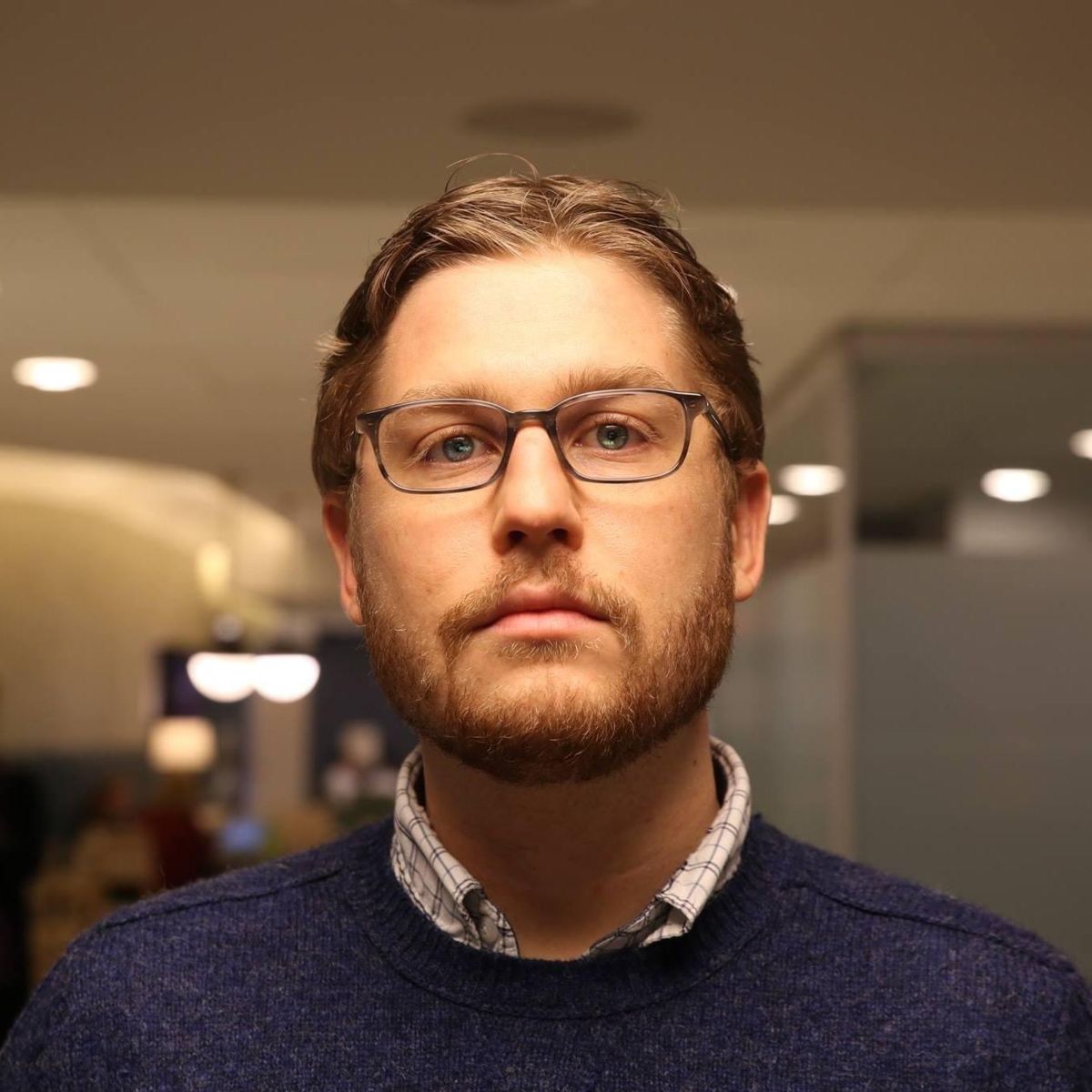
PODCAST HOST
Meet Brian Heater
Brian Heater is A3’s Managing Editor. During his 20+ year career in technology journalism, he has worked as Hardware Editor at TechCrunch, Managing Editor at Tech Times, and Director of Media at Engadget. He is the host of the RiYL podcast and lives in New York’s Hudson Valley with his two rabbits, June and Flash.
Subscribe to the Automated Newsletter
The future of automation delivered to your inbox every Thursday. Interviews with the top minds in robotics and AI, the week’s biggest news, the latest job openings, and more.
We’d love to hear from you! Have thoughts or guest suggestions? Reach us at [email protected]
Follow Us Everywhere: