
News
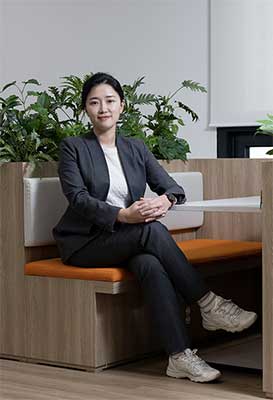
[Interview] Suji Lee, CEO of Deeply | Creating New Markets from Sound Without Language
From B2C to B2B
When Deeply first started, the company developed an AI solution to help with childcare, but later shifted to industrial Sound AI with Listen AI. Lee explained that B2C requires not only modeling skills but also marketing and pricing strategy, which made B2B a better fit for a technology team made up primarily of engineers. She added that enterprise customers have clearer demand and investment capacity because they can measure ROI in terms of quality improvement and defect reduction.
Core Technology
Although the business direction changed, the underlying acoustic AI technology remained the same. Deeply analyzes a wide range of unstructured sounds in the world, including crying, doors opening and closing, and machine operation sounds. Lee noted that while vision AI has many open-source models, acoustic AI is still largely unexplored, which means Deeply must build its own models. The company’s advantage lies in signal processing technology that can distinguish factory machine sounds from surrounding noise.
Data Advantage
Deeply’s acoustic data became attractive to global IT companies because nonverbal data is extremely scarce compared with language data. The company collected real-world sounds itself and also hired actors to record additional data, building a high-quality dataset that is hard to find elsewhere. Lee said that the lack of language barriers also creates international demand, making Deeply’s in-house data, acoustic analysis, and deep learning technology a strong competitive advantage.
Field Collection
Deeply’s Listen AI has two product lines. One is Listen AI Industrial, which detects machine sounds and part fastening sounds in factories for equipment management and defect inspection. To build this product, the company visited more than 40 factories in person to introduce the business and collect sound data. The other is Listen AI Safety, which must accurately recognize screams and calls for help in urban noise and changing weather conditions. For that, the company hired actors and recorded screams in environments such as studios, public restrooms, and parks to build its dataset.
Safety Monitoring
Lee said that in safety monitoring, adding acoustic analysis improves the overall quality of judgment. Just as vision AI alone has limits in factory inspection, safety systems can make more accurate decisions when they can detect not only fire, accident, and violence footage, but also sounds such as calls for help or screams.
Singapore Adoption
Deeply’s acoustic AI technology has been adopted by a Singapore government agency. Lee said Deeply was the only startup from Asia selected among 12 companies chosen from seven countries worldwide. Listen AI Safety will be used in Singapore’s public safety system to detect emergency sounds in real time. She added that Korea is globally strong in public safety and has a high adoption rate for vision AI-based safety monitoring, but that Singapore is trying to complement the limits of visual intelligence by integrating acoustic monitoring into its broader surveillance system. Singapore also serves as a hub for Southeast Asian business, and Deeply is working with local distribution partners.
ROI Calculator
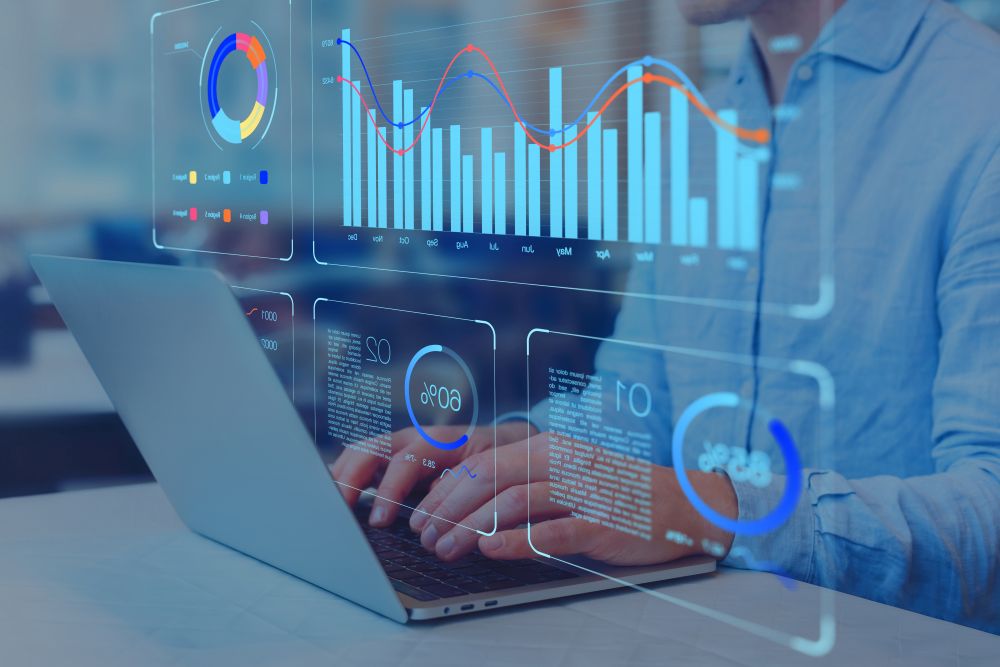
Discover the potential cost savings of robotic automation over a 20-year system life
This calculator compares your current manual labor costs against the total cost of owning and operating a robotic system over its 20-year lifespan.
Local and Global Expansion
Lee said Deeply plans to deploy Listen AI Safety in five local governments in Korea this year. The key capability is accurately recognizing needed sounds regardless of weather, noise, or environmental conditions. The company supplies software through partnerships with CCTV and safety monitoring solution providers.
For North America, Deeply is securing customers in Southeast Asia through Listen AI Safety and plans to establish a North American subsidiary to supply manufacturing companies. In noisy factory environments, its solution can detect fastening sounds between parts, reducing inspection time by up to 60 percent and improving defect rates by up to 75 percent. It can also monitor production lines 24 hours a day and raise defect detection accuracy to 99 percent.
Startup Lessons
Lee said that because Deeply was founded around the potential of acoustic AI itself, finding the market was difficult. The company had to learn which customers would find value in its product and where the technology could have real impact. Through trial and error, it moved into predictive maintenance, hearing-based inspection solutions, and safety monitoring AI for industrial sites.
Hiring and Culture
Deeply is currently looking for proactive people who can respond flexibly without a fixed manual, especially as the company enters the global expansion phase. Because the company has already built differentiated Sound AI solutions using its accumulated data and proprietary technology, it is also looking for candidates with specialized knowledge in acoustic AI or people who have independently studied the field. Lee said the company culture emphasizes kindness, because being harsh may be easy when solving problems, but treating teammates kindly is the real force that helps the team solve difficult problems together.
Long-Term Vision
In the long term, Deeply aims to build the AI that serves as the “ears” required for robots to operate in the real world. Lee said that hearing technology is not only about understanding language, but also about distinguishing and analyzing many different kinds of sound. She believes acoustic AI is still an unexplored field with many topics left to research.
Deeply Inc
Discover how Deeply Inc can support your automation journey with their complete range of solutions and expertise.
Visit Company Website
