
News
[Biva100] Listening to Risk Signals in Daily Life and Industrial Sites with Acoustic Detection AI

In today’s industrial environment, where AI adoption has become essential, one of the biggest questions is how to actually use AI. The goal is no longer just to connect a specific technology to AI, but to place AI in the right part of the workflow so it can significantly improve efficiency.
One area drawing strong attention across industries is Physical AI. Physical AI refers to AI that perceives the physical environment through input devices such as sensors, cameras, and LiDAR, and then performs real-world actions using robotic arms, vehicles, or actuators based on the collected data.
Unlike traditional AI, which mostly generates text or images on digital screens such as computers and smartphones, Physical AI can execute commands in the real world or even produce tangible outcomes directly. As robotics, edge computing, vision, and sensor technologies advance, the number of practical Physical AI applications is rising rapidly. Autonomous vehicles, humanoid robots, and drones are representative examples.
The Physical AI market is also growing quickly. According to Counterpoint Research’s recent Global Physical AI Tracker report, cumulative shipments of Physical AI devices are expected to reach 145 million units between 2025 and 2035.
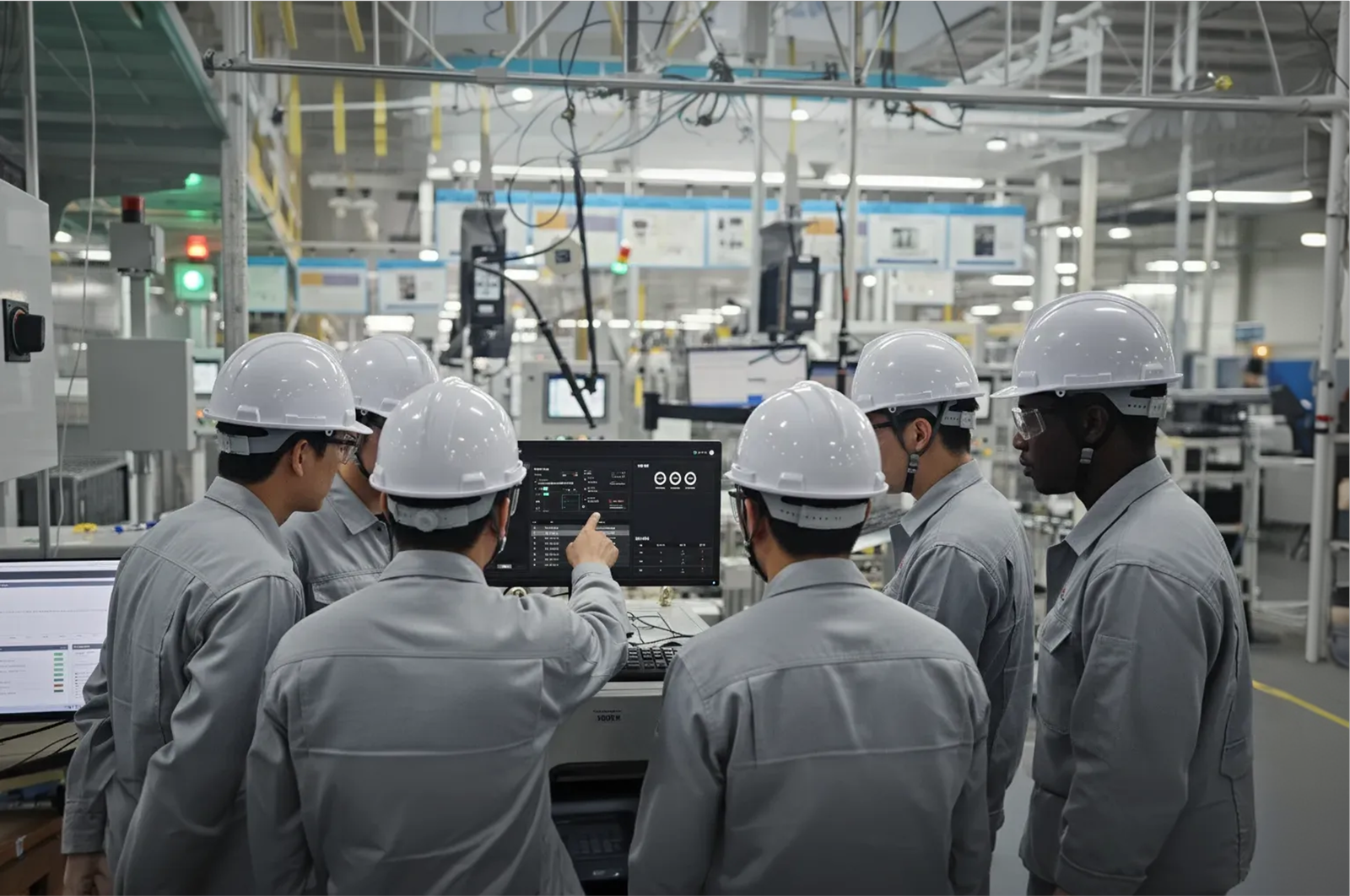
Physical AI has also emerged as a new opportunity for startups worldwide. In manufacturing and industrial environments, many areas still rely on human senses and experience, making automation difficult. Solving those problems with Physical AI could create major business opportunities. Korean startup Deeply is one of the companies focusing on that potential.
Machine Hearing
Deeply’s Physical AI focus is “machine hearing,” which understands the real world through sound. Sound is the signal that reflects equipment status and abnormal signs the fastest, but it has long been underused because it is difficult to quantify.
Suji Lee, CEO of Deeply, said, “Deeply is an AI company that aims to solve diverse problems in industry and everyday life through sound. Ultimately, our goal is to grow into a company that helps shift judgment away from human senses and experience and toward more precise and consistent sound-data-based decisions.”
Lee founded Deeply in 2017 after studying electrical engineering at KAIST and neuroscience at Seoul National University. While studying electronics and neuroscience, she became interested in how signals can be interpreted and turned into meaningful information. She especially focused on how the human brain integrates multiple sensory inputs to make decisions.
Lee said, “For AI to make more accurate decisions, it is important to use not only visual information but also auditory information. I began sound AI research because I believed that if machine vision is to be used in more fields than it is today, AI research in hearing will also be essential. In real industrial environments, important sound data often exists but cannot be used quantitatively. I thought solving that problem through technology would have great industrial value, so I founded Deeply with the goal of creating AI that converts human hearing into data and makes decisions based on that data.”
Listen AI Industrial
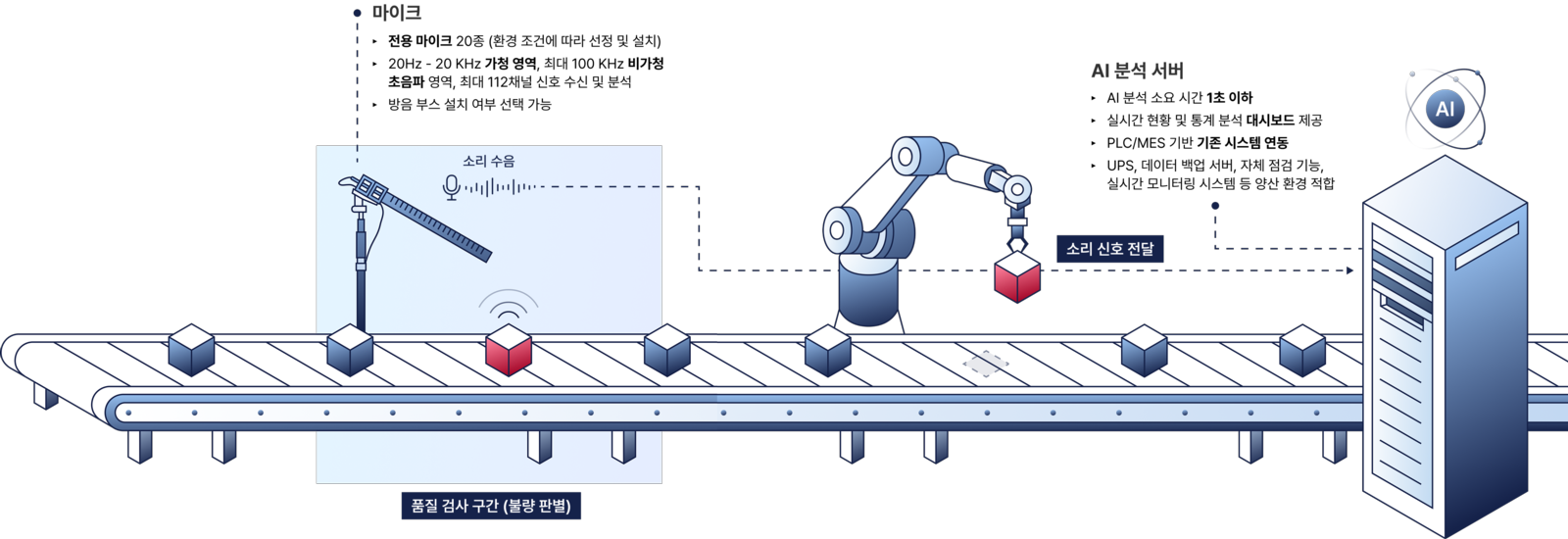
Deeply independently developed a sound AI solution that converts sound into data and quickly detects and judges important signals in industry and daily life. Its main solutions are Listen AI Industrial for manufacturing sites and Listen AI Safety for daily-life and public safety environments.
Listen AI Industrial automates inspection processes in manufacturing that previously relied on workers’ hearing and experience. It analyzes parts such as actuators, motors, and bearings, as well as fastening sounds, to determine quality conditions in real time during production, even in areas that are difficult to confirm through vision inspection alone. Its strengths are reducing differences in inspection standards between workers, preventing defects early, and automatically accumulating process data. Because it can be installed by simply adding dedicated sound equipment to an existing production line, integration with factory systems is relatively easy.
According to Deeply, Listen AI Industrial reduces the cost of operating large-scale hearing inspection lines by more than 60% and guarantees inspection accuracy above 99.78%, significantly lowering defect rates and enabling process automation. It is currently used on mass-production lines at automakers, affiliates, and first- and second-tier suppliers.
Listen AI Safety
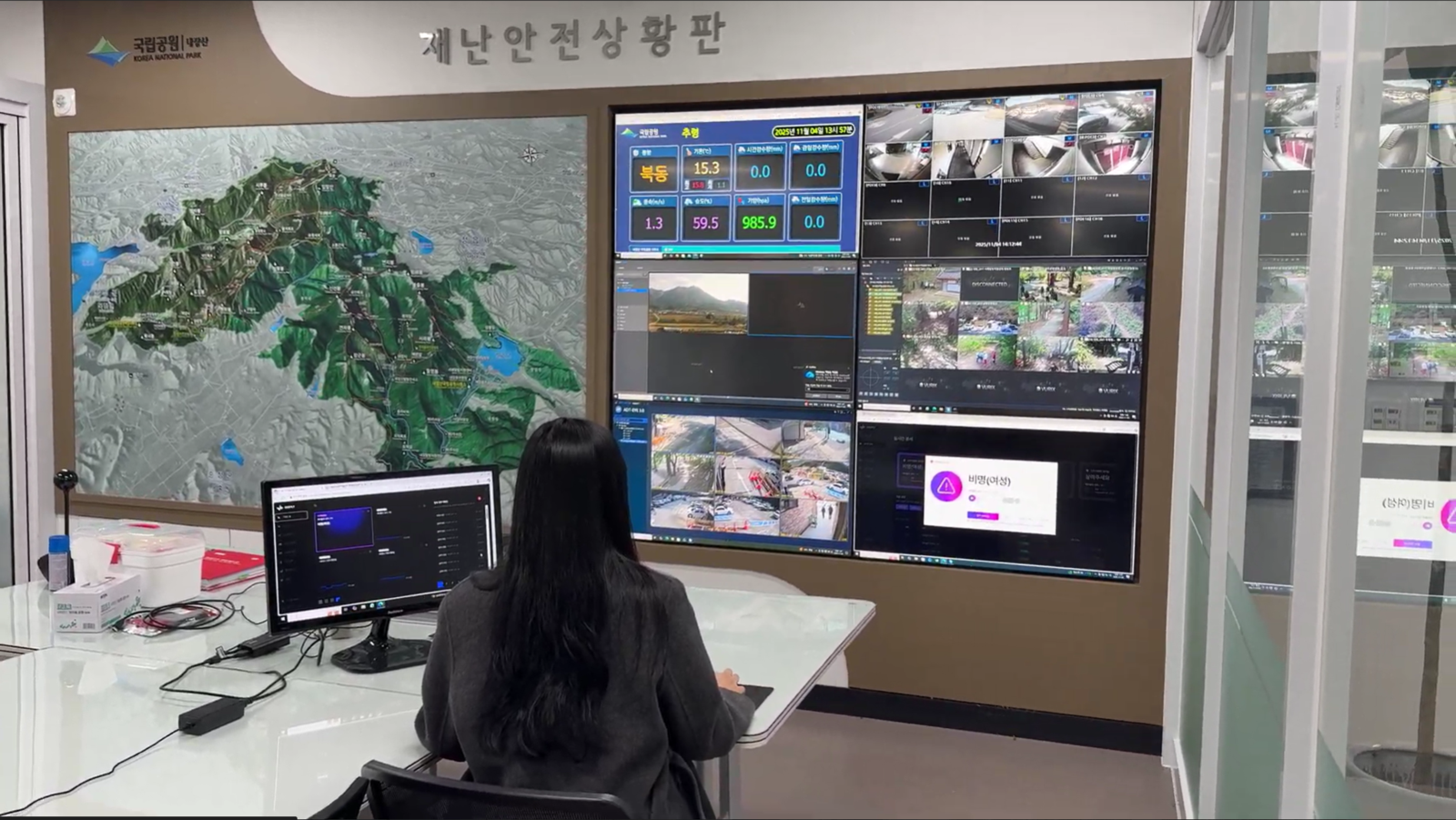
Listen AI Safety is a solution that detects nonverbal sounds in everyday environments that indicate danger and helps people respond quickly. It identifies 10 types of sounds associated with emergencies, including screams, groans, shouting, impact sounds, crying, and hyperventilation, as well as calls for help such as “Save me” and “Help me.” Based on patented sound AI technology, it can identify emergency signals through sound in environments where CCTV installation is difficult.
Deeply supplies Listen AI Safety to places such as the Government Complex Sejong gymnasium, Naejangsan National Park, Incheon Transit Corporation, and Kangwon Land, and has also exported the product to overseas markets including Singapore’s Ministry of Home Affairs, Thailand, and Vietnam. Listen AI Safety is installed even in restrooms, changing rooms, and other blind spots where danger is hard to identify visually, helping manage public safety.
Company Differences
Lee pointed to three major differentiators for Deeply: proprietary sound AI technology, on-site applicability, and scalability across industry and everyday life. First, Deeply independently developed machine-hearing technology that analyzes not only voice but also nonverbal sounds such as equipment noise, ambient noise, and danger signals. The company directly collected and trained data from both anechoic chambers and noisy real manufacturing sites, turning the research into a solution that works reliably in actual environments. Its solution can precisely judge sounds below 1 dB even in noisy manufacturing settings.
Second, unlike many companies that focus on speech recognition in a single field or analysis in a limited environment, Deeply connects industrial quality inspection and everyday safety detection through one sound AI framework. Lee emphasized that this is differentiated by viewing sound not as a simple input, but as a key data source for understanding the real world. She added, “Deeply’s goal is not simply to build AI that listens to sounds, but to help transform judgments that have long relied on human senses and experience into more precise and consistent data-based decision-making.”
Building Trust
One of the hardest parts of being a startup is securing core technology and capital. For Deeply, the biggest early challenge was that the market did not yet understand what sound could do. The company had to spend more time explaining the problem itself than explaining the technology.
To address that, Deeply chose not to rely primarily on investment or external resources. Instead, it focused on proving the problem directly in real factory environments. By entering manufacturing sites, collecting data, and conducting PoC (proof of concept) projects, the company demonstrated that sound alone could be enough to determine quality. Lee recalled the first time the solution was applied to a customer’s mass-production line and caught defects early as a particularly memorable moment. She said that experience gave the market confidence that this was not just a technical test but a solution that could actually be used in practice.
As a result, repeat purchases from customers increased, and both the technology and business began to grow more steadily.
Global Expansion
Deeply’s solutions are now attracting attention not only in Korea but also in global markets. In North America, reshoring trends are increasing, and demand for automation is high because of skilled labor shortages and production efficiency challenges. Deeply’s solutions are seen as a practical way to improve both productivity and quality.
In the safety sector, the company is building a stable revenue base in East Asia, especially around Singapore. Starting with cooperation with HTX, the research agency under Singapore’s Ministry of Home Affairs, Deeply has been securing trusted references in public safety and expanding its business.
Exhibition and Growth
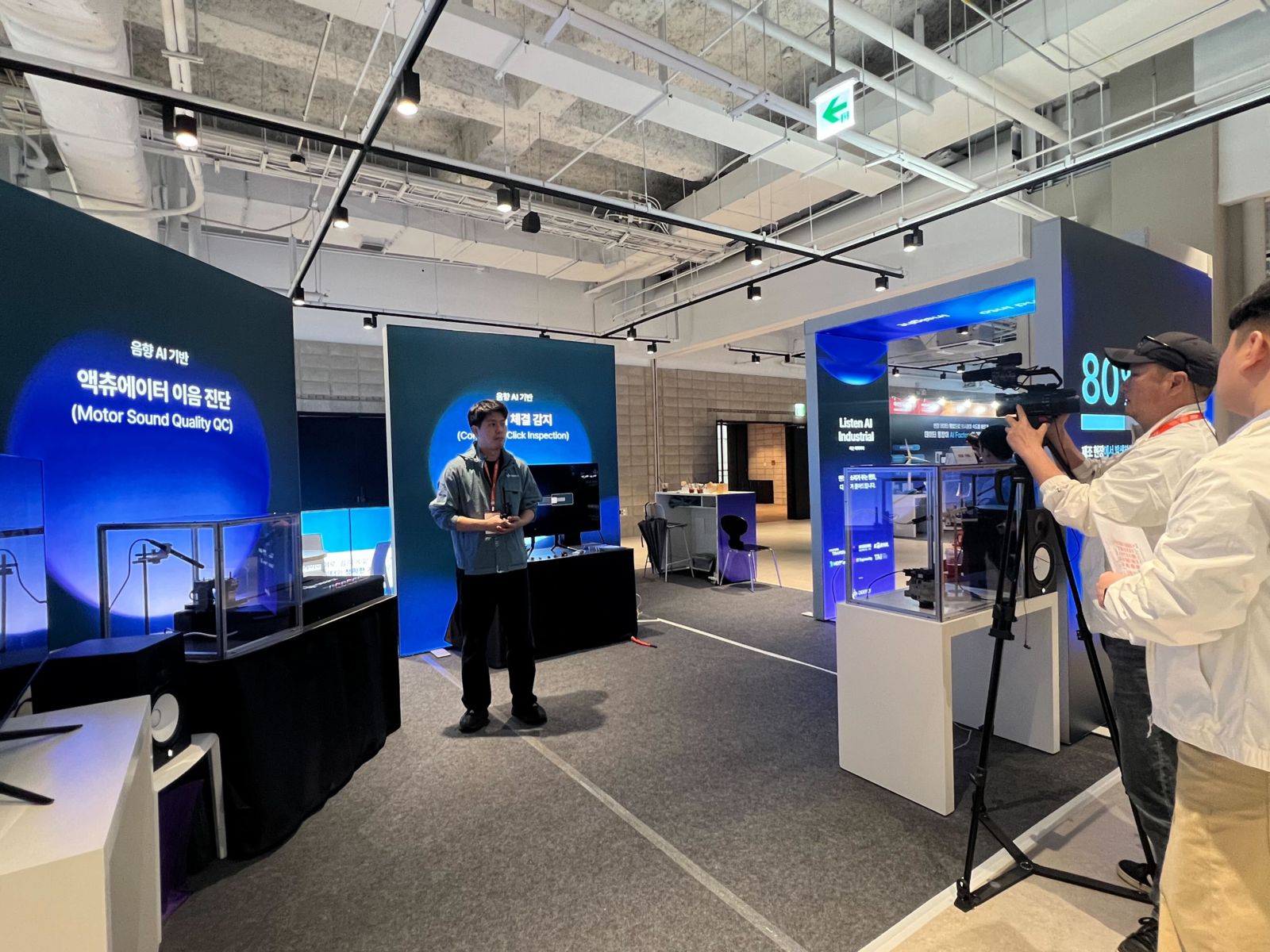
Deeply set its biggest goal for this year as turning strong market demand into real revenue. At AW 2026 in March, the company operated an independent booth for the first time, and the response on site exceeded expectations. After the exhibition, inquiries surged, and the company is currently dedicating most of its resources to converting that interest into business opportunities.
The company is now visiting manufacturing sites across the country to respond closely to customers. It is also preparing for global expansion. Deeply plans to begin a full push into North America with its participation in Automate Show in Chicago this June, and from there expand its business across major manufacturing hubs in Asia and North America.
Lee said the short-term goal is to quickly turn newly secured leads into concrete collaborations and create successful deployment cases. In the medium to long term, she wants this year to become the starting point for Listen AI Industrial to emerge as the new standard for hearing-based inspection in manufacturing sites around the world.
Future Platform
Deeply is also preparing to evolve beyond simple sound analysis into a Physical AI–based equipment diagnostics platform that integrates sound, ultrasound, and vibration signals. Instead of detecting defects from a single sound, the company aims to build a system that comprehensively analyzes multiple physical signals from machines and diagnoses their “health” much like a doctor uses a stethoscope. It is also focusing on optimizing dedicated microphone hardware for noisy environments and improving self-learning algorithms so the AI can adapt faster to new sites.
Lee said that many areas in industrial sites and daily life still depend on human senses and experience, and that this is where AI can contribute the most. She added that Deeply will continue to grow not only as a technology company, but also as a company that truly solves problems in the field.
“Starting with sound, we want to turn unstructured data into data and build a more precise and consistent decision-making structure,” Lee said. “Deeply will continue to grow not just as a technology supplier, but as an industrial partner that solves problems and creates change together with customers.”
Deeply Inc
Discover how Deeply Inc can support your automation journey with their complete range of solutions and expertise.
Visit Company Website
