
News
An ‘AI Skilled Worker’ That Picks Out Defects by Sound Draws Overseas Interest
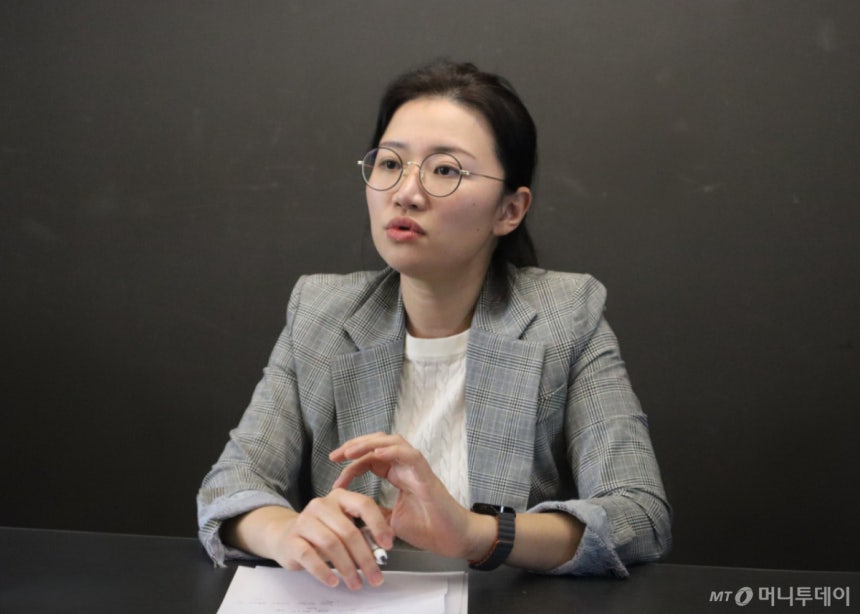
A KAIST electrical engineering graduate who later studied signal processing and a Seoul National University neuroscience master’s researcher who analyzed human brainwave signals found a new field of interest in the noisy sound of factory machinery. Suji Lee, CEO of Deeply, founded the Sound AI startup in 2017 and has been pioneering industrial acoustic AI solutions.
Lee said, “Since I saw brainwaves and sound as the same kind of time-series signal, I started my company with the vision of giving meaning to sound.” In the early years, the company worked in areas such as infant sound analysis and healthcare acoustics, but from 2024 it discovered the scalability of its technology in manufacturing equipment sound analysis and began focusing on that field.
100dB Noise, 1.77dB Defects
Deeply’s core solution is Listen AI, which detects subtle defect sounds in the enormous noise of factories. Even in environments reaching 100 decibels, it can identify defect signals at a level of 1.77 decibels. Lee explained, “Beyond simple frequency analysis, the key technology is to leave only the target sound we want and remove the many surrounding noises through denoising technology.” Listen AI can detect defects in under one second without contact and with 99.78% accuracy.
Listen AI is transforming quality inspection that previously relied on skilled workers. In some manufacturing sites, workers listened directly to machine sounds and judged whether there were anomalies or irregular noises. But even with sharp human hearing, repeated work in noisy environments inevitably introduces subjectivity and leads to inconsistent yield. Lee said companies that adopted Deeply’s solution are satisfied with its machine-like consistency and objectivity, and are expanding the number of processes where it is applied. It is also helping reduce labor costs and improve processes through more detailed log management.
The solution is also highly effective at detecting hidden internal defects through sound. In welding processes, for example, it can detect irregular, abnormal sounds instead of the consistent sound that should normally occur, and identify internal bubble-related defects in real time. When bubbles form, they may appear harmless on the surface but later develop into critical cracks. In this way, the system prevents problems that are difficult to identify through visual inspection alone.
ROI Calculator

Discover the potential cost savings of robotic automation over a 20-year system life
This calculator compares your current manual labor costs against the total cost of owning and operating a robotic system over its 20-year lifespan.
Global Manufacturers Take Notice
Unlike many smart factory solutions that require large-scale infrastructure work, Deeply’s system is easy to deploy on-site. By installing microphone sensors and a deep learning PC for each process, it can be integrated with existing manufacturing execution systems (MES) or PLCs and connected to the factory’s overall monitoring system. Lee said the integration process is structured like an API, allowing site managers to implement it quickly and as a turnkey solution without complex workloads.
Deeply is currently supplying its solution in Korea to automakers’ affiliates, semiconductor lines, and large infrastructure companies producing gas and steel. In the global market, the company plans to prioritize expansion into the U.S. and Japan, where automation is high and labor costs are expensive. Interestingly, some Korean subsidiaries of global companies adopted Deeply’s solution first, and then their headquarters later began asking about deployment.
When Korean subsidiaries of companies headquartered in the U.S. or France report innovation use cases to their headquarters after adopting Deeply’s solution, the company is pursuing overseas expansion based on inbound customer inquiries rather than separate marketing campaigns. In Japan, which is considered a conservative market, Deeply plans to expand its customer base by presenting long-term technology reviews and demonstrations. Lee said Japanese companies tend to conduct analysis and inspection over long periods of time, and Deeply has been steadily pursuing business discussions for years.
Based on more than 50,000 hours of accumulated acoustic data, Deeply is focusing its research capabilities on building a general-purpose sound foundation model. In the future, the company plans to expand its machine-hearing ecosystem beyond manufacturing assembly processes to welding, machining, aerospace, and defense.
Lee said that while sound-based sensor technology used to be led by Germany and Japan, Deeply’s strength lies in combining that hardware base with AI algorithms that can actually be used in the field. She added that the company aims to become the world’s best sound AI company in industrial equipment.
Deeply Inc
Discover how Deeply Inc can support your automation journey with their complete range of solutions and expertise.
Visit Company Website
