
Industry Insights
Waabi’s Long Haul: Raquel Urtasun on the Future of Autonomy
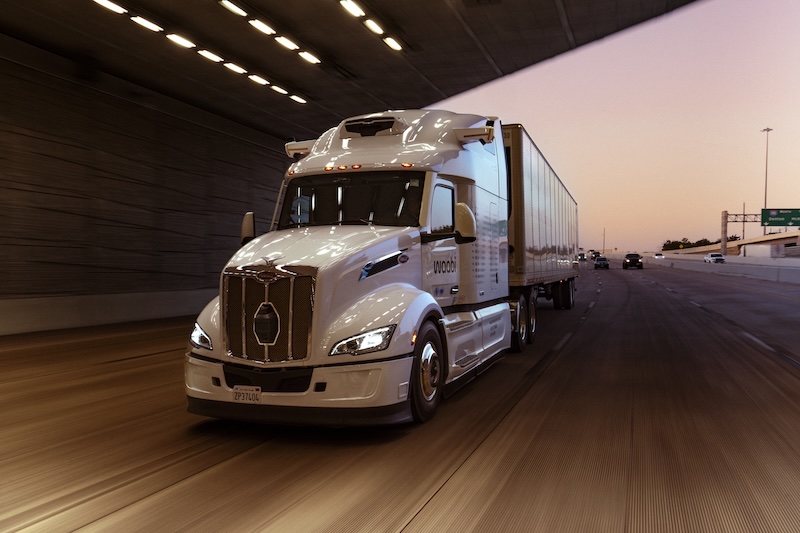
Autonomy exists on a squishy timeline. Goals change and due dates slip as new challenges emerge. You wake up one day, and a decade has passed, shifting beneath your feet and taking the goal posts along with. Some overpromised, others underestimated, but most seem to agree on somewhere between five to 10 years as a perpetual moving target.
I covered the industry at arm’s length in my last job, as I shared mastheads with some of the world’s top automotive reporters. But the race to full autonomy has always loomed large over robotics as a broad topic.
It has informed so much of research time and venture money and yielded the sensors and AI that have laid the groundwork for the present moment of physical AI. It has also, understandably, left many a skeptic in its wake. In my own conversations on the topic, more than one person has made an off-handed comparison to nuclear fusion’s perpetual 30-year timeframe.
When broaching the timeline topic at the close of our conversation, Raquel Urtasun answers, “When we say that we are doing something, we really mean it, and we really deliver.” Waabi’s cofounder and CEO is hardly alone in her confidence. Last week, the Toronto-based startup announced a $1 billion CAD ($725 USD) Series C – the largest raise in Canadian history, by the firm’s own count.
Big rounds from top names aren’t new for this industry, but the landscape has changed dramatically over the last decade-plus. At some point soon, we’ll no doubt revisit some of the parallels we’re seeing in humanoids’ relatively early stages, but the CliffsNotes version is that extended runways, unmet expectations, and unexpected safety concerns – among others – have thinned the herd considerably.
The landscape has transformed dramatically since 2016, with a handful of players (most notably, Waymo) monopolizing headlines. The transformed market, coupled with some legitimate technological breakthroughs have given some very smart people very good reason to take another long, holistic look at the category.
Urtasun jumped in with both feet at the height of the pandemic, fueled by the notion that a novel approach – coupled with a (relatively) clean slate could turn certain industry orthodoxies on their head. As I know that many of the folks reading this piece are approaching the technology from the industrial sector, allow me to frame in these terms: greenfield vs. brownfield.
While Urtasun and Waabi maintain a close connection with her former employer, Uber, she says the approach powering the autonomous trucking firm required solutions that weren’t too beholden to certain legacy predecessors.
“The reason why I left Uber to start Waabi is the next iteration that was in my head, I really thought it was finally here. And, indeed, that’s the case, as you can see with all of the milestones and progress that Waabi has done,” says Urtasun. “The fact that we were leading in innovation in self-driving AI for so many years really put us at the forefront. It’s not about following the LLM recipe and then bringing it to self-driving. For physical AI systems, you have to build something different. You have to innovate, and we will see more and more of this, if there are any newcomers or any folks going into any application of physical AI.”
ROI Calculator

Discover the potential cost savings of robotic automation over a 20-year system life
This calculator compares your current manual labor costs against the total cost of owning and operating a robotic system over its 20-year lifespan.
She adds that the perceived limitations were certainly not limited to her previous employer. “It’s the same for our competitors, particularly in trucking,” Urtasun adds. “They have all invested billions of dollars into technology that is previous generation. They don’t have the DNA, the expertise, the ability, or the luxury to build that foundation and then switch. If you really want to build something transformative, you really want to build a company from scratch.”
Waabi has taken to calling itself a “physical AI” company of late, and, indeed, the startup shares key commonalities with other well-funded firms like Skild that have also taken up the mantle. Accepting the conceit that autonomous vehicles are essentially big, rolling robots, it makes sense that the category is being drawn to similar concepts of generalized models.
That’s a big piece of what made last week’s Waabi news so intriguing beyond the simple dollar raise. Uber’s own incentive-based investment is tied directly to the startup’s diversification from trucks to robotaxis. In essence, the company is working to build a hardware agnostic model for autonomy.
“We built, from day one, a physical AI platform that is composed of two things: The brain – the verifiable end-to-end AI system that drives self-driving vehicles, as well as the simulator,” says Utrasun. “Both of them we built such that you can build any sensor available on the market, you can both simulate, as well as build a brain that can take different form factors, as far as where the sensors are distributed, etc. It was important to build a platform for generalization.”
The key behind the system, Urtasun adds, is an ability to reason and assess the potential consequences of actions in real-time.
“The way we do this is the idea that we can build an architecture where the system is going to be forced to build abstractions of what is seen, the world may evolve, and it's going to be forced to use those interpretations to reason, reason about what are all the possibilities that it can do,” she explains. “This is thousands and thousands of possible things in real-time. It’s not only going to reason those, it’s going to basically think about the consequences of every one of those actions. And by thinking of the consequences, then it's going to choose the best action to do in real-time, as it drives.”
Association for Advancing Automation
Discover how Association for Advancing Automation can support your automation journey with their complete range of solutions and expertise.
Visit Company Website


Serve's CEO on Why Roaches Beat Unicorns
The Uber spinoff announced plans to acquire health care robotics firm Diligent in a bid to expand coverage.
Uber Spinout Serve is Acquiring Health Care Robotics Startup, Diligent
The deal is expected to close in Q1 2026.