
Industry Insights
Moving Platforms
This feature originally appeared in the Automated newsletter. Subscribe here.
Innate is two months removed from the Palo Alto garage that formed the backdrop for the company’s early-September launch video. As with various Homebrew Computer Club members four decades prior, the startup simply grew out of the space.
In keeping with many Computer Club vets, Innate has yet to stray from the Peninsula, transferring operations to a nearby Palo Alto office space that once housed a young enterprise startup called Cloudflare. Despite an abundance of new room, cofounder and CEO, Axel Peytavin, has secured a particularly snug spot from which to take my call, setting up a makeshift office under a desk in the company’s new hardware lab. He’s adopted the unexpected backdrop so as to not disturb an on-going staff meeting.
Early into our conversation, Peyvatin quickly touches on parallels between robotics in 2025 and the nascent days of the personal computer, echoing the narrative of that recent launch video.
“You had these PCs that people were making in Silicon Valley, but they kept changing and you didn’t actually have a proper experience for how to actually program on a computer,” says Peytavin. “We think this is the same today and [robotics] developers deserve a good platform that feels like a good quality product but is also extremely simple to develop with and powerful. That’s the reason behind everything we’re doing. We don’t want this technology to be developed by a corporation that’s just going to use this technology vertically and not give people the power to use it.”
Innate’s first product is Mars, a $2,000 “teachable robot” currently shipping to select early supporters in a kind of beta form. Peyvatin anticipates the rest of existing orders (as of last Friday) will be filled in time for Christmas. Anyone who gets one in this week may make it in just under the wire, though they’ll be cutting it close. While it’s true that Innate has expanded in recent months, the five-person team only has so many hours in the day.
Expansion plans could see Mars manufactured through more traditional injection modeling methods, as well. For now, however, robot bodies are largely comprised of resin parts and PLA (plastic filament) 3D printed on-site at the Innate offices. The 3D hardware’s 3D printability speaks to another of the project’s key attributes: open sourcing.
“Because we’re open-sourcing the hardware, people can print their pieces at home,” Peyvatin says. He adds that the company will open-source “everything” on the hardware and software front, while allowing that certain pieces of the product pipeline may remain protected in order to protect company IP.
“There are different conceptions of openness,” he explains. “What Hugging Face is doing with Le Robot is extremely collaborative to the point where a lot of people are going to fork the thing and turn it into something different. It keeps changing all the time. Our philosophy is it needs to be open because we want people to trust us.”
Peyvatin suggests that Innate will be more “opinionated” in its approach to the modifications it does and doesn’t allow, implying a level of quality control that could be more comparable to the iOS App Store than Google Play. Relative degrees of openness is a kind of perpetual third rail in the world of open source.
The good news for everyone, however, is that — even after the recent unfortunate loss of K-Scale Labs — the open-source robotics community is very much having a moment. That includes stalwarts like Open Robotics’ ROS, along with newcomers including the aforementioned Le Robot. Juggernauts like NVIDIA, Google, and Qualcomm (which now owns Arduino) have pledged to maintain openness and cross collaboration in a bid to embrace robotics developers in their earliest stages.
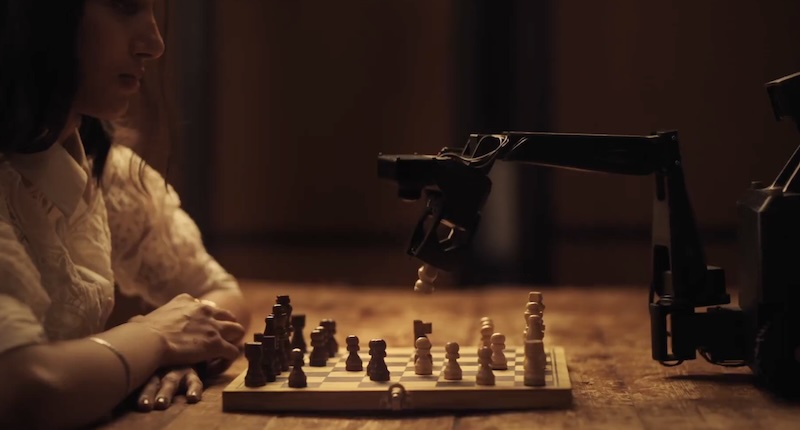
Innate is going after that same group with Mars, a kind of minimal viable general-purpose robot.
“If you don't have any way of like moving around because you don't have wheels and it's not a general-purpose robot,” Peyvatin explains. “If you don't have an arm, it's also not one. We provide you with a GPU. We provide you with everything inside. Basically it's a complete robot. You don't need to have a computer off-site to make it run. You don't need to buy additional accessories so that the thing can actually move around. In the future we want to make more capable ones, but if you're a developer today, this is the best you can get for the minimal amount of money because you have everything in there you need.”
Association for Advancing Automation
Discover how Association for Advancing Automation can support your automation journey with their complete range of solutions and expertise.
Visit Company Website


Mission Design and Automation welcomes Scot Lindemann as CEO
Building on over 15 years as an intelligent systems integrator located in West Michigan, the Mission team serves the...

Is Robotic Grinding Really Worth It?
Grinding is a surface finish task that is in high demand in some industries.
Turnkey System for Complete Visual Surface Inspection of Electronic Devices
In this video, see a demo of a turnkey surface inspection system from Radiant as it performs a complete, 6-side inspection of a notebook and tablet PC.