
Industry Insights
Model Citizens: Karen Panetta on Combating Physical AI Biases
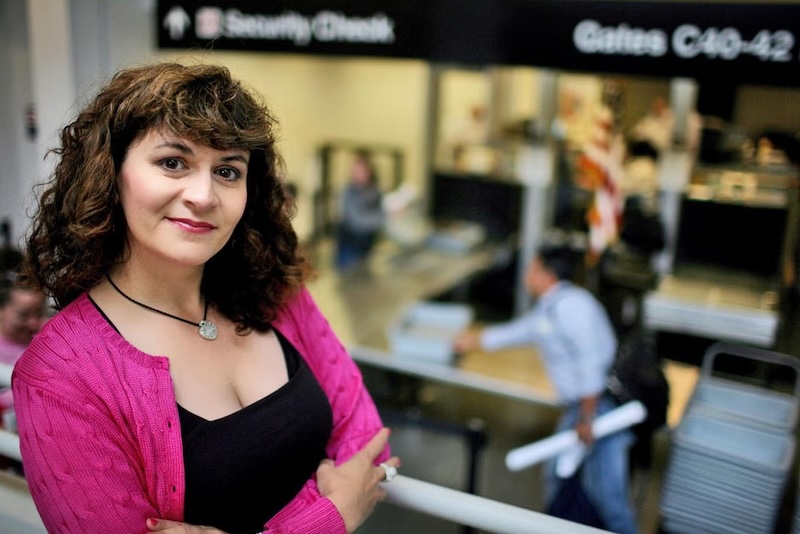
“I'm actually the co-inventor of the very first digital twin,” Karen Panetta notes. It’s a factoid tossed off somewhat matter-of-factly, roughly halfway through a conversation about biases in physical AI. Her computer engineering work at Digital Equipment Corporation (DEC) played an important role in co-developing the simulation technology in the early 90s. It’s a pretty good flex, honestly.
Now a professor of electrical and computer engineering, along with computer science at Tufts, Panetta served as the worldwide director for IEEE Women in Engineering from 2007 to 2009. Shereceived the Presidential Award for Science and Engineering Education and Mentoring from then-President Obama in 2011, and in 2023 was inducted into the National Academy of Engineering.
Her work has focused on protecting wild elephants, studying autism, combating human trafficking, and expanding health care to underrepresented groups. While “ethical” and “responsible” are regularly tossed around like buzzwords to the point of losing nearly all meaning, Panetta has been careful to define such concepts as they pertain to her own work.
Asked to break down the distinction between “ethical AI” and “responsible AI,” Panetta invokes the Latin phrase, “primum non nocere,” that core tenet of the Hippocratic Oath that has become the foundational concept of bioethics.
“There’s always the overarching theme of ‘do no harm,’” she explains. “That means I’m not going to cause someone to lose their job or make a wrong diagnosis. That, to me, is the responsible piece.” She adds, “Ethical to me is more about how I collected the data and how I'm using it and making sure that the access is fair and equitable across and accessible.”
NEW ONLINE TRAINING COURSE
Designing Industrial AI Agents
Gain the skills to orchestrate advanced AI agents that learn, adapt, and collaborate like experts in real-world automation environments
Diversity is another key factor in addressing potential biases in data sets. Human beings aren’t edge cases, nor should they be treated as such. When addressing physical AI, Panetta notes new dimensions of accessibility for which one must also account.
“Most of the things we’ve seen AI do I’d say are for customer service, assistance — more discovery tools, information gathering,” she explains. “Whereas now, when we talk about physical AI, we’re talking about putting AI in an environment in the physical world, such as for navigation for blind people, or people with hearing impairments. And we’re expecting it to assist them in real-world environments, rather than controlled settings. “
“That introduces a whole host of new problems,” Panetta adds. “If I have a customer AI chatbot, and it doesn’t answer my question properly, I can be elevated to a human being. But If I’m trying to cross the street, and my AI says, ‘go ahead, cross the street,’ and you trip over a curb because you’re in a wheelchair and there’s no ramp, that has serious implications.”
Panetta holds out hope that the proliferation of certain technologies may increase accessibility. Segments of the market once thought to be too small to be commercially viable may suddenly be addressable.“ A lot of commercial viability of low-cost sensors and AI is opening up a lot of low-cost businesses that will address those markets,” she explains.
Association for Advancing Automation
Discover how Association for Advancing Automation can support your automation journey with their complete range of solutions and expertise.
Visit Company Website


