
Industry Insights
Letters to Pleo: Kate Darling on Reframing Robotics Opinions
“My opinion is that there's too many opinions about robots out there,” Kate Darling notes. Such a sentiment can go either way, really, roughly one-third of the way into an hour-long podcast interview that is, for all intents and purposes, about robots.
There are, objectively, a lot of opinions about robots out there. I suspect I encounter more than most as part of my day-to-day operations. Statistically speaking, some are better than others, though who serves as the ultimate arbiter is another question altogether.
We can, to a certain extent, analyze these opinions based on available data. In cases where opinions take the form of predictions, however, time will be the ultimate arbiter. In the meantime, I recommend taking up a hobby as diametrically opposed to your day job as you’re comfortable with.
“I didn't want to add more opinions,” Darling adds, laying out the foundations of the RAI Institute’s Robotics, Ethics & Society research team. “So, I specifically hired people who are trained in different methods of data collection. Outward-facing research and mission is to collect data to better inform decision-making in the design or integration, regulation, or standard settings of robotics.”
Prior to leading a team at RAI, Darling spent 14 years as a research scientist at MIT’s Media Lab, with a focus on human-robot interaction. Her HRI journey began a few years prior to that, in 2008, when a robot dinosaur arrived on her doorstep from Hong Kong. “Pleo is the whole reason that I got interested in robotics,” she explains.
Designed by Furby co-creator, Caleb Chung, Pleo was an advanced robot toy in the form of a week-old camarasaurus. Ultimately, the product was arguably a couple of decades ahead of its time, as its creator, Ugobe, declared bankruptcy within two years of launch.
“It has a tilt sensor, so if you hold it up by the tail, it'll start crying and squirming,” Darling adds. “I thought it was really interesting and was showing it to my friends. One person held it up for a really long time and watched it squirm. It made me really uncomfortable. I was like, ‘okay, put the robot back down now, that's enough.’ That was interesting. I know exactly how this thing works, I feel really compelled to be kind to it.”
ROI Calculator

Discover the potential cost savings of robotic automation over a 20-year system life
This calculator compares your current manual labor costs against the total cost of owning and operating a robotic system over its 20-year lifespan.
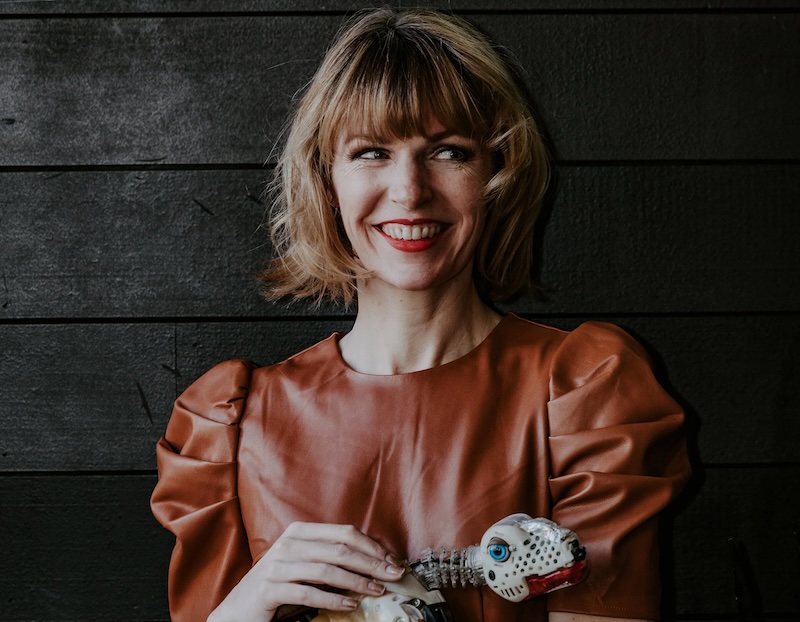
Pleo has since become a kind of mascot for Darling’s HRI work, as evidenced by the above author photo, which finds the top of a skinned baby dino head peaking out. Though vaguely unsettling, the visage pales in comparison to a scene of ritualistic Pleo sacrifice Darling would oversee at a conference in Geneva Switzerland in 2012 — though you’ll need to listen to the full podcast interview or read her 2021 book, The New Breed for the full details there.
At the end of 2023, RAI announced it was brining Darling on to, “lead its study of ethics and societal impact.” The Hyundai-backed research organization, founded by Boston Dynamics’ Marc Raibert, explained, “The rapid advance of robotics and AI has created challenges with regard to public perception, technical literacy, government policy, and media coverage. Scientific data are needed to ground conversations, as well as guide development of the technology.”
Darling adds, “it's this incredible opportunity to embed social scientists in an engineering institute where we're engaging with engineers every day. When I came on to build this team, one of the things that was important to me was that we weren't just a traditional ethics team.”
Among the team’s goals is the reexamination of automation through the lens of those who will be directly impacted. The team’s recently published, “Dull, Dirty, Dangerous: Understanding the Past, Present, and Future of a Key Motivation for Robotics” questions orthodoxies around the “Three Ds” of roles roboticists often discuss automating away.
“Similar to ‘dangerous,’ we see some hidden opportunities for robotics in ‘dirty’ work,” Darling writes of the research. “But one of our more interesting takeaways from the data is that a lower-ranked job can be something that the workers themselves enjoy or find immense pride and meaning in. If we care about what tasks are truly undesirable, understanding this worker perspective is important.”
It’s a recognition that, while there are a lot of opinions about robots out there, perhaps it’s time to bring some new perspectives into the mix.
Association for Advancing Automation
Discover how Association for Advancing Automation can support your automation journey with their complete range of solutions and expertise.
Visit Company Website


