
Industry Insights
How AI is Shaping the Future of Robotics with Low-Code and No-Code Solutions
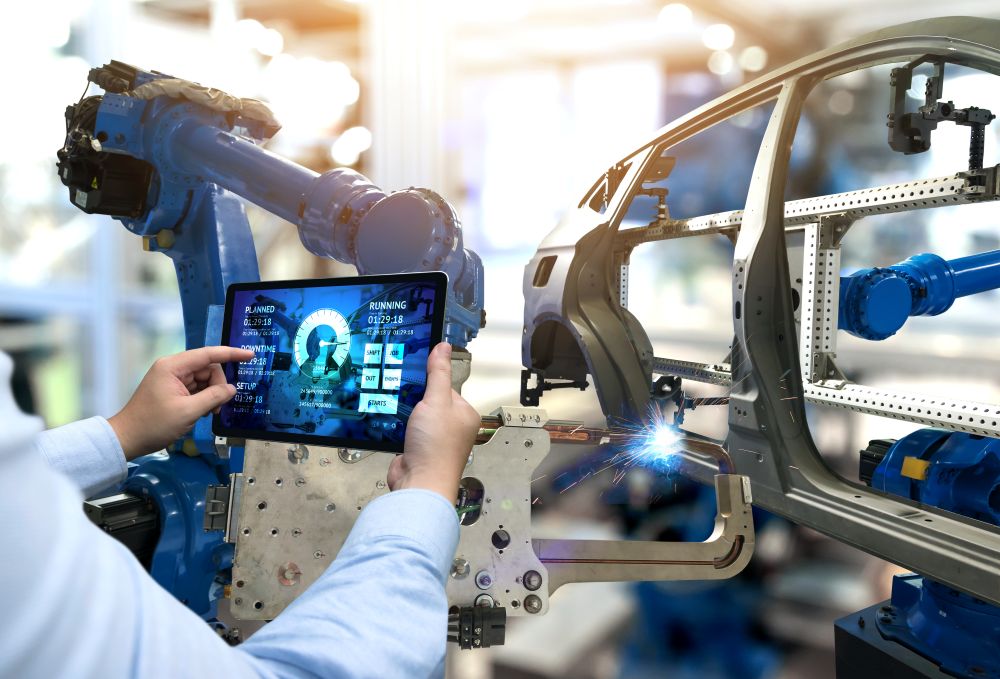 A transformation is underway in robotics deployments across North America. One where smarter, adaptable software meets the needs of changing production lines and stricter requirements. This isn’t about simple automation; rather, the emergence of low-code and no-code solutions powered by AI and designed to operate without extensive programming knowledge.
These solutions fundamentally change how manufacturers implement robotics automation. In removing the traditional barriers to adoption, namely skills and experience, low-code and no-code platforms address the challenges of labor shortages and the need for greater production flexibility. Regardless of employee skillset or experience, they make advanced robotics capabilities accessible to everyone.
Defining The Low-code/No-Code Revolution
Low-code/no-code platforms shift robot programming tasks from humans to machines. Rather than requiring extensive coding knowledge and creating new code for each new application, these platforms provide intuitive interfaces that allow users to configure and adapt systems through simple interactions.
"With no-code solutions, you remove the need for programming PLC logic, business logic, and fine-tuning of AI models," explains Rajesh Iyengar, CEO of Lincode. "These tools save time and eliminate the need for specialized technical skills. More importantly, they enable an existing workforce to program robots themselves."
No-code platforms provide a visual interface and simple workflows that abstract programming details away from users. They often feature drag-and-drop interfaces, pre-built templates, and visual process builders that enable users without programming experience to create sophisticated automation control solutions.
Low-code platforms are a middle ground between no-code and full programming environments. They provide simplified development interfaces that require minimal programming knowledge with options for extending capabilities through code components and application programming interfaces (APIs).
The Shift from Traditional Programming To AI-enabled Platforms
Traditional robotics implementations required specialized developers and engineers to write code for each application. These modules took time to create and test, and were often tied to a specific use case and environment. When production requirements changed, such as to handle a new part or part variation, the entire system needed reprogramming, creating significant downtime and additional costs.
"The vision industry relies on Excel spreadsheets to do the programming," Iyengar says, describing the traditional approach. "One of our automotive customers used to configure inspection cameras individually. Each position required them to call a programmer who would manually edit Excel sheets specific to the model they were producing. If they launched a new product on their line, they had to call this person again to sit and manually update everything."
Kristi Martindale, chief commercial officer at Palladyne AI, contrasts the old and new approaches. "Unlike traditional programming where robots perform fixed, predetermined actions, AI enables approaches where robots can reason and adapt to changing situations. These robots learn through natural language commands or simple motion demonstrations, take sensor inputs from cameras and LiDAR, and operate autonomously with true situational awareness."
AI-based reasoning is a fundamental shift away from systems requiring every possible scenario explicitly coded in advance. Advanced machine learning algorithms allow systems to learn from training examples that can be input at any time. This capability has dramatically expanded what robots can do.
Martindale illustrates the difference with a practical example: "If a robot is tasked with moving orange blocks to a blue bin, it doesn't have to follow a programmed script blindly. It can recognize obstacles in its path, navigate around them, and adapt to blocks in different orientations and positions without reprogramming.”
How AI Powers Low-Code/No-Code Solutions
Integrating AI into low-code/no-code platforms opens up four key capabilities accessible to manufacturing companies of any size.
1. Natural Language Instruction
Rather than writing code, operators can now provide instructions in plain verbal or textual English. "You can tell the system to pick this item up and place it there,” explains Martindale. “The system translates those commands into instruction sets that the robot understands."
2. Learning by Demonstration
Many AI-based systems allow robots to learn tasks through human demonstration rather than programmed scripts. Martindale describes how this works: "Using magnetic motion trackers, you can perform a movement in space that the robot learns and repeats. The UI is very simple for humans to use and it hides all the complexity of the robot’s instruction set from the user. The human doesn't have to worry about a single line of code.”
3. Transfer Learning
Iyengar highlights how AI can apply knowledge from one domain to another, even between industries. "For example, we can take defect data from machining aluminum parts in the automotive industry to laptop manufacturing. Even if the laptop industry doesn’t have enough data to train AI effectively, we can fill in the gaps by learning from patterns we've seen before."
4. Visual and Environmental Understanding
AI-based robotics programming often includes systems that can interpret and adapt to their surroundings. "Once the robot understands what it's supposed to do, it goes into autonomous mode and reasons its way around complex problems," explains Martindale. "For example, if it needs to move fourteen orange blocks to a specific destination and finds something in its way, it will know to move around the obstacle to accomplish the task.”
Real-World Applications of Low-Code/No-Code Solutions
The capabilities of AI-powered low-code/no-code solutions are more than theoretical advantages. They're delivering tangible benefits across numerous manufacturing sectors today.
These technologies solve real business challenges that traditional automation techniques could never address: Eliminating the need for specialized programming skills, increasing adaptability to different situations, and supporting intuitive human-machine interaction.
The following examples demonstrate how manufacturers leverage these technologies to achieve concrete results.
NEW ONLINE TRAINING COURSE
Designing Industrial AI Agents
Gain the skills to orchestrate advanced AI agents that learn, adapt, and collaborate like experts in real-world automation environments
Visual Inspection Systems
Traditional approaches to visual inspection systems require complex programming to coordinate automated robot actions. With low-code/no-code solutions, the entire process can be configured to adapt on the fly through user-friendly interfaces.
In automotive manufacturing, AI-driven quality inspection is increasingly being used to coordinate complex, multi-robot workflows. Iyengar gives an example of how this can be used in the assembly process. "The system coordinates the actions of different robots based on real-time inspection results," Iyengar explains. "If a robot applies sealant properly to the hood of a car, we give an 'okay' signal to a second robot, which then places another component on top for bonding. Once that's placed, we signal a third robot to pick up the completed assembly and move it to the next production stage." This orchestration happens without workers writing a single line of code, including quality-based routing decisions.
What makes this application remarkable is that this intricate multi-robot choreography, with conditional logic, quality checks, and alternative process paths, is configured entirely through a no-code platform rather than through traditional programming methods. This allows workers to modify robot behaviors and inspection criteria without specialized coding expertise, dramatically improving workforce and production flexibility.
There are several other companies and platforms, like NEURA, Nordbo, Vention, Jidoka, Robo360, who are building no-code or low-code robotics and AI inspection systems that can orchestrate behavior based on vision results.
Complex Assembly Operations
Manufacturing has long assumed that certain tasks, like parts identification and sequencing, are inherently dependent on human judgment. Parts kitting, in particular, is often left to skilled workers because of its variability: components arrive in inconsistent packaging, edge cases emerge unexpectedly, and assemblies require precise sequencing across multiple items. These realities have reinforced the belief that human intellect is the only reliable way to manage complexity on the factory floor.
AI robotic software platforms enable machines to handle these unstructured environments through observation and reasoning, and are deployable much faster than manual programming. Companies like Palladyne AI, Covariant, Osaro, Ambi Robotics, Mujin, Bright Machines, and Robust.AI are among those building AI robotic platforms that can interpret messy, variable environments and automate tasks that once required human reasoning.
Benefits Beyond Technical Capabilities
These applications illustrate not just what these systems can do but how they're addressing fundamental business challenges faced by manufacturers today. By removing programming barriers and enabling non-specialists to configure advanced automation, these platforms deliver strategic advantages that benefit the business side of manufacturing.
Democratized Automation
Low-code/no-code platforms put automation tools in the hands of production staff, maintenance technicians, and other personnel who have an intimate understanding of manufacturing processes but lack coding expertise.
"It opens the opportunity to companies that couldn't automate as effectively because they didn't have access to talent or it was cost prohibitive," explains Martindale. "If you have to hire a systems integrator and pay millions of dollars to implement automation, that's a limitation for many companies."
This democratization means that the people who work most closely with products and processes can directly contribute to automation initiatives without intermediaries translating their requirements into code.
Addressing Skill Shortages
Both Iyengar and Martindale highlight how AI-based solutions address critical labor challenges. "We have a customer who couldn't find skilled labor for a specific process," Iyengar shares. "Even when they found workers, they were leaving after a few months because the tasks were too repetitive. They were forced to look for an alternative solution and ended up selecting no-code robotics to reduce their reliance on technical skills."
Martindale highlights the growing shift in who gets to configure and manage the robotic systems. "The ones most experienced at performing a task, the line workers, can simply instruct robots on how to do that task. This eliminates situations where companies must wait for a programming expert to come from somewhere else to do the programming for them.”
Challenges and Future Trends
Despite their transformative potential, AI-powered low-code/no-code robotics face adoption hurdles. "I think it's really just an understanding and awareness," says Iyengar, noting that many manufacturers remain unfamiliar with these technologies' capabilities. This knowledge gap is compounded by what Iyengar describes as "pilot purgatory," where companies become overwhelmed by competing technology options and struggle to move beyond initial trials.
Looking forward, both experts envision rapid evolution in how these technologies are deployed and used. Iyengar predicts increasing natural language capabilities, where operators will simply tell robots what to do in conversational terms. "We’ll move beyond no-code where you'll prompt systems in layman English, such as 'pick it from here and place it there.’”
Martindale sees labor challenges as the main adoption driver, noting that "the opportunities are endless" as these technologies become more accessible and proven across diverse manufacturing environments. “As AI continues to advance, we can expect these platforms to handle increasingly complex tasks while becoming even more intuitive for non-technical users.”
A Codeless Era for Robotics Automation
The convergence of AI, robotics, and low-code/no-code platforms creates new opportunities for manufacturers to adapt to changing market conditions while addressing persistent labor challenges. For manufacturers considering these solutions, both experts recommend starting with a clear understanding of specific process requirements and challenges.
"Depending on the process they're deploying and how complicated the rules are, manufacturers can decide on the level of low-code or no-code solution they should use," advises Iyengar.
As these technologies continue to mature, they promise to fundamentally reshape how manufacturers approach automation — focusing less on the complexities of implementation and more on the strategic benefits that intelligent, adaptable systems can deliver.
Association for Advancing Automation
Discover how Association for Advancing Automation can support your automation journey with their complete range of solutions and expertise.
Visit Company Website


TECH B2B Marketing Honored With Netty Award
TECH B2B Marketing was recognized by the Netty Awards for the best integrated campaign.
Siemens to invest more than $500 million in U.S. manufacturing for critical infrastructure in 2023
New US$150 million investment in Dallas-Fort Worth production of critical electrical infrastructure equipment to help power U.S. data centers
RoboDK Software helps cut Aircraft Washing Time by 95%
Wilder Systems uses RoboDK robot programming features for automated airplane washing.