
Industry Insights
AI in Logistics: Reshaping How Goods Move Globally
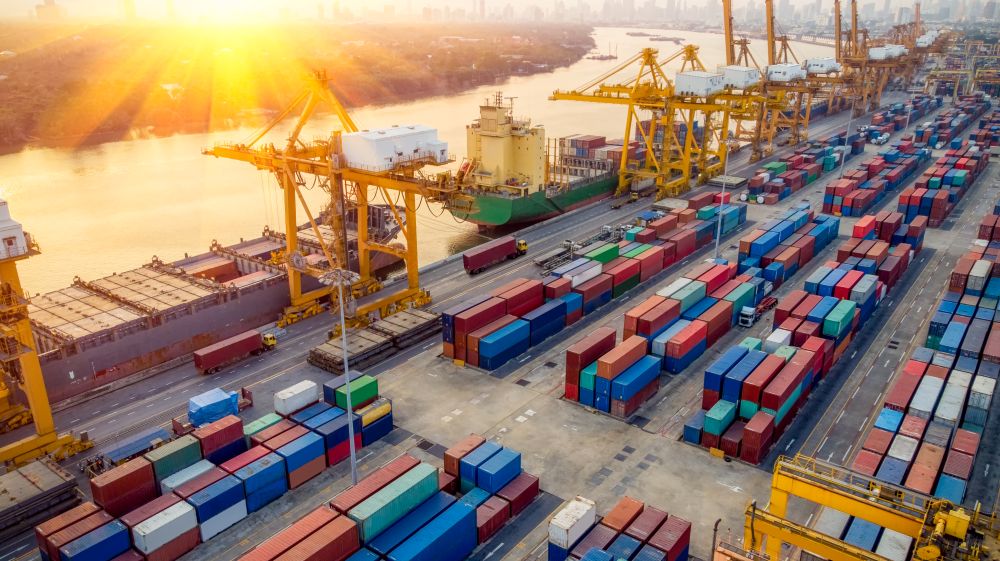 Logistics and supply chain operations have spent decades dealing with complexity. Skilled operations managers work to mitigate slowdowns or stoppages and predict when trucks won’t show up or how new demand will affect the current flow of goods into and out of warehouses. This requires optimizing numerous small processes daily. Even within a single process, a slight imbalance can build into a significant backlog. Logistics operators are expected to perform the same operations with precision and accuracy at the lowest possible cost, repeatedly. This leads to two conflicting objectives for supply chain optimization: maximizing quality while minimizing cost. This conflict leads to uncertainty and unoptimized decisions. Logistics AI solutions provide insights and automation to reduce uncertainty by ingesting real-time data from your facility, upstream and downstream, to inform decision-making.
Imagine a situation where the picking team is chasing a production metric by maximizing production per hour, but the packing team can’t keep up. Over time, product piles up, creating a slowdown and eventually, a stoppage. Ultimately, the picking team has lowered the overall cost per item picked; however, the stoppage due to inefficiency could cost more than the savings from maximizing picking production.
“Human error compounding can be one of the main difficulties in legacy operations,” explains Amel Ali, director of product marketing at Agility Robotics. “Imagine a pallet dropped at the wrong bay. When the next forklift arrives with its load, the bay is full, so that load is placed in the next available spot. One mistake cascades across the entire operation, leading to bottlenecks, stoppages, and incorrect logging.”
Beyond the direct optimization of specific processes, the macro picture is complex as well. Optimization and forecasting are hindered by complexity and unpredictability. Geopolitical risk, port congestion, unexpected weather, and supplier issues can all change expected delivery timeframes and require a reassessment of priorities for any supply chain. Human-driven forecasting can be limited by the ability to integrate the numerous data sources necessary to gain a comprehensive view. The legacy warehouse automation tech stack (ERP, WMS, and WCS) is limited in its ability to support forecasting.
“The legacy tech stack is designed to manage data, not processes. Logistics is an interconnected orchestration of resources, where everything must flow predictably and consistently. To operate predictably, modifying the process order of operation based on delivery times, pickup times, and new priorities is crucial,” Seth Patin, CEO of LogistiVIEW, explained.
No one notices a supply chain that meets SLAs and performs as expected. The risks in time, money, and reputation for not meeting expectations are substantial. AI plays a significant role in determining labor allocation, deciding which work to release to whom, dynamically adjusting work orders if expected outbound or inbound transportation is delayed, and handling other variations in logistics operations.
Driving Improvements Across Supply Chain and Logistics
Logistics operations are not built the same. Different specialties require different optimizations. A warehouse fulfilling two-day shipping operates differently from a warehouse for bulk commodities. How can AI solutions optimize the processes and systems that are critical to operating efficiently when supply chains are each so unique?
Logistics AI solutions require training on your specific process and should incorporate input from your managers or flow controllers. In this way, solutions can be directly tailored to meet the optimization requirements and the upstream and downstream data needs of your processes.
“Logistics operations need more than just automation; they require solutions that embrace the industry's dynamic nature — from shifting workflows and peak seasons to evolving customer demands,” Amel Ali expands. “The best ROI comes not from simply adding robots, but from forming partnerships with automation vendors that form solution-driven offerings that integrate automation thoughtfully. These collaborations manage the entire process — from planning and training your staff to deployment. Guaranteeing you not only meet your business goals but also strive for operational excellence and adoption by your whole workforce.”
Examples of AI-driven Optimizations for Logistics Processes
Demand Forecasting & Predictive Analytics
The use of static models limits the accuracy and flexibility of legacy demand forecasting. Machine learning-driven AI forecasting solutions can improve accuracy by dynamically adjusting forecasts based on multivariate data. For example, this means the models can combine weather data and your staffing data with information from your outbound transportation partner to optimize decision-making.
Route & Transportation Optimization
AI-powered logistics platforms can deliver dynamic routing and last-mile delivery optimization by integrating real-time traffic, weather, fuel costs, and driver availability. Minimizing transportation costs while meeting SLA delivery timeframes can be crucial to staying competitive.
Inventory & Warehouse Management
Beyond just managing data, AI WMS solutions can combine live picking and packing status data with computer vision, robotics, and staff-optimization models to enhance existing warehouse automation. By predicting optimal inventory levels and avoiding overstock or short stock situations, AI-powered dynamic WMS can allocate staff and prioritize work orders based on minute-to-minute changes. AI doesn’t replace labor; it augments decision-making to ensure everyone is best utilized.
Risk Management & Supply Chain Resilience
Supply chain risk has been one of the many topics related to supply chain resilience that have been brought to the forefront over the past five years, particularly the risk associated with single sourcing. AI scenario modeling and digital twins for contingency planning can identify at-risk elements within supply chains and help find solutions. Risk management using AI models can also help predict potential disruptions, such as supplier delays and port closures, before they impact a process.
Customer Experience & Service
Maintaining a competitive advantage includes delivering the best possible customer interactions. Customer experience is a vital aspect of managing expectations and keeping your hard-earned reputation. AI-driven chatbots can provide immediate shipment-tracking updates and predictive ETAs, improving customer trust. Personalized delivery windows can be created by leveraging historical data and utilizing both upstream and downstream data within the model.
Patin elaborated, “AI doesn’t just provide insights; it allocates resources as needed to meet desired outcomes. It can prioritize, understand the order of operations, see the live results of decisions, and adapt accordingly. If something happens faster or slower than expected, it adjusts.”
Challenges in AI Adoption
Integrating AI in automation requires a succinct plan, including evaluating your current processes and needs to identify the best opportunities for AI augmentation. Implementation challenges will also be identified in this process, outlining where limitations in systems, data, and knowledge can cause issues. Data is a crucial aspect of every AI integration, as it forms the foundation of industrial AI.
“There are unique physical, equipment, labor, and process challenges in every operation. AI models need to be trained to the same level of knowledge as the best manager or flow controller; the machine doesn’t inherently know what the experts know,” Patin explains. “Additionally, people often don’t trust the model to make decisions that humans previously made. Building trust in AI implementations and including operations in the planning and model training process is critical.”
Many organizations struggle with fragmented systems, numerous data silos, inconsistent formats, and incomplete records. Legacy equipment often lacks modern connectivity, making it difficult to build reliable data pipelines. Without accurate, standardized, and accessible data, AI models cannot deliver trustworthy insights. Establishing governance, cleansing historical datasets, and ensuring ongoing quality monitoring are critical but resource-intensive steps. Equally complex is managing organizational change. AI adoption alters established workflows, decision-making structures, and even roles on the plant floor. Integrating key expert knowledge in the AI planning and integration process is crucial. AI models benefit from including the intrinsic process knowledge of operators and managers across processes. If expectations are not managed carefully, projects can become more difficult. Leaders must clearly communicate how AI supports, rather than undermines, human expertise, positioning it as a tool for augmentation and enhancement. Comprehensive training is essential, not only on technical systems but also on developing new problem-solving skills and confidence in working alongside AI. Building trust requires phased rollouts, hands-on education, and involving staff in shaping solutions. Successful integration depends as much on an organization's cultural readiness as on its technological capability. By carefully planning, manufacturers can ensure a smooth AI integration that delivers value quickly.
Best Practices AI Adoption
There are key best practices to ensure that AI integrations for logistics and supply chain automation deliver ROI quickly. A feasibility study should assess data quality across suppliers, warehouses, and transport systems, as well as infrastructure readiness. Evaluation begins with building a cross-functional team that includes all levels and specialties, from operators on the floor to IT specialists and operations management. This team will help identify clear objectives, such as improving demand forecasting, reducing delivery times, or optimizing inventory flows, and potential challenges, namely processes that currently don’t generate real-time data, staffing or training limitations, or safety concerns.
This team provides value beyond investigating and planning solutions; it enables ongoing cross-functional evaluation of results and builds institutional knowledge to support future integrations. Planning must support interoperability and scalability. Understanding where legacy systems fall short in terms of data availability or reliability is critical to planning which tools to use and how to integrate them into logistics processes. Based on the team’s evaluations, processes can be prioritized for the initial AI integrations that offer the smoothest path to improving efficiency and the fewest challenges or risks.
Based on the team's evaluations and input, a phased implementation timeline can be developed to drive high-priority solutions and evaluate the results with clear goals and metrics. Working closely with vendor experts and internal stakeholders to execute pilot implementations, organizations need to closely track metrics and ensure that the upgraded processes are meeting the target goals. The knowledge gained from integrating high-priority pilot programs becomes a foundation for your future integrations.
Amel Ali outlines, “A solution partner needs to supply more than robots; decision makers implementing automation in logistics operations need a partner with experience that understands more than just cost. When evaluating a potential automation supplier, you need to move past the marketing hype and focus on commercial readiness and financial flexibility. Ask these critical questions: Does your partner offer various deployment financing options? Does your partner have real-world deployments in your industry, with products available today? Are the demos you’re seeing use actual autonomy in real-world environments, or are the technology demos just using marketing glitter in carefully crafted videos? Choosing a supplier that is commercially ready and validated is essential for a successful implementation and realizing your required ROI.”
Where AI in Supply Chain Is Headed
AI is no longer experimental; it has already reshaped logistics. AI supply chain integrations are evolving from a competitive advantage for industry frontrunners to a standard industry practice. Over the next five years, AI systems will oversee more processes end-to-end, providing visibility throughout the chain and adjusting priorities based on real-time data, thereby increasing efficiency. High-level visibility into manufacturing delays, transportation schedule changes, and their impact on orders will enable models to optimize how SLAs are consistently met at the lowest cost.
Patin illustrates, “Siloed systems are inadequate, AI-driven optimizations will require end-to-end implementations to avoid the equivalent of putting a racecar on a congested road. We’re reaching a point where efficient execution and meeting SLAs at a competitive cost will require a single system that can see, analyze, and make end-to-end decisions across the entire system. End-to-end throughput oversight and decision-making will be required to maintain competitive advantage.”
Global supply chains are becoming increasingly complex and volatile. In this increasingly dynamic business environment, supply chains face growing demand alongside tighter performance requirements. In response, AI is moving from a supporting tool to a core driver of decision-making at all levels. Advances in predictive analytics will enable companies to anticipate demand fluctuations, transportation disruptions, and supplier risks with far greater accuracy, reducing uncertainty, waste, and unexpected downtime.
On the warehouse floor, autonomous robots and systems will coordinate with humans in real time, with AI models optimizing labor allocation, picking, routing, storage, and prioritization. Beyond automation, models will enhance visibility by integrating IoT sensors, ERP systems, and external data streams into unified decision platforms. This will enable operations leaders to reroute shipments dynamically, adjust inventory placement, and minimize costs while meeting service-level expectations. This approach will improve forecasting, optimization, inventory management, process resilience, and customer experience.
“The core challenge in logistics is that legacy facilities were designed for humans, making many spaces historically difficult to automate," notes Amel Ali. "Coupled with labor shortages and high turnover, this creates a major staffing problem. Humanoid robots will change this dramatically. As safety standards mature, humanoids will be safety-rated to work alongside their human counterparts, taking on the harder, back-breaking roles previously impossible for existing mobile robots today. They can be dynamically assigned to various tasks based on changing workflows or priorities, finally enabling automation in previously constrained spaces for wheeled and fixed robots.”
The demands on supply chains will only increase. AI can’t eliminate unpredictability in supply chains, but it will make operations far more adaptive, transparent, and resilient to unexpected challenges. The operations that will be able to compete and thrive will be those that integrate AI most effectively.
Association for Advancing Automation
Discover how Association for Advancing Automation can support your automation journey with their complete range of solutions and expertise.
Visit Company Website


Kamet AI Now Available under Early Access Program
Kamet AI is the world’s first predictive analytics platform to maximize efficiency across diverse systems, machines and humans.
NexAIoT Express Vol.01 2025 H2
"NexAIoT Express Vol.01 2025 H2 delivers the latest updates and insights on industrial automation, AI solutions, and smart manufacturing innovations.