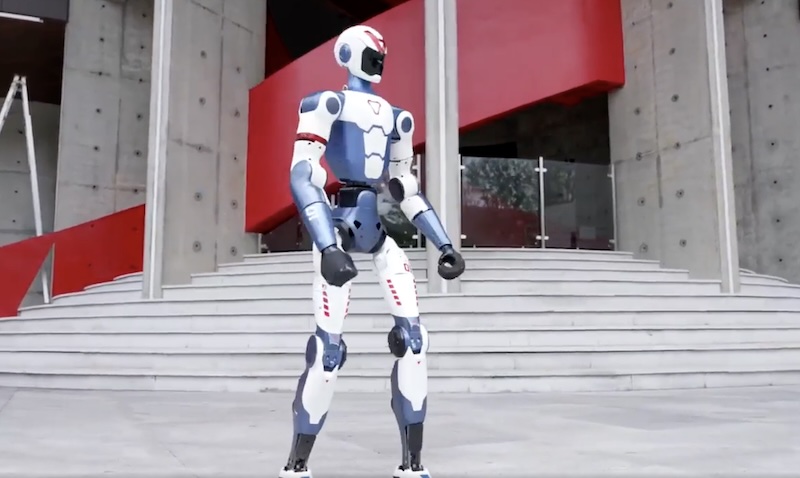
Months after unveiling a new humanoid robot, Unitree is back with the R1. The new bipedal robot runs $5,900 -- just over one-third the price of its G1 system. The new addition is also ultra lightweight, at 25 kg (~55 lbs).
The Unitree R1 debuted with a social media sizzle reel Friday, showcasing a variety of moves, including cartwheels and something akin to boxing. From the look of it, the system is designed for spectacle, rather than any sort of pragmatic use, but it’s an impressive testament to low-cost, ultra lightweight manufacturing, none the less.
The new robot debuts days after the Hangzhou-based company filed a pre-IPO with China’s Securities Regulatory Commission (CSRC), signaling its intentions to go public later this year. In manufacturing terms at least, Unitree is far ahead of nearly all humanoid manufacturers, as it brings this third model to market. Putting them to work is another issue altogether, of course.
The H1/H2 robots have found some footing in labs as a low-cost way to perform research on humanoids. We’ve seen Unitree robots dance, box, and leap, but for the time being, the company doesn't seem especially interested in the less glamorous work of building systems that can carry heavy payloads around fulfillment centers.
That said, there are plenty of robots aiming for to fill those practical real world roles among China’s 100+ humanoid startups. Ubitech is worth singling out as a company that started life building robot toys, before branching out into industrial settings. Just last week, the Shenzhen-based firm debuted a humanoid capable of swapping out its own batteries on the fly.
The Unitree R1 has a swappable battery, as well, though a human is going to have to put in the hard work there. The on-board battery life is currently listed at around one hour – roughly half of what you’ll get with the $16,000 G1.