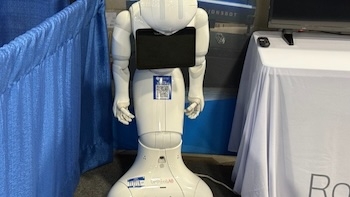
Shenzhen-based Maxvision Technology Corp. has purchased Aldebaran’s core assets, months after the French robotics firm declared bankruptcy. Among the more notable inclusions are the rights to well-known bipedal robots, Pepper and Nao.
Founded in 1997, Maxvision is one of those technology firms that seems to do a bit of everything, with a particular focus on vision and other biometric security systems for airport and the like. The company’s site also features a handful of robots with jobs ranging from industrial cleaning to firefighting.
Like more than 100 other tech outfits in China, Maxvision has been eyeing entry into the humanoid space. While neither Nao nor Pepper sustained enough interest to keep the customers and investors like SoftBank interested in the long run, both system carved out their own respective niche. The smaller Nao found popularity in the research world, while Pepper mostly picked up work greeting visitors at banks and other public venues.
Neither was particularly well equipped for factory or warehouse work, however, so we can likely check industrial applications off Maxvision’s short term roadmap. In a LinkedIn post last week, the company outlined some of the potential verticals for its newly adopted humanoids,
Expanding Maxvision's existing robot portfolio to include humanoid platforms, supporting deployment in high-potential sectors such as border security, education, cultural and creative applications, healthcare, eldercare, emergency response, and commercial services.
The company is also touting the acquisition as a way to expand into both Aldabaran’s native Europe, along with the U.S. – though the latter may prove particularly tricky to navigate in the current political climate.
As for the former, Maxvision notes that it is establishing a subsidiary of its brand in France, which will, c“ontinue to invest in Aldebaran's development—particularly in education and healthcare applications—while fostering local innovation.”