In a Lab in China, a Flapping Wing and a High-Speed Camera Reveal Clues to Better Drones
SHENZHEN, China — Researchers from Jilin University teamed up with SinceVision, a manufacturer of high-speed cameras and industrial sensors. Together, they studied one of flight's most elusive movements: the flapping of a single artificial wing.
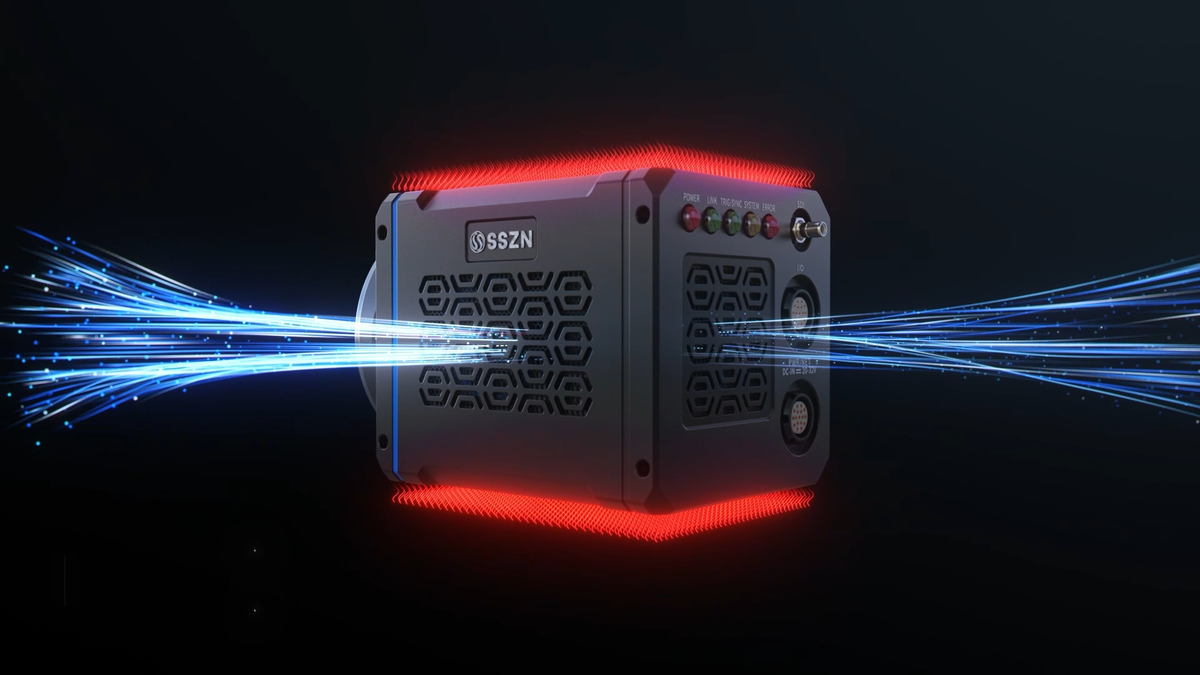
The SH3-502 high-speed camera is the heart of the experiment. It’s a precise tool made for analyzing fast motion. The project aimed to unlock the complex mechanics of flapping-wing flight. This has been a long-standing challenge in designing micro-aerial vehicles (MAVs) and in biomimetic robotics. The research team says the results could help design new lightweight drones. These drones may imitate the flight patterns of insects and birds.
A Wing in Motion: The Experiment
Inside the lab, a 12-centimeter-long wing was mounted to flap at 10 hertz with a 70-degree amplitude. The team used SinceVision’s high-speed camera to record important data. They measured velocity, acceleration, displacement, and strain on the wing’s surface. To ensure clarity in every frame, the setup incorporated 220-watt LED auxiliary lighting, casting uniform illumination to capture even the smallest structural deformations.
But the most striking finding emerged not from what the camera revealed, but from what briefly disappeared.
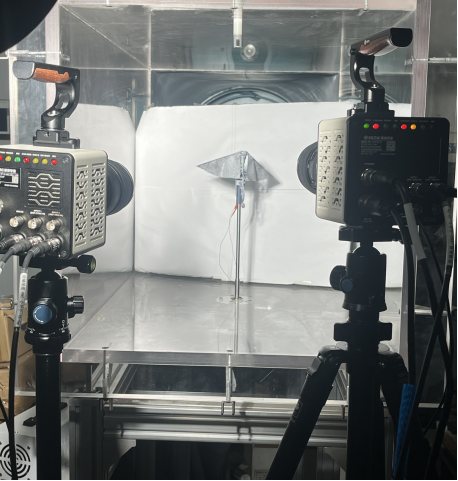
Figure: Wing flapping setup
At the apex of its motion, the wing exhibited a subtle but critical effect known as “inertial overshoot.” As the wing reached the limit of its upward stroke, inertia caused it to swing slightly higher than expected — a momentary upward arc that disrupted its intended trajectory. This movement caused the upper edge of the wing’s speckle pattern to vanish from view, momentarily obscuring deformation data at precisely the point of peak load.
Watch the full video here: Biomimetic Wing Flapping Experiment
Inertial Overshoot: A Hidden Challenge in Flight Mechanics
What might appear to be a small imaging flaw is, in fact, a major aerodynamic insight. The team identified this inertial overshoot as a key factor that can destabilize flapping-wing designs. The phenomenon, while fleeting, underscores how real-world mechanical inertia can complicate theoretical models of wing motion.
To address this, the researchers outlined specific next steps:
- Material Testing: Experimenting with wing materials of different stiffness could help dampen the inertial effect.
- Lighting Optimization: Adding a secondary light source from an alternate angle would ensure consistent illumination and eliminate data drop-out.
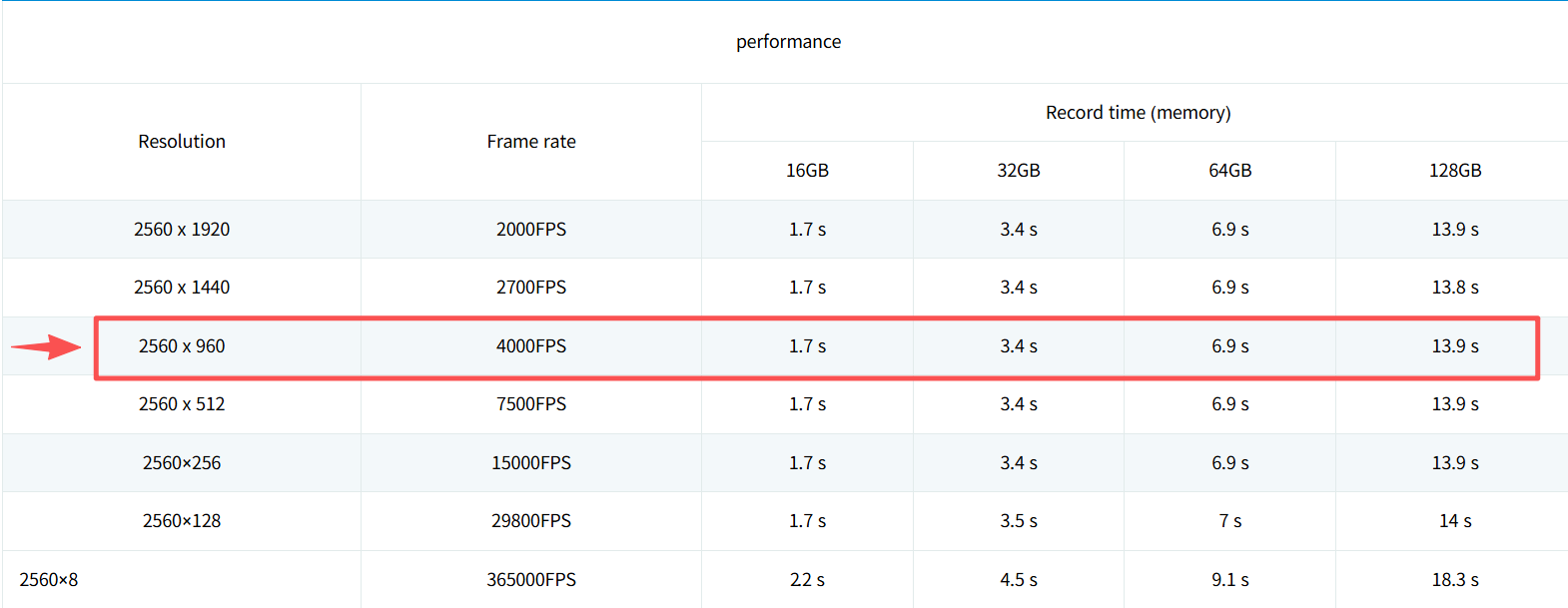
Figure: Technical parameters used during the research
Toward Smarter, More Stable Drones
Far from being a setback, the observation marks a turning point in experimental aerodynamics. By quantifying inertial overshoot, the researchers are developing a clearer understanding of how flapping mechanisms behave under real-world conditions. Such insights could inform the design of micro-aerial vehicles, biomimetic robots, and aerospace components that require delicate balance between flexibility and control.
The hardware system used in the study integrated industrial cameras, lenses, auxiliary lighting, and a fixed structural frame, with the SH3-502 high-speed camera serving as the primary data acquisition device. The system’s ability to track minute variations in movement made it indispensable for analyzing the dynamic forces at play.
SinceVision’s participation underscores the growing role of commercial imaging technology in academic research. Its high-speed cameras and sensor solutions are increasingly used to extract precise data from fast-moving, complex experiments — the kind of data that traditional methods often miss.
“The full technical report on this experiment is available upon request from SinceVision at [email protected].”
About SinceVision
SinceVision, founded in 2014 and headquartered in Shenzhen, is a world-class manufacturer of industrial sensors and high-speed cameras. Its solutions are trusted by over 10,000 global customers and renowned brands such as Apple, Tesla, Samsung, LG, CATL, BYD, and Foxconn. The company’s technologies serve industries including consumer electronics, lithium batteries, semiconductors, automotive, aerospace, and academic research worldwide.
About Jilin University
Jilin University, founded in 1946 and is a public university in the city of Changchun, Jilin, China. It is affiliated with the Ministry of Education. The university is part of Project 211, Project 985, and the Double First-Class Construction. It has now 115 undergraduate programs, 192 Master's degree program, 105 doctoral degree programs, and seventeen post-doctoral programs.