
The 2026 agenda will be posted soon. Check out our 2025 agenda below!
Select Your Track:
Filter the conference agenda by selecting the track(s) you are interested in to see only sessions in that track. Below the track buttons, you can also filter by day.
Agenda subject to change. More sessions coming soon.
Stuart Shepherd, President, Shepherd Solutions, Inc.
 |
President |
Carole Franklin, Director of Standards Development, Robotics, Association for Advancing Automation (A3)
Maren Roush, Manager of Standards Development, Robotics, Association for Advancing Automation (A3)
 |
Director of Standards Development, Robotics |
 |
Manager of Standards Development, Robotics |
Bob Bollinger, Owner, Dynamic Horizons Automation Solutions LLC
Jeff Fryman, Consultant, Association for Advancing Automation (A3)
 |
Owner |
 |
Consultant |
Adam Haroz, Director of Engineering, Conversion Technology Inc
Jamison Harrell-Latham, Senior Regulatory Compliance Engineer, Amazon Robotics
 |
Director of Engineering |
 |
Senior Regulatory Compliance Engineer |
Mark Lewandowski, Director - Robotics & Machine Safety, Procter & Gamble
Roberta Nelson Shea, Global Technical Compliance Officer, Universal Robots
 |
Director - Robotics & Machine Safety |
 |
Global Technical Compliance Officer |
Chris Soranno, Manager of International Safety Standards, SICK PCA
Patrick Barry, Safety and Compliance, MiR
 |
Manager of International Safety Standards |
 |
Safety and Compliance |
Jorge Gomez, Compliance Assistance Specialist, OSHA
 |
Compliance Assistance Specialist |
Roberta Nelson Shea, Global Technical Compliance Officer, Universal Robots
|
Global Technical Compliance Officer |
Craig Salvalaggio, President, Applied Manufacturing Technologies
Gerd Walter, President & COO, Creative Automation
 |
President |
 |
President & COO |
Bill Edwards, Sr. Manager, Collaborative Robotics, Yaskawa Motoman
Chris Soranno, Manager of International Safety Standards, SICK PCA
 |
Sr. Manager, Collaborative Robotics |
|
Manager of International Safety Standards |
Carole Franklin, Director of Standards Development, Robotics, Association for Advancing Automation (A3)
Kevin Reese, Distinguished Robotics Safety Engineer, Agility Robotics
|
Director of Standards Development, Robotics |
.jpg) |
Distinguished Robotics Safety Engineer |
Declan Staunton, Principal Applications Engineer, Analog Devices
 |
Principal Applications Engineer |
Carole Franklin, Director of Standards Development, Robotics, Association for Advancing Automation (A3)
Mark Lewandowski, Director - Robotics & Machine Safety, Procter & Gamble
Peter Swanson, Director - Research and Development, FANUC America Corporation
Roberta Nelson Shea, Global Technical Compliance Officer, Universal Robots
|
Director of Standards Development, Robotics |
|
Director - Robotics & Machine Safety |
 |
Director - Research and Development |
|
Global Technical Compliance Officer |
Jeff Fryman, Consultant, Association for Advancing Automation (A3)
|
Consultant |
Thomas Wedlick, Safety and Compliance, Amazon Lab126
|
|
 |
Safety and Compliance |
Gianpiero Negri, Principal Manager - Robotics Safety Center of Excellence (RS CoE), Amazon
This speech will focus on the main aspects of establishing a global center of excellence on robotics: mission, vision, strategic pillars, and plan to support the identification of safe robotics technologies in a complex logistics environment. Some relevant use cases on virtual models to enhance industrial operational safety, AI tools to support functional safety assessments, and the design of global products will also be introduced as a part of the Robotics Safety CoE execution plan. |
|
 |
Principal Manager - Robotics Safety Center of Excellence (RS CoE) |
Bob Bollinger, Owner, Dynamic Horizons Automation Solutions LLC
|
Owner |
Brian Heater, Managing Editor, Association for Advancing Automation (A3)
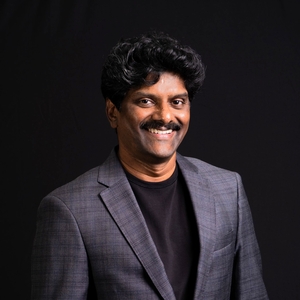
Karthikeyan Subramaniam, CEO, Frizb Inc
Nathan Bivans, CTO, FORT Robotics
Thomas Wedlick, Safety and Compliance, Amazon Lab126
 |
Managing Editor |
 |
CEO |
 |
CTO |
|
Safety and Compliance |
Riccardo Mariani, VP of Industry Safety, NVIDIA
Physical AI is nowadays an essential element of robot safety, from direct control to supervision. This session will start by providing an overview of the Physical AI safety standardization landscape, with focus on ISO/IEC TS 22440 series on “Artificial intelligence — Functional safety and AI systems” and the relationship with ongoing projects such as ISO TC 299/WG 12/WD 25785-1. Then, NVIDIA Halos will be presented, and how its comprehensive "edge to cloud" framework establishes a foundation for physical AI safety. The session will describe how Halo's principles and technologies apply to robot safety, at both design, deployment, and evaluation time. |
|
 |
VP of Industry Safety |
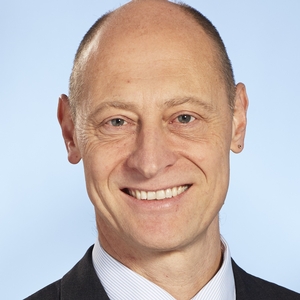
Martin Wuestefeld, Vice President - Research and Development, SICK AG
Safety-related sensors are used in robotics applications where there is a risk of personal injury. These sensors provide protection by ensuring that the robotic system returns to a safe state before any person can be exposed to a hazardous situation. The use of mobile robots and collaborative robotics has led to an increased demand for a wider range of sensor technologies (such as vision sensors, 3D LiDARs, or radar sensors), new sensor functions (like object classification and object tracking), and the combination of different sensors to detect humans and objects that could pose a risk. The IEC 62998 series provides guidance for the safe detection of objects based on risk assessment in robotics applications. The standard is applicable for manufacturers of sensors, robots, or system integrators, and is prepared to connect with future safe AI standards. |
|
 |
Vice President - Research and Development |
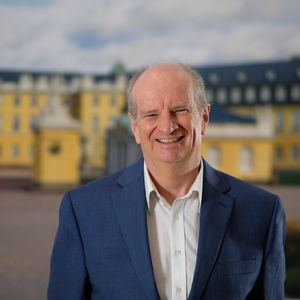
Marcellus Buchheit, President & CEO, Wibu-Systems USA Inc.
As robotics systems become increasingly interconnected, intelligent, and integral to critical applications, ensuring robust software security is a legal and ethical imperative. The European Union’s Cyber Resilience Act (CRA), set to reshape the cybersecurity landscape for all digital products, introduces binding requirements for manufacturers to address software vulnerabilities, enforce secure development practices, and provide lifecycle security support.
Whether you’re a robotics manufacturer, software developer, integrator, or safety engineer, this session will offer concrete guidance to align product development with emerging EU cybersecurity law, without compromising innovation or performance. |
|
 |
President & CEO |
Christopher Savoia, Global Head of UR+ Ecosystem, Universal Robots
As collaborative robotics evolves, so must our approach to safety. This session explores the limitations of traditional Power and Force Limiting (PFL) and introduces a new paradigm: dynamic safety limits enabled with open APIs. This presentation will examine how robot manufacturers may work with third-party components to interface directly with robot controllers and dynamically adjust safety parameters like stopping time, tool speed, and momentum. |
|
 |
Global Head of UR+ Ecosystem |
Benedikt Rohrssen, Attorney-at-Law (Germany), Taylor Wessing
As robotics systems increasingly integrate AI – from collaborative cobots in manufacturing to autonomous service robots – the European regulatory framework is undergoing a profound transformation. The convergence of the EU AI Act, the new Machinery Regulation, the Cyber Resilience Act, and ISO 10218:2025 creates a multi-layered compliance landscape that manufacturers, integrators, and operators must navigate to ensure safety, liability management, and market access. The session offers a practical roadmap for aligning robotic systems with these overlapping legal and technical requirements. Drawing on my experience in product liability and compliance, I will explore:
|
|
 |
Attorney-at-Law (Germany) |
Stuart Shepherd, President, Shepherd Solutions, Inc.
With the continued shortage of arc welders and increasing demands for quality, employers, large and small, are turning to robotic automation and inexperienced employees to close the gap. In this breakout session, we will discuss how the recently harmonized A3 and AWS Robotics Safety Standards can help employers keep their arc welding employees safe. |
|
|
President |
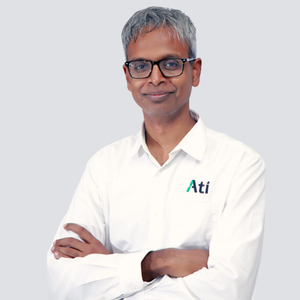
Naveen Arulselvan, Chief Technology Officer, Ati Motors
Across more than 200 autonomous mobile robots deployed in live manufacturing environments, ATI has learned that long-run safety performance emerges from choices made far upstream—in architecture, validation, and day-to-day operations. This talk introduces our 4S framework—Safety, Speed, Sturdiness, and Space—a practical lens for designing and operating mobile robot systems that are provably safe, predictably fast, mechanically and electronically robust, and spatially aware of real factory constraints. We will show how “Safety-first” is not at odds with throughput: dynamic speed-and-separation monitoring, geo-fenced behaviors, fault-tolerant perception, and rigorous commissioning turn safety constraints into production reliability. Using field evidence, we connect safety cases to measurable KPIs (near-miss rate, mission success under degraded sensing, MTBF of safety-critical components), and describe how Space—aisle widths, transfer station geometry, human work envelopes—often determine whether a “safe” design is also maintainable and scalable. Attendees will see how hazard analysis (like FMEA), mock-simulations feed into an always-current safety case that travels with the product from pilot to fleet scale. The session is aimed at practitioners who must implement safe automation workflows in brownfield factories. Concretely, we will share: design patterns that prevent “fast-but-unsafe” regressions; commissioning checklists that tie ISO-aligned requirements to acceptance tests; telemetry practices that turn near-misses into corrective actions; and inculcating organizational safety hygiene(incident reviews, operator training, and configuration control) that sustain safety without sacrificing line cadence. Audience will leave with a reusable 4S worksheet to evaluate their own systems—translating principles into decisions about speed limits, protective zones, hardware redundancies, service intervals, and spatial layouts that keep operations safe and factories productive. |
|
 |
Chief Technology Officer |