
Agenda
Select Your Track:
Filter the conference agenda by selecting the track(s) you are interested in to see only sessions in that track. Below the track buttons, you can also filter by day.
Agenda subject to change. More sessions coming soon.
Vincent Vanhoucke, Distinguished Engineer, Waymo
Waymo’s mission is to build the world’s most trusted driver. In this talk, we’ll discuss some of the ingredients for building a robust, multimodal perception stack, and how high-fidelity, generative sensor simulation is revolutionizing the foundations of testing and validation, particularly for difficult, long-tail scenarios. |
|
 |
Distinguished Engineer |
Peter Denzinger, Vice President of Engineering, Vista Solutions
Deploying machine vision is no longer just about installing cameras and writing inspection code; it’s about creating reliable, scalable systems that deliver measurable results in real production environments. In this session, Vista Solutions will share the key lessons learned from decades of deploying advanced vision systems, including AI-driven inspection platforms, across industries such as automotive, medical devices, and consumer goods. |
|
 |
Vice President of Engineering |
Eric Hershberger, Principal Applications Engineer, Cognex
In this session I will dive into how to make AI integration easy with machine vision deployments. I will discuss real world examples on how to setup an AI system for real world deployment success. I will walk through the steps needed to setup, image, program and deploy. I have lots of great examples on ease of use and how to continue to be successful over time. |
|
 |
Principal Applications Engineer |
Stephen Se, Senior Engineering Manager, Depth Sensing, Teledyne
Deep learning has improved stereo vision in challenging real-world conditions, but it does not eliminate the fundamental limits imposed by system design. This presentation examines where learning-based stereo delivers meaningful practical gains and where performance remains limited by optics and geometry. |
|
-1.jpg) |
Senior Engineering Manager, Depth Sensing |
Zeeba Mercer, Accreditation & Technical Manager, TÜV Rheinland of North America Inc.
SO/IEC 42001 is the first global standard for Artificial Intelligence Management Systems (AIMS), providing a framework to ensure AI technologies are ethical, transparent, reliable, and aligned with organizational and societal values. This presentation explores the significance of ISO 42001, its key components, and its role in shaping the future of AI governance. The content will delve into the standard's principles, including ethical considerations, risk management, and performance metrics, and discuss how organizations can implement it to build trust and compliance in their AI initiatives. |
|
 |
Accreditation & Technical Manager |
Paul Thomas, Director of Machine Vision and Applied AI in Global Engineering, P&G
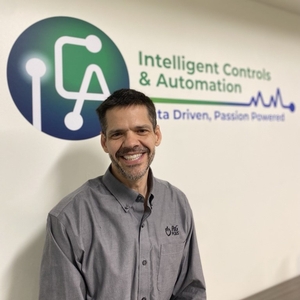 |
Director of Machine Vision and Applied AI in Global Engineering |
Albane Dersy, COO & Co-founder, Inbolt (with Stellantis)
Carl Standertskjold, Head of Innovation - North America Manufacturing, Stellantis
Most of the world's manufacturing capacity already exists. The hardest automation problem isn't building greenfield plants; it's automating brownfield ones, where existing layouts, mixed-model production, and accumulated part variation make traditional fixturing-heavy approaches slow and expensive. |
|
 |
COO & Co-founder |
 |
Head of Innovation - North America Manufacturing |
Annie Lu, CEO & Co-Founder, Laminar
Annie Lu, CEO & Co-Founder of Laminar, has spent her career inside the facilities most technology companies overlook – legacy process manufacturing plants running on equipment and workflows built decades ago. With 100+ deployments across six continents, she has seen firsthand how food & beverage operations bleed margin through wasted water, chemicals, energy, and time – not from carelessness, but from systems that were never designed to learn or adapt. The business case for fixing that is now undeniable: facilities deploying Laminar’s process-aware AI are seeing an average of a 20% reduction in water and chemical consumption and 15% uptime, achieving ROI in under a year. With productivity and sustainability both strived for, this session is the unfiltered vision on how those numbers get built, and what it takes to get there. |
|
 |
CEO & Co-Founder |
Alvin Clark, Global Developer Relations Manager - Industrial and Manufacturing, NVIDIA
Deep-learning inspection is usually sold on accuracy. The more expensive problem is the ledger. Because models learn defects from parts pulled off the line, every new SKU and every changeover is a cold start — and the tax isn’t compute or annotation, it’s material. You build bad parts to detect bad parts, and during the ramp, before the model is trustworthy, escapes reach the field. Quality’s oldest rule of thumb is 1-10-100: a defect costs about $1 to prevent, $10 to catch in-house, and $100 once it ships. A cold-start model pays that $100 line, at every changeover, for defects it will eventually learn to catch — after the material is already gone. |
|
 |
Global Developer Relations Manager - Industrial and Manufacturing |
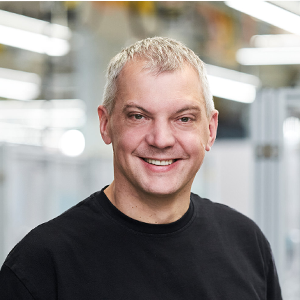
Torsten Kroeger, Chief Science Officer, Intrinsic
The field of industrial automation is undergoing a profound paradigm shift driven by advancements in artificial intelligence. Historically, robotics has relied on deterministic, highly engineered software solutions tailored to static environments. While successful in highly structured settings, these legacy systems struggle with variability, high-mix hardware configurations, and complex multi-robot coordination. This talk explores the shifting landscape of robotics software, focusing on the distinct yet complementary roles of generalized and specialized AI models in unlocking scalable, adaptive automation. |
|
 |
Chief Science Officer |
Thomas Kuckhoff, Senior Product Manager, Omron Automation Americas
In this session, Omron Senior Product Management will share a practical roadmap for creating a data-first culture that reduces the cost and complexity of deploying advanced process controls. While much attention has been given to algorithm development and deep neural networks, this session focuses on the critical foundation for successful AI adoption: factory operations.
By framing these concepts within operational efficiency, the session will illustrate how an intentional data-first strategy can strengthen production systems today while preserving flexibility for advanced process control tomorrow. Attendees will leave with actionable steps to maximize uptime today through non-intrusive data collection and be able to avoid costly challenges when seeking to build a scalable intelligent automation architecture. |
|
 |
Senior Product Manager |
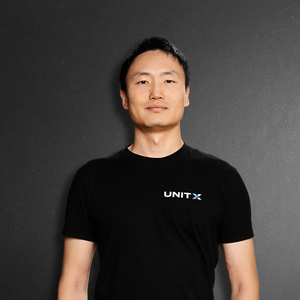
Keven Wang, CEO, UnitX Inc
Most manufacturers rely on end-of-line inspection, yet relatively few inspect products at the manufacturing steps where defects actually occur. The challenge is no longer whether AI can detect defects—it can. The real barriers are deploying AI quickly, training reliable models with limited production data, and achieving a return on investment that justifies inspection at every critical process. |
|
 |
CEO |
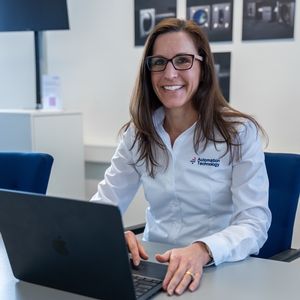
Gretchen Alper, Business Director, North America, AT-Sensors
As manufacturers continue to increase automation and inspection requirements, machine vision systems are being used in a growing range of production environments where speed, variability, and reliability create significant implementation challenges.
Several application examples will be used to illustrate how different system architectures and sensing approaches were selected based on the specific inspection or measurement requirements. |
|
 |
Business Director, North America |
Rashmi Misra, Supervisory Board, Mercedes-Benz Group AG
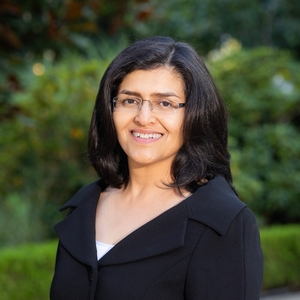 |
Supervisory Board |
Chris Matthieu, VP, Developer Ecosystem, RealSense, Inc.
For robots to operate safely and effectively in real-world environments, two capabilities must come together: perception and trust. Robots need to understand the physical world in 3D—and they need to understand who they are interacting with.
Based on lessons from real deployments, we explore how these layers work together to unlock new capabilities in industrial and service robotics—from safer human-robot collaboration to authenticated task execution and delivery.
This talk offers a forward-looking but grounded perspective on how perception and identity together form the foundation of trusted autonomous systems. |
|
 |
VP, Developer Ecosystem |
Jeff Adolf, Vision/AI Specialist, 3M
 |
Vision/AI Specialist |
Ricky Watts, General Manager and Sr. Director, Industrial and Robotics Division, Intel Corp.
 |
General Manager and Sr. Director, Industrial and Robotics Division |