 Medical device manufacturing offers unique challenges compared to typical manufacturing environments. Strict regulations requiring products and processes to be validated and documented, coupled with high reliability requirements, create an environment that presents challenges for process changes and upgrades. Legacy processes include many manual assembly steps. Equipment is heavily siloed, and the generated data is work-cell-specific. Batch records, device history records, testing logs, and calibration sheets are often managed on paper or in separate digital records, which complicates audit-readiness. Processes remain untouched for years because organizations want to avoid process changes that require revalidation.
In the current environment, medical device manufacturers need to scale to meet increases in demand while also tightly controlling costs to stay competitive. User-specific requirements for specific devices require agile manufacturing to meet customer demands. Devices are increasingly complex, driving up the cost of manual processes. Trying to scale to meet demand amid increasing complexity, the need to manage costs, and the necessity of staying compliant is challenging. Automation is providing manufacturers with an avenue to control costs, standardize and streamline compliance documentation, and dynamically scale to fill increasing market needs.
“Demand is increasing with an aging population and increased access,” says Ben Webster, business development manager of ATC Automation. “Procedures are becoming more complex, requiring new, more complicated devices. Through all this, maintaining regulatory compliance is crucial. Processes need to be standardized, traceable, and verifiable.”
Compete and Scale With Automation
Automation technology has accelerated over the past decade, moving beyond single-axis programming and toward more cost-effective commissioning and modifications. For decades, automation was confined to simple repetitive tasks and wasn’t always suited to high-precision processes. In addition, the limitations inherent in legacy automation meant it wasn’t typically suited to producing different products in small batches due to extensive, costly reprogramming and calibration.
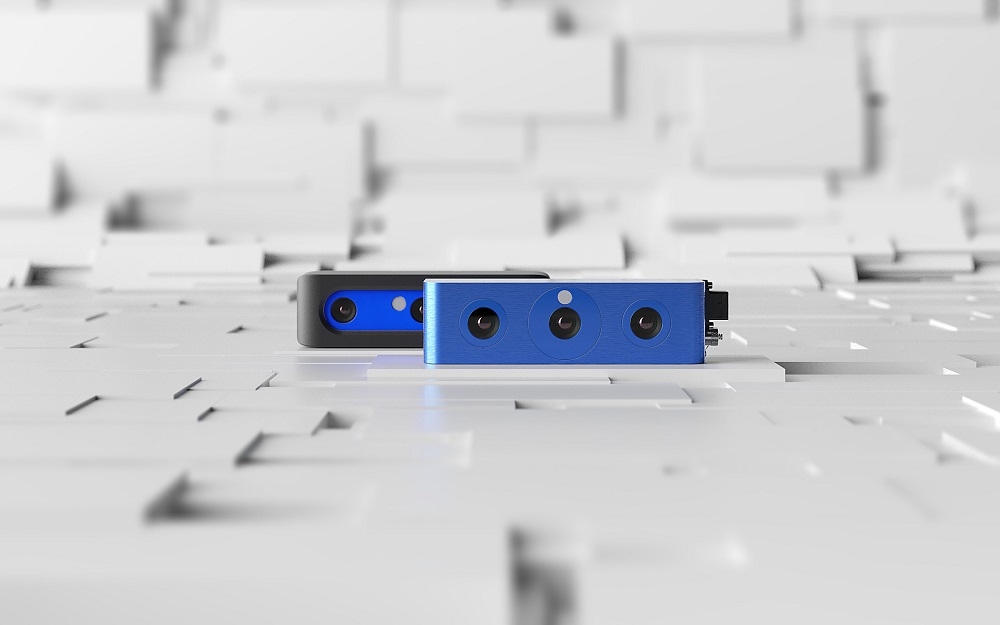
Modern automation technologies allow high-precision manufacturing and agile manufacturing powered by machine learning. High-precision automation can help reduce process variation, lowering reject rates and associated waste. Cleanroom space and labor are costly and can be hard to staff. Automation can reduce or eliminate human-introduced particles, enable 24/7 three-shift operation, with fewer gowning cycles, thereby reducing contamination risk and the cost of goods. Machine vision systems are one stark example of the improvements in automation solutions. Machine vision has traditionally required extensive application-specific programming and has been confined to a single product, configuration, and color. Any changes required reprogramming, resulting in significant cost and downtime. Machine vision solutions are now available that can be quickly reconfigured to validate new products or variations of existing products, empowering the agile manufacturing required to compete in today’s business environment.
“It’s an exciting time in the automation industry as many vendors are entering the high-precision assembly market with small parts feeding systems, small robots, and high-resolution 3D vision systems,” shares Steve Maves, engineering fellow for vision and AI at Boston Scientific. “High-resolution optical techniques are moving out of the lab and onto the factory floor. We are using these types of systems to drive efficiencies and continuously improve the quality of our medical devices.”
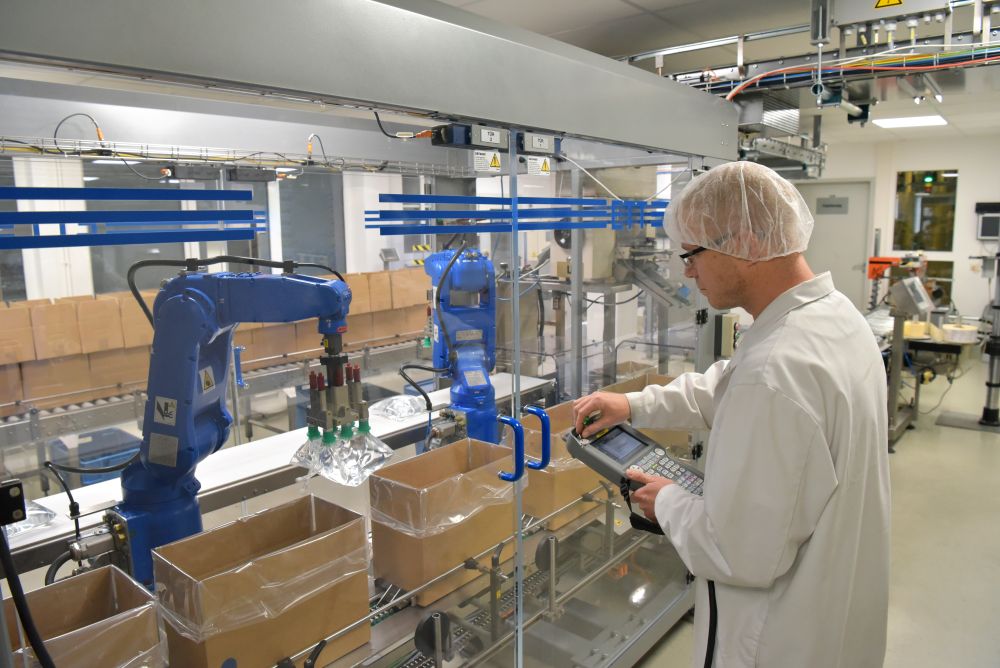
Another typical example of adaptive automation technology are the adaptive grippers and force sensors that allow robots to manipulate different objects delicately across various processes. Automation has become feasible for “handcrafted” devices such as catheter subassemblies, wearable sensors, surgical tools, or diagnostic cartridges. Modern automation processes that share data throughout the process and even across a whole facility or organization can automatically generate digital records. Serial number tracking, in-process test recording, and real-time environmental logging can be used to optimize processes and streamline validation and auditing.
“Modern automation systems allow manufacturers to have very finite control over specific motions, and that automation can handle more variations and more complex tasks,” says Webster. “Smart machine vision systems are quickly becoming standard, whereas vision systems of any kind used to be unusual and expensive.”
Implementing automation is based on a foundation of data. Combining data sources across work cells and processes to create a unified data architecture supports more than just automation; it enables robust simulation that can be leveraged from design to facility- or organization-level decision-making. These simulations, also known as digital twins, can digitally reproduce internal production processes to test and validate hardware and software, as well as external machine metrics, allowing layout optimization, workflow planning, and accelerating commissioning. Process design can become “digital first,” leveraging simulations to design for automation, agile manufacturing, and modular scaling.
A large capital investment is crucial for design and commissioning of medical devices, says Webster. “Traditionally, manufacturers have had to wait to build until all regulatory approvals are in place. Virtual commissioning enables testing and validation as approvals are underway. The majority of a machine can be designed and validated concurrently, saving manufacturers time and money. This maximizes ROI and minimizes pre-production time lags.”
To successfully implement automation into medical device manufacturing operations, a holistic view of all processes is needed. Identifying the processes that could benefit from automation with the lowest risk and highest ROI. Understanding the data environment, where data is generated and how it is stored, is an essential part of successful integrations. Projects need to have clear, measurable, ROI-focused goals. New automation implementations need to consider demand dynamics and plan for portability and scalability.
Maves explains, “As with any industry, the most successful projects start with a firm grasp on the requirements and an understanding of which aspects of a project carry the most risk. Suppose material handling or inspection are tasks that carry high risks. In that case, decision makers should look to fund feasibility studies that tackle these with a proof-of-concept before full-scale automation projects begin.”
Manufacturers need to choose partners who understand that there's more than one way to approach a problem or automate a process. Solutions need to consider application-specific demands and have a deep, intrinsic understanding of the regulatory challenges involved with changing or updating medical device manufacturing processes.
“Once the regulatory system validates a product and process for medical device manufacturing, it’s much more intrusive and costly to upgrade or modify the system than in other industries,” says Webster. “Vast amounts of capital are sunk and invested in the existing equipment and process, and it is generating revenue. Manufacturers need a clear, well-supported use case and proven ROI. To implement automation successfully, manufacturers need a partner who understands where they’re starting from and their end goals, to help evaluate processes and challenges and determine whether upgrades, redesigns, or a complete replacement make the most financial sense.”
The Future of Automation in Medical Device Manufacturing
As competition continues to increase, high-mix, modular production leveraging automation will be required to compete, not simply a competitive advantage. Automation will enable fully traceable, data-driven, autonomous production that lowers costs across the board, using data to reduce labor, energy, and raw-material costs while achieving better quality with less downtime. Predictive and prescriptive maintenance powered by machine learning will reduce equipment failures and minimize downtime, further reducing production costs.
Robots designed for quick-change tooling and smart vision solutions will form the core of new flexible machine designs that enable the process agility to support high-mix production. Processes across a facility sharing a unified data architecture will allow decision makers transparency into processes and create “compliance by default” by automatically logging required data, generating time-stamped DHRs, and providing detailed traceability for every product produced.
Miniaturization remains a major trend in medical devices, according to Maves, because it helps reduce the impact of treatments on patients and has long shaped the industry. “Combining therapies also presents a unique opportunity and challenge to merge the requirements of devices that had previously been used in separate procedures,” he goes on to say. “Part feature size is always a challenge. As parts miniaturize, the need to detect minor flaws increases. Inspecting small parts becomes an optical challenge, where the trade-off between magnification and depth of field demands computational imaging approaches such as laser profilometry or focus stacking.”
Beyond automating production tasks, automation will be adopted across business operations to streamline analytical and administrative processes. Once a unified data architecture is in place across a facility, production data can feed into other business systems to support decision-making. When combined with production data, ERP and SCM data can optimize logistics and production decisions by anticipating raw-material inflows and shifting production to align with delivery timeframes and customer demands. Administrative tasks that are time sinks for operational or design teams can be automated using agentic systems, leading to increased productivity.
Webster says that “across all of manufacturing, there will be broader adoption of AI for day-to-day activities.” Automating routine tasks like “standard project timeline or cost updates” can remove barriers to collaboration and free cross-functional teams, often spanning multiple organizations, to focus on higher-value work. Webster also notes a shift toward designing automation to be modular and scalable from the start, so early trials don’t have to be separate from full-scale production.
The unique challenges of medical device manufacturing have slowed the industry’s adoption of automation. That reality has created a business environment in which effective automation implementation can generate a substantial competitive advantage. Device manufacturers that can be more agile and scale at a lower cost can capture significant market share. As automation becomes more common, it will no longer create a competitive moat and will be required to compete effectively. Evaluating existing processes and ensuring greenfield project designs take advantage of the improvements in automation technology available helps future-proof those operations.