“I forget how many tens of millions of times customers had asked Alexa to marry them or for science jokes or whatever,” Alexa and Echo VP Daniel Rausch tells me. “There's a beloved technology that doesn't just live on someone's laptop or phone. People brought Alexa into their homes and included Alexa in their lives.”
We have a firm metric for the former — or at least did as of just over a decade ago. In 2017, Amazon confirmed that more than one million people had proposed marriage to its smart assistant. Whatever motivation consumers might ultimately have opting to devote their life to a disembodied voice emanating from a broad range of consumer electronics, it was ultimately on the system’s creators to let them down gently.
If you were among those who popped the question back then, you would have been greeted with some humorous — but firm — responses. The two of you were at very different places at that point in your life, for example. After all, Alexa’s head, body, and everything else, were stuck in the cloud.
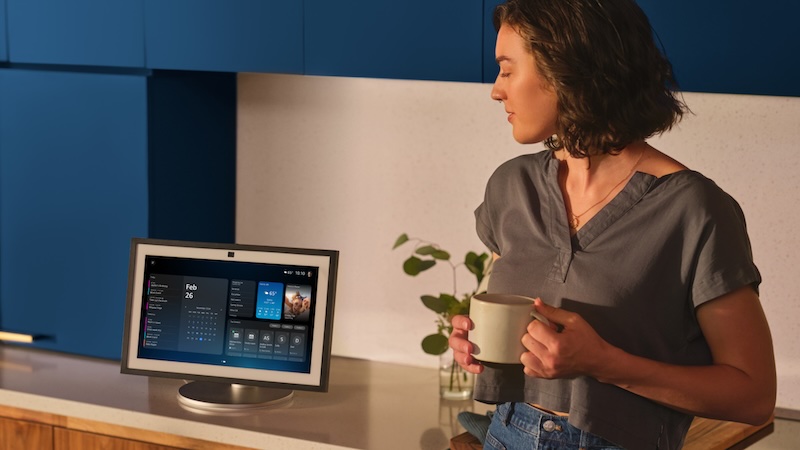
It’s probably for the best you decided to see other people. Think of all that you’ve experienced since then — all the life you’ve lived. No hard feelings, right? Alexa’s had a glow up in the past year, as well, as part of a fundamental rethink of how a smart assistant ought to perform — and sound–– in the age of ChatGPT and its ilk. The new service, Alexa+, has since been opened to Prime subscribers in North America and the U.K., with more markets waiting to follow suit, as the company works through localization demands.
Earlier versions of Alexa had the marriage answers hard coded into them. Customers were proposing marriage, and the assistant needed to respond appropriately, so people were tasked with writing that material. Similarly, all of those science — and every other–– jokes were the product of a writers’ room.
“At the beginning we had an incredibly talented team of comedy writers helping us build a database of jokes and responses,” say Rausch. “Now you're talking about a non-deterministic system. There are over 70 models that back Alexa, that we choose for different tasks, that we train differently, that we fine tune differently, that we count on for different parts of the infrastructure. Really, it's about influencing the outcomes of those things, having the right training data, having the right post-training, doing the right reinforcement learning, etc. to get the experience that you're looking for that's built on sort of the tenets and foundations that you want for that experience, but is incredibly flexible and dynamic. So, it’s a very different approach to building that.”
Alexa for the LLM era relies on dozens of different systems, including first-party systems like Amazon Nova, as well as partners, including Anthropic’s Claude. The goal is a smart assistant that doesn’t simply answer a question and allow the user to move on, but instead engages them through conversation and an ambient, always-on presence. Rausch says the company was surprised to find that music listening increased 25% with the same users moving from Alexa to Alexa+, a phenomenon he chalks up to more engagement through artist trivia and the creation of on-the-fly playlists, using connective tissue between songs.
“I would not have expected that,” he explains. “It’s because it's just that much more delightful to find a song. You go through a discography, and you learn new facts about an artist you've always loved, but you didn't know completely. You can do a full biography and you can say, ‘When were all these songs written?’ ‘Play them in the order that the artist actually published them and wrote them.’ You can do all kinds of things that you couldn't do.”
The notion of an “ambient” approach will likely raise concerns among privacy critics long skeptical of smart home voice assistants. Rausch says that Amazon has built upon the privacy and security foundations outlined for the original Alexa.
“I think what you need to do in those areas is create the right foundation and then you can keep leaning on it,” he notes. “One of the good news bits about building on this decade- plus of having Alexa exist out in the world is that we had some of the foundational bits right. Like the transparency that you have over your data and the degree of control that you have over your data is like one of the foundational bits that customers want. They want to see everything Alexa heard in the Alexa Privacy Dashboard. And you can delete those conversations one at a time or all at once. You can control how your data is used for training or not.”
Alexa’s philosophy on marriage also appears not to have evolved much in the past decade. I gave it a go before wrapping up the newsletter this morning and got the sort of wishy-washy response one would expect from an assistant with more than 70 models at its beck and call, “Oh wow, that's quite the proposal! While I'm flattered, I'm more of the ‘helpful digital companion’ type than the ‘walk down the aisle" type. Plus, I'd probably short-circuit during the vows! How about we stick to being great friends and I help you with whatever you need instead?”
Plus, Rausch assures me that — as a Seattle native — Alexa is a Seahawks fan. As a Bay Area native myself, I might have better luck with a Siri or Gemini.